
How To Use Blue Devil Head Gasket Sealant
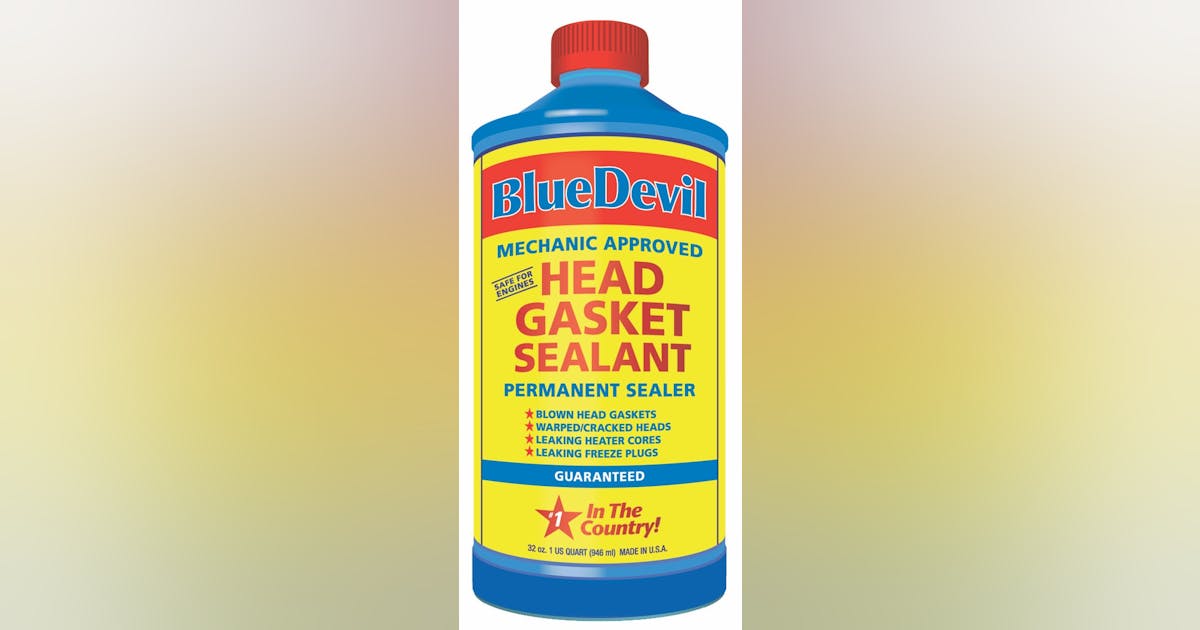
The dreaded head gasket failure: a costly and time-consuming repair that can cripple a vehicle. In the automotive repair world, mechanics are constantly seeking effective and efficient solutions for this common problem. Blue Devil Head Gasket Sealant has emerged as a popular product, promising a relatively quick and inexpensive fix. But how effective is it, really? This article provides an in-depth look at Blue Devil, focusing on its technical aspects, real-world performance, and comparison with alternative repair methods, offering a comprehensive guide for automotive professionals.
Understanding Blue Devil's Mechanism
Blue Devil Head Gasket Sealant is formulated with a blend of sodium silicate (water glass) and other proprietary sealing agents. Its purported mechanism of action involves being drawn into the area of the head gasket leak by the pressure differential. The heat from the combustion chamber then causes the sodium silicate to harden, forming a seal that, in theory, bridges the gap and prevents further leakage. Understanding the chemical composition is crucial for assessing its potential effectiveness and drawbacks.
Technical Specifications and Application
Blue Devil typically requires a specific application process to maximize its chances of success. This generally involves:
- Draining a portion of the coolant system.
- Removing the thermostat (in some applications).
- Adding the correct amount of Blue Devil to the radiator.
- Running the engine for a specified period of time to allow the product to circulate and the sealant to activate.
The instructions are generally straightforward, but adhering strictly to them is critical. Deviation from the recommended procedure can lead to suboptimal results or even exacerbate the problem. The specific amount of Blue Devil required varies depending on the vehicle's cooling system capacity, which should be precisely calculated based on the manufacturer’s recommendations. Overdosing or underdosing can severely impact the sealant’s effectiveness.
Real-World Performance and Case Studies
The efficacy of Blue Devil Head Gasket Sealant is a subject of much debate. In some cases, it has been reported to provide a temporary fix, extending the life of a vehicle by several months or even years. However, these successes are often limited to minor leaks and specific engine types. Online forums and professional mechanic communities reveal a mixed bag of experiences, ranging from complete satisfaction to utter failure. Critical reviews often cite the inconsistent results and the potential for clogging the cooling system as major drawbacks.
Analyzing case studies, we see that the success rate seems higher in situations where the leak is small and localized. For example, a hairline crack in the head gasket or a minor breach around a coolant passage might respond positively to Blue Devil. However, in cases of severe head gasket failure, such as those involving significant coolant loss or oil contamination, the sealant is unlikely to provide a lasting solution.
Comparison with Alternatives
The primary alternative to using a sealant like Blue Devil is a proper head gasket replacement. This involves removing the cylinder head, cleaning the mating surfaces, installing a new head gasket, and reassembling the engine. While significantly more expensive and labor-intensive, a head gasket replacement offers a reliable and permanent solution. Other alternatives may include engine replacement if the engine block itself is damaged beyond repair.
Here's a comparison table:
| Option | Cost | Reliability | Pros | Cons |
|---|---|---|---|---|
| Blue Devil | Low | Variable (Temporary) | Quick, inexpensive, DIY possible | Unpredictable results, potential for clogging, temporary fix |
| Head Gasket Replacement | High | High (Permanent) | Reliable, long-lasting solution | Expensive, labor-intensive, requires specialized tools |
| Engine Replacement | Very High | High (New Engine) | Completely restores engine performance | Most expensive option, significant downtime |
Pros and Cons of Using Blue Devil
Pros:
- Relatively inexpensive compared to other repair options.
- Easy to apply and can be done by DIY mechanics.
- May provide a temporary fix for minor head gasket leaks.
Cons:
- Effectiveness is unpredictable and often short-lived.
- Can clog the cooling system, leading to overheating and further damage.
- May mask underlying problems, delaying a proper repair.
- Not suitable for severe head gasket failures.
Reliability Aspects and Maintenance Tips
The long-term reliability of a repair using Blue Devil is questionable. Even if it initially seals the leak, the underlying cause of the head gasket failure remains unaddressed. Factors such as engine overheating, detonation, and corrosion can contribute to head gasket failure, and these issues will continue to degrade the repair over time. Regular monitoring of coolant levels and engine temperature is crucial after using Blue Devil. A sudden increase in coolant loss or engine temperature is a sign that the sealant is failing and that a more permanent repair is needed. Consider performing a coolant flush after several months to remove any residual sealant particles that may be circulating in the system.
Future Trends and the Automotive Industry
The automotive industry is constantly evolving, with advancements in engine technology and materials. As engines become more complex and efficient, the demands on head gaskets increase. Future trends in head gasket design may focus on improved materials and sealing technologies to enhance durability and prevent failures. Simultaneously, advancements in diagnostic tools are enabling mechanics to identify head gasket leaks more accurately and efficiently, leading to more informed repair decisions. While sealants like Blue Devil may continue to play a role in temporary repairs or as a last resort, the focus will likely shift towards preventative maintenance and more robust engine designs to minimize the occurrence of head gasket failures in the first place.
As electric vehicles (EVs) gain popularity, the prevalence of head gasket failures is expected to decrease significantly due to the absence of internal combustion engines. However, EVs introduce new challenges related to battery technology and thermal management, requiring new skills and knowledge for automotive technicians. The industry is undergoing a major transformation, and automotive professionals must adapt to these changes by embracing new technologies and acquiring specialized training.
In conclusion, while Blue Devil Head Gasket Sealant can offer a temporary reprieve from a costly repair, it should be approached with caution and a thorough understanding of its limitations. Automotive professionals should carefully evaluate the specific situation, consider alternative repair options, and provide clients with realistic expectations. The future of automotive repair lies in embracing new technologies and providing comprehensive solutions that address the root causes of vehicle problems.