
Is Bank 1 Sensor 2 Upstream Or Downstream
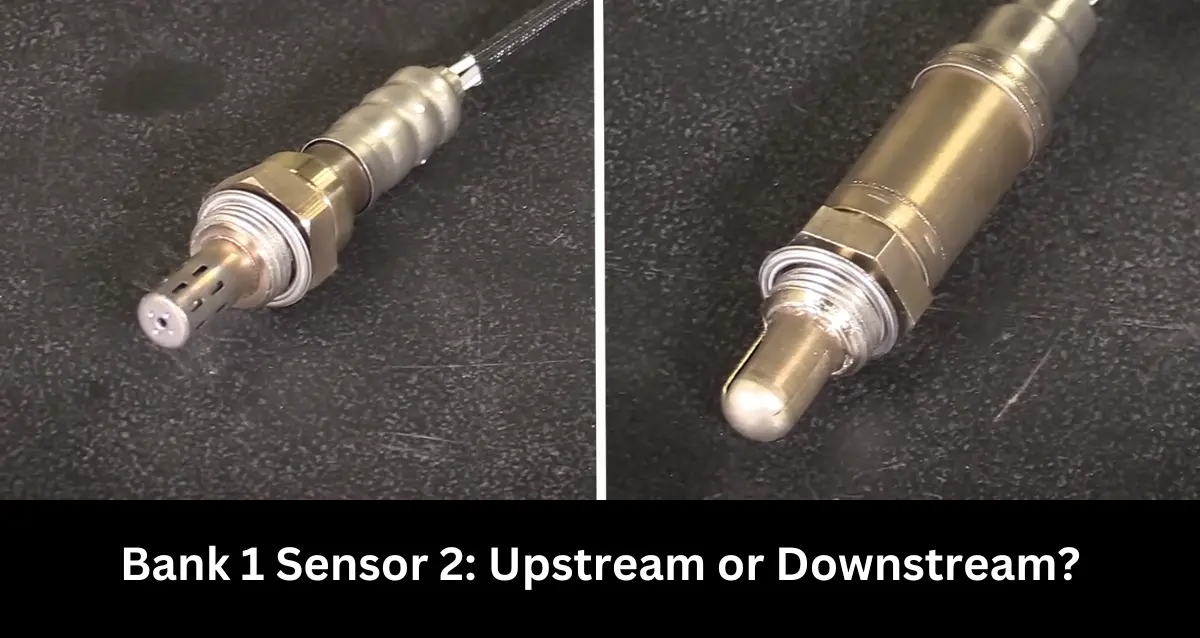
Understanding the intricacies of your car's exhaust system can feel like navigating a maze. Among the many components, oxygen sensors – often abbreviated as O2 sensors – play a vital role in ensuring your engine runs efficiently and cleanly. Figuring out which sensor is which, particularly when dealing with terms like "Bank 1 Sensor 2," can be confusing. This article will demystify these terms, explaining whether Bank 1 Sensor 2 is located upstream or downstream of the catalytic converter.
Decoding Oxygen Sensor Terminology
Before diving into the specific location of Bank 1 Sensor 2, let's break down the terminology:
- Oxygen Sensor (O2 Sensor): This sensor measures the amount of oxygen in the exhaust gas. This information is crucial for the engine control unit (ECU) to adjust the air-fuel mixture for optimal combustion.
- Bank: This term applies to vehicles with multiple cylinder banks, typically V-shaped or horizontally opposed engines. Think of a V6 engine in a Toyota Camry or a Subaru Outback's Boxer engine. Each bank is essentially a separate engine half. Bank 1 is generally the side of the engine that contains cylinder number 1. Consult your vehicle's repair manual to confirm which side is Bank 1 for your specific car.
- Sensor Number: This indicates the sensor's position relative to the catalytic converter.
The numbering convention is key. Generally speaking:
- Sensor 1 is the sensor upstream of the catalytic converter. This means it's located before the catalytic converter, closer to the engine. It's sometimes referred to as the pre-cat sensor.
- Sensor 2 is the sensor downstream of the catalytic converter. This means it's located after the catalytic converter, further away from the engine. It's sometimes referred to as the post-cat sensor.
Therefore, Bank 1 Sensor 2 is almost always located downstream of the catalytic converter on Bank 1.
Visualizing the Exhaust System
Imagine a typical V6 engine like the one found in many Honda Accords. Each side of the "V" is a bank of cylinders. Each bank has its own exhaust manifold. The exhaust flows from the engine, through the exhaust manifold, past Sensor 1, then into the catalytic converter. After exiting the catalytic converter, it passes Sensor 2, and then continues through the exhaust system.
In the case of an inline-four engine, such as those in many Mazda 3s, there is only one bank of cylinders, so there's no "Bank 1" designation needed. The sensors would simply be referred to as Sensor 1 (upstream) and Sensor 2 (downstream).
The Role of Upstream and Downstream Sensors
Now that we've established the locations, let's discuss the purposes of the upstream and downstream oxygen sensors.
Upstream Oxygen Sensor (Sensor 1)
The primary function of the upstream sensor is to measure the oxygen content in the exhaust gas before it enters the catalytic converter. This sensor provides crucial feedback to the ECU, allowing it to fine-tune the air-fuel mixture. The ECU constantly adjusts the amount of fuel injected into the cylinders based on the readings from this sensor, aiming for the ideal stoichiometric ratio (approximately 14.7:1 air-fuel ratio). This ensures efficient combustion and minimizes emissions.
Downstream Oxygen Sensor (Sensor 2)
The downstream sensor, located after the catalytic converter, has a different, but equally important, role. Its primary function is to monitor the efficiency of the catalytic converter. A properly functioning catalytic converter significantly reduces harmful emissions. The downstream sensor compares its oxygen readings to those of the upstream sensor. If the catalytic converter is working correctly, the downstream sensor should report a much lower level of oxygen in the exhaust gas compared to the upstream sensor.
If the readings from the downstream sensor are similar to those from the upstream sensor, it indicates that the catalytic converter is not effectively reducing emissions and may need to be replaced. This will often trigger a check engine light and diagnostic trouble code (DTC), such as P0420 (Catalyst System Efficiency Below Threshold).
For example, a common scenario is a failing catalytic converter in a Nissan Altima triggering a P0420 code. This indicates the downstream oxygen sensor is detecting similar oxygen levels to the upstream sensor, signaling the converter isn't working as efficiently.
Why Does Location Matter?
Knowing the location of Bank 1 Sensor 2 is crucial for several reasons:
- Diagnosis: When troubleshooting engine problems and reading diagnostic codes, knowing the location helps you pinpoint the faulty sensor. If you're getting a code specifically related to Bank 1 Sensor 2, you know exactly which sensor to inspect or replace.
- Repair: When replacing an oxygen sensor, you need to ensure you're replacing the correct one. The upstream and downstream sensors are often different part numbers and have different functions. Installing the wrong sensor in the wrong location can lead to performance issues and potentially damage your engine.
- Performance Tuning: For enthusiasts who modify their vehicles, understanding the role and location of oxygen sensors is essential for proper tuning. Adjusting the air-fuel mixture based on sensor readings requires accurate knowledge of which sensor is providing which data.
Exceptions to the Rule
While Bank 1 Sensor 2 is almost always downstream, there are rare exceptions. Some vehicles may have multiple catalytic converters or additional sensors. Always consult your vehicle's service manual or a reliable online resource for the specific configuration of your car. Online forums dedicated to specific car models can also be incredibly helpful.
For example, some high-performance vehicles or those meeting stringent emissions standards may have two catalytic converters per bank, each with its own oxygen sensor. In such cases, deciphering the exact sensor locations becomes even more critical.
Practical Takeaways
Here's how you can apply this knowledge:
- Check Your Manual: The best source of information is always your vehicle's service manual. It will clearly identify the location of all oxygen sensors, including Bank 1 Sensor 2.
- Use a Scan Tool: If you're diagnosing a check engine light, use an OBD-II scan tool to read the diagnostic trouble codes. The code will often specify the affected sensor (e.g., "P0157 - O2 Sensor Circuit Low Voltage (Bank 2, Sensor 2)").
- Visually Inspect the Exhaust System: Follow the exhaust pipe from the engine to the catalytic converter. You should be able to locate the sensors before and after the converter. Remember to do this when the engine is cool to avoid burns.
- Online Resources: Utilize online forums and databases specific to your car make and model. Other owners and mechanics often share valuable information and diagrams.
- When in Doubt, Ask a Professional: If you're unsure about anything, consult a qualified mechanic. They have the experience and tools to accurately diagnose and repair your car.
By understanding the location and function of Bank 1 Sensor 2, you'll be better equipped to diagnose engine problems, perform repairs, and ensure your car runs efficiently and cleanly. Remember that a little knowledge can go a long way in keeping your vehicle on the road.