
Is It Safe To Drive With A Bad Alternator
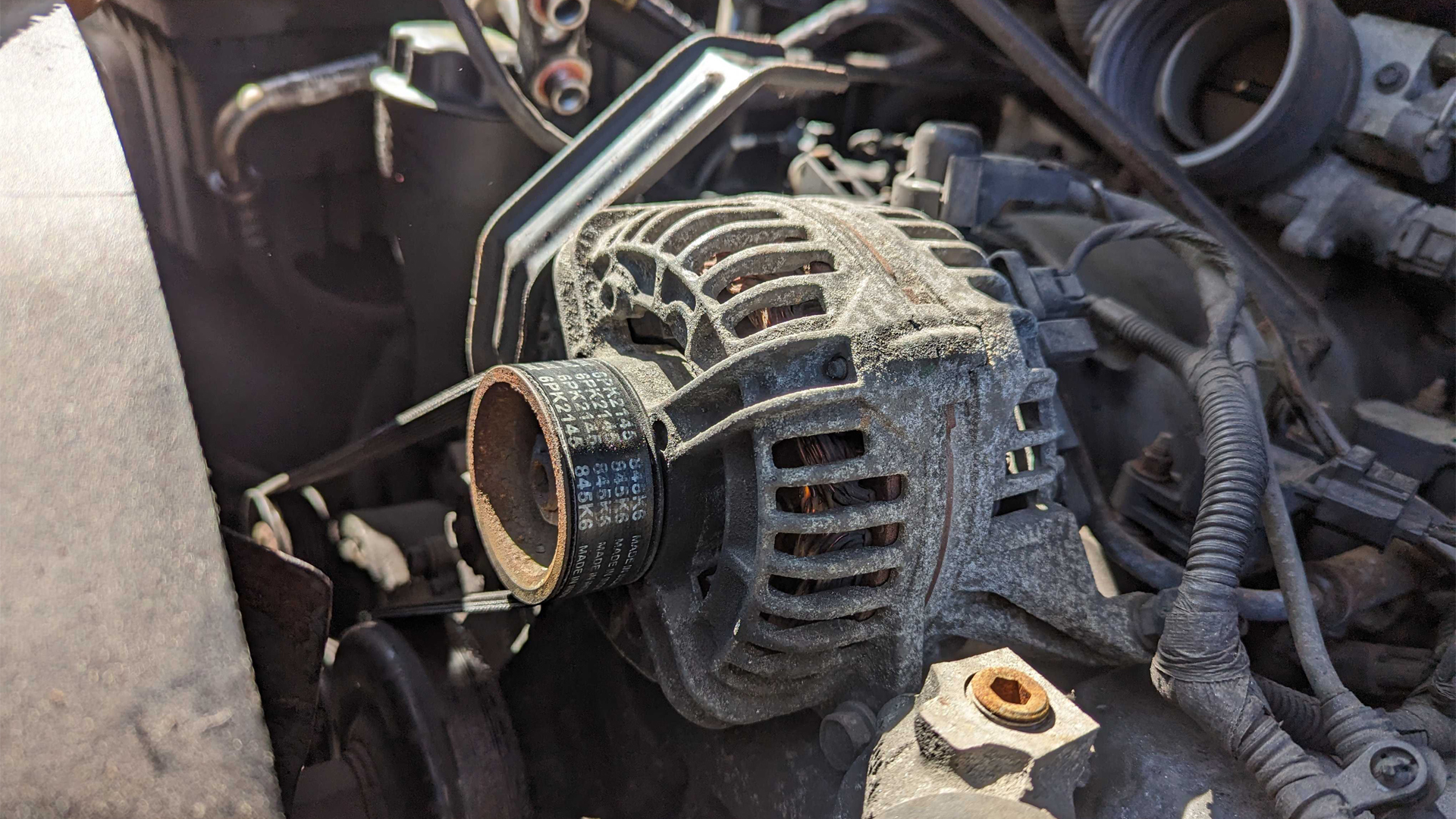
The dreaded flicker. The dimming headlights. The battery warning light glaring accusingly from your dashboard. These are telltale signs that your alternator, the unsung hero of your car's electrical system, might be failing. For years, the conventional wisdom has been clear: driving with a bad alternator is a gamble, a risky proposition that could leave you stranded and facing costly repairs. But in the rapidly evolving landscape of automotive technology, is this age-old advice still relevant? The answer, as with most things in the 21st century, is becoming increasingly nuanced.
The Risks Remain, But the Landscape is Changing
Let's be clear: a failing alternator fundamentally compromises the reliability of your vehicle. Without a properly functioning alternator, your car relies solely on the battery for power. This isn't a sustainable solution. While a fully charged battery might give you a limited range, driving until the battery is completely depleted can cause serious damage, potentially shortening its lifespan significantly. Moreover, a sudden loss of power while driving – particularly at night or in inclement weather – poses a significant safety risk. Power steering, braking assistance, and even critical safety systems like airbags rely on a stable electrical supply. A sudden failure could compromise your ability to control the vehicle, increasing the risk of an accident.
However, the automotive world is undergoing a seismic shift. The rise of electric vehicles (EVs) and hybrid electric vehicles (HEVs) is fundamentally altering how we think about electrical systems. In a traditional internal combustion engine (ICE) vehicle, the alternator is crucial for maintaining the battery's charge and powering all electrical components. In an EV, the high-voltage battery pack provides the primary source of power, and a DC-to-DC converter performs the functions traditionally handled by an alternator, stepping down the voltage to power the 12V system responsible for things like lights, windows, and infotainment. While the 12V system is still vital, its reliance on the main battery pack means a failure is managed very differently.
Even in HEVs, the role of the traditional alternator is evolving. Many modern hybrids use regenerative braking to recapture energy and recharge the battery, reducing the strain on the internal combustion engine and extending the life of components. Some even eliminate the traditional belt-driven alternator altogether, opting for integrated motor generators that are more efficient and reliable. This shift towards electrification is inherently making vehicles more resilient to alternator-like failures.
Smart Automotive Solutions: The Future of Failure Prediction
Beyond the powertrain revolution, smart automotive solutions are playing an increasingly important role in predicting and mitigating potential failures. Modern vehicles are equipped with a plethora of sensors that monitor everything from battery voltage to engine temperature. Advanced algorithms can analyze this data to detect subtle anomalies that might indicate an impending alternator failure long before it manifests as a full-blown breakdown.
Imagine a scenario where your car's onboard diagnostics system detects a slight decrease in alternator output. Instead of waiting for the battery light to illuminate, the system proactively alerts you through the infotainment screen, suggesting a visit to a qualified technician. Some advanced systems might even schedule an appointment automatically and pre-order the necessary parts, minimizing downtime and preventing a potentially dangerous situation. This level of proactive diagnostics is becoming increasingly common, promising a future where breakdowns are predicted and prevented, rather than reacted to.
Furthermore, Over-the-Air (OTA) updates are enabling automakers to continuously improve the performance and reliability of vehicle systems. These updates can include software patches that optimize alternator performance, improve battery management, and enhance the accuracy of diagnostic algorithms. This continuous improvement loop ensures that your vehicle becomes smarter and more resilient over time.
Challenges and Considerations
While the future looks bright, significant challenges remain. The transition to EVs and HEVs is still underway, and a vast number of ICE vehicles remain on the road. Moreover, even with advanced diagnostics, predicting failures perfectly is an impossible task. Sensors can fail, algorithms can be imperfect, and unforeseen circumstances can always arise.
Affordability is another key consideration. Advanced diagnostic systems and OTA updates are often features of premium vehicles, leaving owners of older or less expensive cars vulnerable to traditional alternator failures. Ensuring that these technologies are accessible to all drivers is crucial for maximizing safety and reliability across the entire vehicle fleet. There's a growing aftermarket for smart diagnostics tools but user should do the diligence.
Cybersecurity is also a growing concern. As vehicles become increasingly connected and reliant on software, they become more vulnerable to cyberattacks. A malicious actor could potentially compromise the vehicle's diagnostic system, disabling safety features or even causing a breakdown. Robust cybersecurity measures are essential for protecting drivers from these emerging threats.
A Visionary Note: The Future of Mobility is Predictive and Proactive
The question of whether it's safe to drive with a bad alternator is evolving. While the risks remain significant in traditional vehicles, the advancements in EV technology, smart diagnostics, and over-the-air updates are paving the way for a future where breakdowns are rare and mobility is seamless. The future of automotive is not just about building faster or more efficient cars; it's about creating intelligent systems that anticipate our needs, protect us from harm, and enhance our driving experience. We are moving towards a world where vehicles don’t just react to problems; they predict and prevent them, ensuring a safer, more reliable, and ultimately more enjoyable journey for everyone. The era of reactive maintenance is fading, replaced by a proactive, predictive approach to mobility, powered by data, intelligence, and a relentless pursuit of innovation.