
Kubota Oil Filter Cross Reference Chart
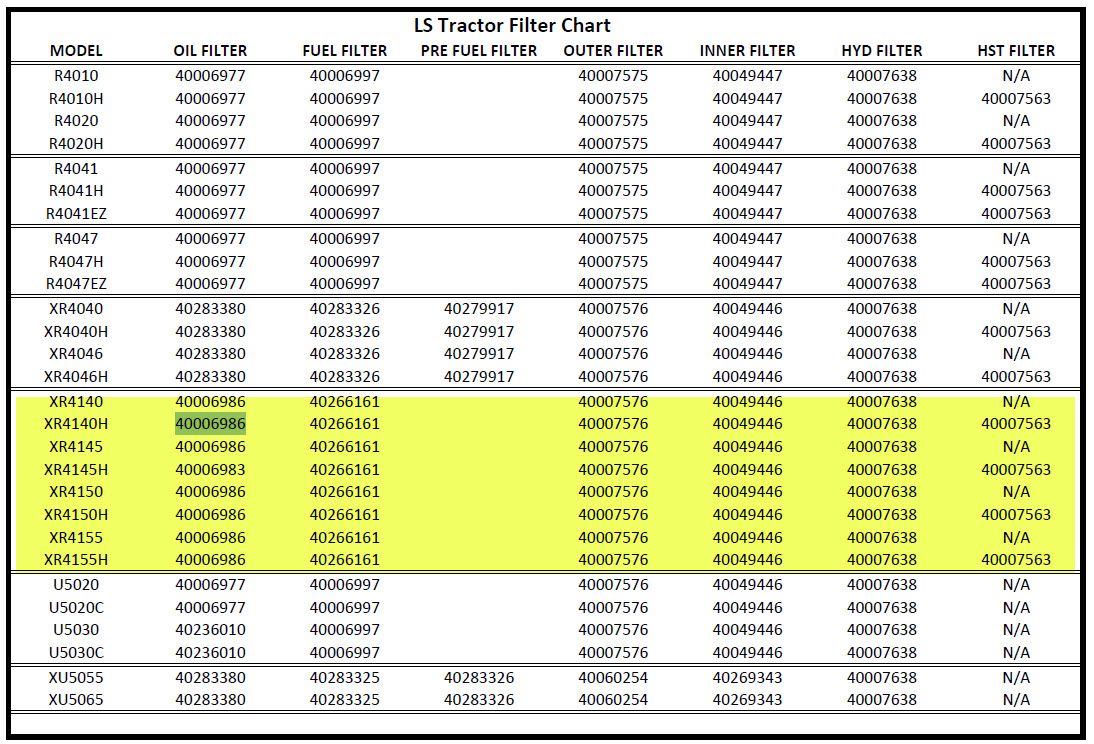
Understanding the intricacies of maintaining your Kubota equipment, especially when it comes to oil changes, is paramount for longevity and optimal performance. One of the most frequently encountered challenges is finding the correct oil filter, especially when you're looking for alternatives or dealing with unavailable OEM (Original Equipment Manufacturer) parts. This is where a Kubota Oil Filter Cross Reference Chart becomes an invaluable tool. This article delves into the details of these charts, helping you navigate the options and make informed decisions.
Why Use an Oil Filter Cross Reference Chart?
The primary reason to utilize a cross reference chart is to identify suitable replacement oil filters from different manufacturers for your Kubota engine. There are several scenarios where this is beneficial:
- OEM Filter Unavailability: Sometimes, obtaining the original Kubota filter can be difficult due to supply chain issues or regional limitations.
- Cost Savings: Aftermarket filters can sometimes offer a more budget-friendly option without compromising quality, although careful research is crucial.
- Performance Upgrades: Some aftermarket filters boast enhanced filtration capabilities, which might be desirable for specific applications or operating conditions. These often use synthetic media for better filtration efficiency and capacity.
- Convenience: Local auto parts stores might carry a wider selection of aftermarket brands than OEM Kubota filters.
However, it's crucial to understand that not all cross-referenced filters are created equal. Blindly substituting without considering the specifications can lead to serious engine damage. Always prioritize matching critical parameters.
Understanding the Critical Parameters
A good cross reference chart doesn't just list alternatives; it also implies a matching of critical specifications. Here's what you need to scrutinize:
Thread Size and Pitch
This is arguably the most crucial parameter. The thread size and pitch must match the filter adapter on your Kubota engine. Mismatched threads can lead to cross-threading, leaks, and even catastrophic engine failure. The thread size is usually expressed as a diameter in millimeters (e.g., M20) followed by the thread pitch (e.g., 1.5). Common sizes for Kubota include M20x1.5, 3/4-16 UNF, and M16x1.5.
How to Check: While a thread gauge is ideal, you can often find this information in your Kubota's service manual or online parts catalogs. Some online retailers include this information on their cross-reference tool results pages.
Outside Diameter (OD) and Height
The physical dimensions of the filter are important to ensure it fits within the available space and doesn't interfere with other components. A larger filter *might* offer increased filtration capacity, but only if it physically fits without obstruction. A too-small filter, on the other hand, could negatively affect oil pressure or lead to premature clogging.
How to Check: Measure the dimensions of your current filter (or consult its specifications) and compare them to the dimensions of the cross-referenced filter.
Gasket Diameter (Inner and Outer)
The gasket provides a seal between the filter and the engine block. The inner and outer diameters of the gasket must match the filter mounting surface. If the gasket is too small, it won't seal properly, leading to oil leaks. If it's too large, it might not seat correctly and could also cause leaks.
How to Check: Compare the gasket specifications listed for both filters.
By-Pass Valve Pressure
The by-pass valve is a crucial safety feature. When the filter becomes clogged, this valve opens, allowing unfiltered oil to flow through the engine to prevent oil starvation. This is a critical component for the life of your engine. The by-pass valve pressure (measured in PSI) determines at what pressure difference the valve will open. A significantly different by-pass valve pressure could lead to either unfiltered oil circulating prematurely or, conversely, insufficient oil flow during a clog.
How to Check: Finding the by-pass valve pressure for aftermarket filters can sometimes be challenging. Consult the manufacturer's specifications or technical data sheets if available. If the exact value isn't listed, a close approximation is generally acceptable.
Filtration Efficiency (Micron Rating)
The micron rating indicates the size of particles that the filter can effectively remove. A lower micron rating means the filter can capture smaller particles, providing better filtration. However, a very low micron rating can also lead to increased flow restriction, especially as the filter ages. Typical oil filters have a nominal micron rating between 20 and 40 microns. Look for filters with a good balance between filtration efficiency and flow rate. Some filters are rated in "nominal" and "absolute" terms. Nominal rating means the filter removes a certain percentage (e.g. 50%) of particles of that size. Absolute means it removes nearly all (e.g. 99%) of the particles of that size.
How to Check: Check the manufacturer's specifications for the filter's micron rating.
Flow Rate
The flow rate is the amount of oil that can pass through the filter per unit of time. A filter with a low flow rate can restrict oil flow, potentially starving the engine of lubrication at high RPMs. Ensure the cross-referenced filter has a flow rate that is equal to or greater than the OEM filter's specification.
How to Check: Flow rate information can often be difficult to find but may be available on the manufacturer's website or technical data sheets. If the OEM specification is unavailable, prioritize matching the other parameters meticulously.
Using a Kubota Oil Filter Cross Reference Chart Effectively
Here’s a step-by-step guide to using a cross reference chart:
- Identify Your Kubota Part Number: Start by finding the OEM oil filter part number for your specific Kubota engine. This is usually found in your owner's manual or parts catalog.
- Locate a Reliable Cross Reference Chart: Many online resources and auto parts stores provide cross reference charts. Some manufacturers, such as Wix, Fram, and Purolator, also offer their own cross reference tools on their websites. Always use multiple sources to verify the accuracy of the cross reference.
- Compare Specifications: Once you have a potential cross-referenced filter, meticulously compare all the critical parameters (thread size, dimensions, gasket diameters, by-pass valve pressure, micron rating, and flow rate) to the OEM filter specifications. Prioritize matching thread size and gasket dimensions.
- Read Reviews and Research: Look for online reviews and research the reputation of the aftermarket filter manufacturer. User feedback can provide valuable insights into the filter's performance and reliability.
- Consult a Professional: If you are unsure about any aspect of the cross reference, consult a qualified mechanic or Kubota dealer. They can provide expert advice and ensure you select a suitable replacement filter.
Caveats and Considerations
Never compromise on quality. While cost savings might be tempting, using a substandard oil filter can lead to costly engine repairs in the long run.
- Beware of Generic Claims: Be wary of filters that claim to fit a wide range of applications without specific details. A truly universal filter is unlikely to meet the precise requirements of your Kubota engine.
- Check for Counterfeits: Counterfeit oil filters are a real concern. Purchase filters from reputable suppliers to avoid purchasing a fake filter that could damage your engine.
- Regular Oil Changes are Still Critical: Even with the best oil filter, regular oil changes are essential for maintaining engine health. Follow the recommended oil change intervals specified in your Kubota's owner's manual.
By understanding the intricacies of oil filter cross reference charts and carefully considering the critical parameters, you can confidently select a suitable replacement filter for your Kubota equipment, ensuring its continued performance and longevity. Remember that prevention is always better than cure, so prioritize quality and accuracy when making your choice.