
Location Of Cam Position Sensor
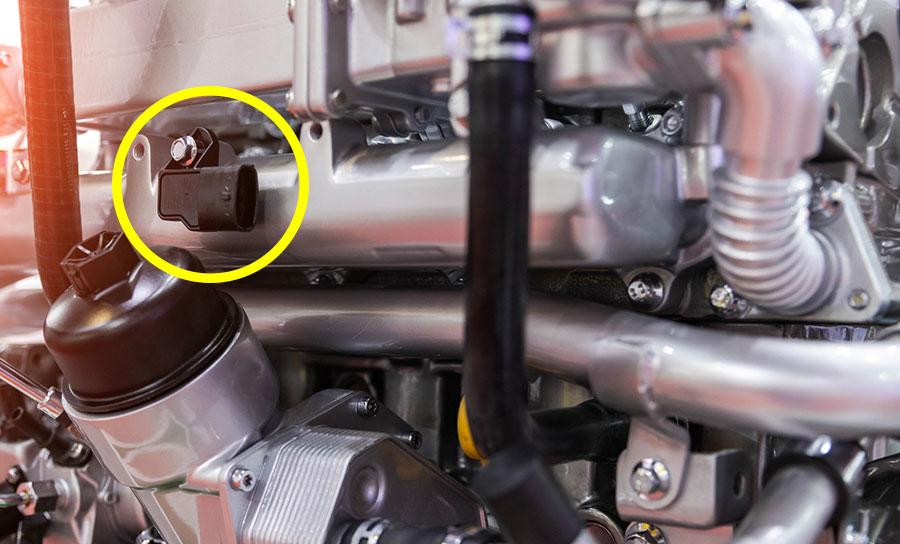
The camshaft position sensor (CPS), sometimes called a cam sensor, is a crucial component in your vehicle's engine management system. Its primary function is to monitor the position and speed of the camshaft, relaying this information to the engine control unit (ECU). The ECU then uses this data, in conjunction with information from other sensors like the crankshaft position sensor, to precisely control fuel injection and ignition timing. A faulty cam position sensor can lead to various performance issues, including difficulty starting, poor fuel economy, and even complete engine failure. Understanding the location of your cam position sensor is the first step in diagnosing and addressing these problems.
Why Finding the Cam Position Sensor Location Matters
Knowing where your CPS is located is essential for several reasons:
- Troubleshooting Engine Problems: If your car is experiencing engine misfires, stalling, or difficulty starting, locating the CPS allows you to inspect it for damage, loose connections, or corrosion.
- DIY Repair and Replacement: While some automotive repairs are best left to professionals, replacing a cam position sensor is often a relatively straightforward task that many DIY enthusiasts can handle.
- Preventative Maintenance: Knowing the location allows for occasional inspection of the sensor and its wiring, potentially catching problems before they escalate into major issues.
- Understanding Diagnostic Codes: If your check engine light is on, the diagnostic code may point to a problem with the CPS. Knowing where it is helps you understand the code's implications.
General Locations of Cam Position Sensors
The location of the cam position sensor can vary depending on the make, model, and year of your vehicle, as well as the engine type. However, there are some common locations where you're likely to find it:
Front of the Engine
Many vehicles, especially older models, have the CPS located at the front of the engine, near the timing cover. It is often mounted on the cylinder head, near the camshaft pulley or sprocket. In these setups, the sensor usually reads a tone ring or notched wheel attached to the camshaft pulley.
Look for a sensor with wires leading to it, usually held in place by a bolt or two.
Rear of the Engine
In some vehicles, particularly those with transversely mounted engines (where the engine is positioned sideways), the CPS may be located at the rear of the engine, also near the timing cover. This is less common than the front location but still a possibility.
Inside the Distributor (Older Vehicles)
For older vehicles with a distributor ignition system, the CPS may be integrated within the distributor itself. In this case, you won't find a separate, externally mounted sensor. The distributor houses a rotating shaft connected to the camshaft, and the CPS inside detects its position.
If you have a distributor, the CPS functionality is often intertwined with the distributor's internal components.
Under the Valve Cover
Some newer engines, particularly those with overhead camshafts (OHC) or double overhead camshafts (DOHC), may have the CPS located under the valve cover. This placement keeps the sensor protected from the elements and allows for a more compact engine design. This is often near the end of the camshaft.
Near the Intake Manifold
In some instances, especially with specific engine configurations, the sensor can be found near the intake manifold. This is generally closer to where the camshaft is located to get an accurate reading.
How to Find the Exact Location of Your Cam Position Sensor
While the above information provides general guidance, finding the exact location of your cam position sensor requires a more specific approach:
- Consult Your Vehicle's Repair Manual: This is the most reliable method. A repair manual (either physical or online) specific to your vehicle will provide detailed diagrams and instructions for locating various components, including the CPS. Look for diagrams illustrating the engine and its components.
- Use Online Resources: Many automotive websites and forums offer detailed information and diagrams for specific vehicle models. Search for your vehicle's year, make, model, and engine type, along with the term "camshaft position sensor location." You may find forum posts with photos or videos demonstrating the location.
- Visual Inspection: Carefully examine the areas mentioned above (front, rear, distributor, under the valve cover) for a sensor with wires connected to it. The sensor will typically be cylindrical or rectangular in shape and mounted near the camshaft. Look for wiring leading directly from the sensor to the main wiring harness.
- Check Diagnostic Codes: If your check engine light is on, use an OBD-II scanner to retrieve the diagnostic codes. A code related to the CPS will often include information about which bank the sensor is located on (e.g., "Bank 1 Camshaft Position Sensor"). This narrows down the search area, especially in engines with multiple camshafts. Common codes include P0340, P0341, P0342, P0343.
- Ask a Mechanic: If you're unsure or uncomfortable locating the CPS yourself, consult a qualified mechanic. They have the expertise and resources to quickly identify the sensor's location and diagnose any related problems.
What Does a Cam Position Sensor Look Like?
The appearance of a cam position sensor can vary slightly depending on the manufacturer and vehicle model, but here are some general characteristics:
- Shape: Typically cylindrical or rectangular.
- Size: Usually a few inches in length.
- Material: Often made of plastic or metal.
- Connections: Will have a connector with two or three wires leading to it.
- Mounting: Secured with one or two bolts or screws.
Common Problems Associated with a Faulty Cam Position Sensor
A failing cam position sensor can cause a range of engine problems. Recognizing these symptoms can help you diagnose a potential CPS issue:
- Engine Stalling: The engine may stall unexpectedly, especially at low speeds or when idling.
- Difficulty Starting: The engine may crank for an extended period before starting, or it may not start at all.
- Poor Fuel Economy: The ECU may miscalculate fuel injection timing, leading to reduced fuel efficiency.
- Engine Misfires: One or more cylinders may misfire, resulting in rough idling and reduced power.
- Check Engine Light: The check engine light will often illuminate, accompanied by diagnostic codes related to the CPS.
- Reduced Engine Power: The engine may lack its usual power, especially during acceleration.
- Erratic Idling: The engine may idle roughly or irregularly.
Can You Drive with a Bad Cam Position Sensor?
While it might be possible to drive with a failing cam position sensor, it's generally not recommended. The engine may run poorly, and you risk causing further damage to other engine components. In some cases, the engine may not start at all, leaving you stranded. It's best to address the problem as soon as possible to avoid more serious issues.
If you suspect a faulty CPS, have it diagnosed and replaced promptly.
Replacing the Cam Position Sensor
Replacing the CPS is a task many car owners with some mechanical aptitude can undertake. However, always consult your vehicle’s repair manual for specific instructions. The general process involves:
- Disconnecting the negative battery cable.
- Locating the CPS (using the methods described above).
- Disconnecting the electrical connector from the sensor.
- Removing the bolt or screws holding the sensor in place.
- Carefully removing the old sensor.
- Installing the new sensor, ensuring it is properly aligned.
- Reattaching the electrical connector.
- Reinstalling the bolt or screws.
- Reconnecting the negative battery cable.
- Clearing any diagnostic codes (if necessary).
Important Note: Some vehicles may require you to relearn the crankshaft position after replacing the CPS. Consult your repair manual for details.
Conclusion
The cam position sensor plays a critical role in your engine's performance. Knowing its location and understanding its function can help you diagnose and address engine problems effectively. By using the resources and techniques outlined in this article, you can confidently locate your CPS and take the necessary steps to keep your engine running smoothly. Remember to always consult your vehicle's repair manual for specific instructions and seek professional assistance if you're unsure about any aspect of the process. Early detection and proactive maintenance are key to preventing major engine problems and ensuring the longevity of your vehicle.