
Location Of Fuel Pump Relay
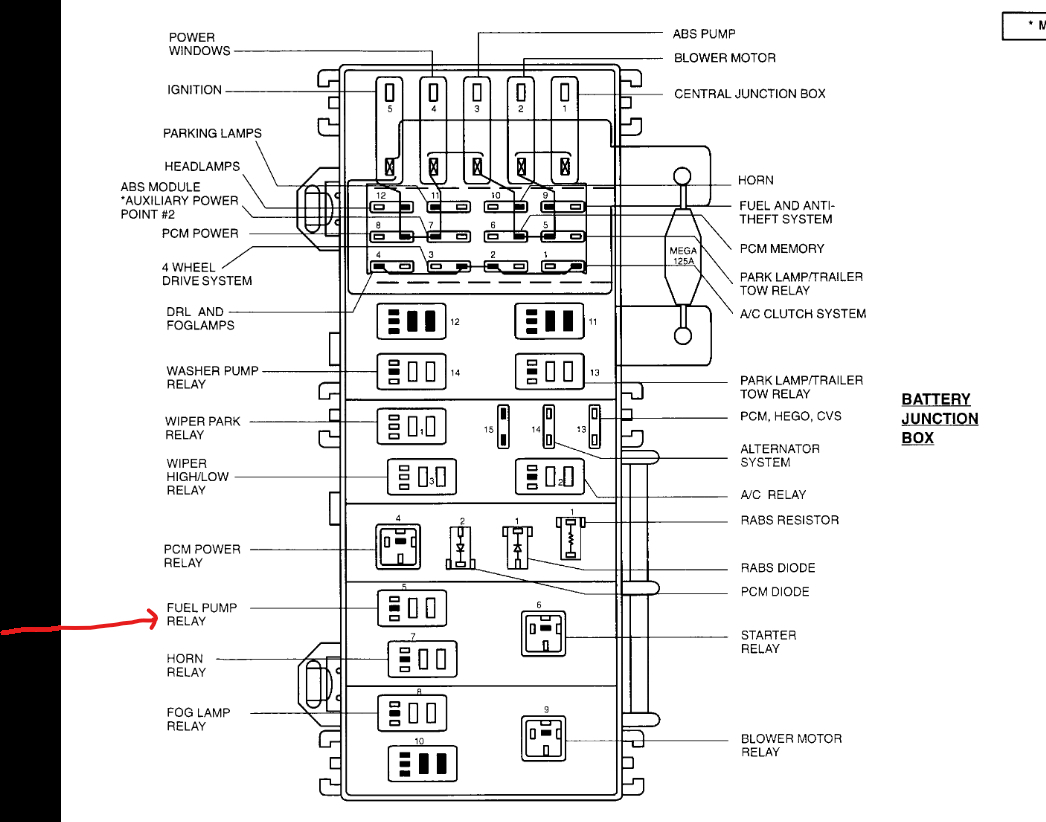
The fuel pump relay, a seemingly simple component, plays a critical role in the operation of a modern internal combustion engine (ICE). Its primary function is to provide a controlled and reliable electrical path to the fuel pump, enabling it to deliver fuel from the tank to the engine. Understanding its location, technical aspects, and the engineering choices behind its implementation is crucial for automotive professionals.
Location and Identification
The location of the fuel pump relay is not standardized across different vehicle manufacturers. However, there are common areas where you are likely to find it. Typically, it resides within one of the following:
- Under-hood Fuse Box: This is perhaps the most common location. The relay will be housed in a fuse box, often near other engine management relays. A diagram on the fuse box cover usually identifies each relay.
- Interior Fuse Box: Some manufacturers place the fuel pump relay in a fuse box located inside the passenger compartment, often under the dashboard or in the glove compartment.
- Central Junction Box (CJB): Many modern vehicles utilize a central junction box, which integrates various electrical functions, including relay control. The fuel pump relay might be located within this integrated unit.
- Dedicated Relay Center: In some older vehicles or vehicles with more complex electrical systems, a separate relay center may exist, housing multiple relays, including the fuel pump relay.
Regardless of the location, the fuel pump relay is typically a standard 4 or 5-pin automotive relay. It can often be identified by its markings, such as "Fuel Pump Relay" or a specific circuit designation relating to the fuel pump. Consult the vehicle's service manual for the definitive location and identification.
Technical Specifications and Engineering Choices
The fuel pump relay is essentially an electromagnetic switch. It consists of a coil of wire wrapped around a ferrous core, an armature, and a set of contacts. When a small control current is applied to the coil (typically from the engine control unit (ECU)), it creates a magnetic field. This magnetic field pulls the armature, which closes the contacts, completing the circuit to the fuel pump.
Technical Specifications:
- Voltage Rating: Typically 12V DC (for standard automotive applications).
- Current Rating: Varies depending on the fuel pump's current draw, but commonly ranges from 15A to 30A.
- Contact Configuration: SPST (Single Pole Single Throw) or SPDT (Single Pole Double Throw). SPST is the most common for fuel pump relays.
- Coil Resistance: Varies, but is typically in the range of 70-120 ohms.
Engineering Choices:
The decision to use a relay instead of directly powering the fuel pump from the ECU is driven by several factors:
- Current Amplification: The ECU operates on low-current signals. Directly switching the fuel pump's high current draw would require much larger and more expensive components within the ECU. The relay acts as a current amplifier, allowing the ECU to control a high-current circuit with a low-current signal.
- Isolation: The relay provides electrical isolation between the ECU and the fuel pump circuit. This protects the ECU from voltage spikes or faults that may occur in the fuel pump circuit.
- Safety: The relay can be incorporated into safety circuits, such as those that cut off fuel supply in the event of a collision. This is often achieved by the ECU de-energizing the relay, shutting off the fuel pump.
- Reliability: While relays are electromechanical devices and subject to wear, they are generally reliable and easy to replace. The cost of replacing a relay is significantly less than replacing a damaged ECU.
Alternatives and Comparison
While relays are the dominant technology for fuel pump control, alternative solutions exist, albeit less commonly:
- Solid-State Relays (SSRs): SSRs use semiconductor devices (e.g., transistors, thyristors) to switch the circuit.
Pros: Faster switching speed, longer lifespan (no moving parts), silent operation, more resistant to vibration.
Cons: Higher cost, potential for higher voltage drop across the switching element, more susceptible to damage from overvoltage or overcurrent.
- Direct ECU Control (with MOSFETs): Using high-current MOSFETs within the ECU to directly switch the fuel pump.
Pros: Eliminates the need for a separate relay, potentially reducing wiring complexity.
Cons: Requires more robust and expensive components within the ECU, increased heat dissipation within the ECU, reduced electrical isolation, increased risk of ECU damage in the event of a fuel pump fault.
Relays are preferred due to their cost-effectiveness, reliability, and simplicity. The advantages of SSRs and direct ECU control are often outweighed by their disadvantages, especially considering the relatively low switching frequency required for fuel pump operation. The fuel pump does not need to be switched on and off rapidly, so a relay's slower response time is acceptable. As a result, electromechanical relays remain the standard engineering choice.
Real-World Performance and Reliability
In real-world applications, fuel pump relays are generally reliable. However, they are subject to wear and tear, primarily due to the mechanical movement of the armature and the repeated making and breaking of electrical contacts. This can lead to:
- Contact pitting: Arcing during switching can cause pitting on the contact surfaces, increasing resistance and reducing current flow.
- Coil failure: The coil can become damaged due to overheating or corrosion, leading to a short circuit or open circuit.
- Mechanical wear: The armature and spring can wear out over time, leading to erratic operation or failure to engage.
A failing fuel pump relay can manifest in various symptoms, including:
- Engine starting problems: The engine may crank but fail to start due to lack of fuel.
- Engine stalling: The engine may stall intermittently, especially under load.
- Fuel pump not running: The fuel pump may not run at all, even when the ignition is turned on.
- Erratic fuel pump operation: The fuel pump may run intermittently or at reduced speed.
Maintenance Tips
Regular maintenance can help to extend the lifespan of the fuel pump relay:
- Visual Inspection: Periodically inspect the relay for signs of damage, such as cracks, corrosion, or burnt contacts.
- Relay Testing: Use a multimeter to test the relay's coil resistance and contact continuity. You can also apply voltage to the coil and check for contact closure.
- Relay Replacement: Replace the relay if it shows signs of wear or is suspected of being faulty. A faulty relay can lead to drivability problems or even damage the fuel pump.
- Socket Inspection and Cleaning: Inspect the relay socket for corrosion and clean the contacts with a suitable electrical contact cleaner. Ensure the relay fits snugly into the socket.
It's also prudent to periodically check the condition of the wiring harness and connectors associated with the fuel pump relay circuit. Loose or corroded connections can cause voltage drops and erratic fuel pump operation.
Future Trends
The automotive industry is rapidly evolving, with increased electrification and the adoption of advanced driver-assistance systems (ADAS). These trends are likely to impact the design and implementation of fuel pump control systems.
- Shift to Solid-State Relays: As the cost of SSRs decreases and their performance improves, they may become a more viable alternative to electromechanical relays, particularly in hybrid and electric vehicles that still require fuel pumps for range extenders or emergency generators.
- Integration into Power Distribution Modules: Fuel pump relays are likely to be integrated into more sophisticated power distribution modules (PDMs), which offer advanced features such as fault detection, diagnostics, and remote control.
- Advanced Diagnostics: Future vehicles will likely incorporate more advanced diagnostic capabilities that can detect subtle changes in fuel pump relay performance, allowing for proactive maintenance and preventing potential failures.
- Software-Defined Relays: The concept of software-defined relays, where the functionality of the relay can be reconfigured through software, may emerge. This would allow for greater flexibility and adaptability in fuel pump control systems.
The increasing complexity of automotive electrical systems necessitates a deeper understanding of components like the fuel pump relay. Automotive professionals must stay abreast of the latest technologies and diagnostic techniques to effectively service and maintain these systems.
As the automotive industry transitions towards electric vehicles, the role of traditional fuel pumps will diminish. However, for the foreseeable future, ICE vehicles will continue to be a significant part of the vehicle parc, and understanding the intricacies of their fuel systems, including the fuel pump relay, will remain a critical skill for automotive technicians.