
Location Of The Camshaft Position Sensor
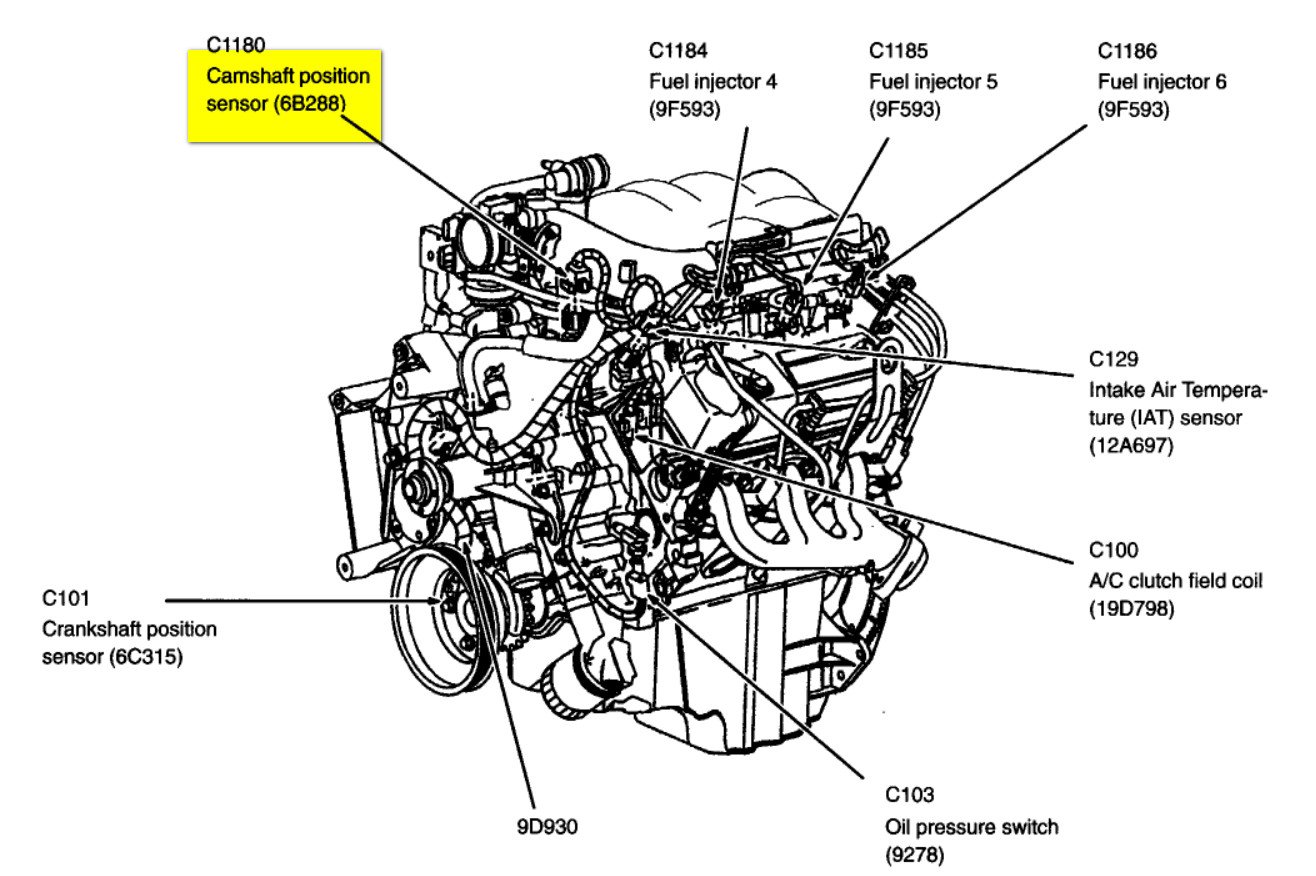
The camshaft position sensor (CPS) is a vital component in modern internal combustion engines. It plays a crucial role in engine timing and overall performance. Understanding its location and function can be invaluable for car enthusiasts, owners, and hobby mechanics.
What is a Camshaft Position Sensor (CPS)?
Before diving into location, let's understand what the CPS does. Essentially, it monitors the position of the camshaft(s) and sends this information to the engine control unit (ECU), the car's "brain." The ECU uses this data, along with input from other sensors like the crankshaft position sensor, to determine the precise timing for fuel injection and ignition. This ensures optimal combustion and engine efficiency.
Think of it like this: the crankshaft position sensor tells the ECU the engine's overall speed and position, while the CPS provides specific information about the camshaft's orientation. This combined information allows the ECU to orchestrate the complex dance of valves opening and closing, fuel being injected, and spark plugs firing at precisely the right moment.
Where is the CPS Located?
The location of the CPS can vary depending on the engine design, manufacturer, and vehicle model. However, there are a few common locations to look for:
Front of the Engine:
One of the most frequent spots is at the front of the engine, often near the timing cover. The timing cover is usually a large metal or plastic cover that protects the timing belt or chain. The CPS will be mounted so that it can 'see' a reluctor wheel or target on the camshaft. This reluctor wheel has notches or teeth that pass by the sensor as the camshaft rotates, creating a signal that the sensor sends to the ECU.
Example: Many Honda and Toyota engines have the CPS located near the front of the engine, often accessible by removing a few bolts and potentially some surrounding components like air intake hoses.
Cylinder Head:
Another common location is on the cylinder head, particularly on engines with overhead camshafts (OHC) or double overhead camshafts (DOHC). In these configurations, the camshaft(s) are located within the cylinder head. The sensor will be positioned to read the camshaft's position directly.
Example: BMW's inline-six engines often have the CPS mounted on the cylinder head, typically near the front or rear of the head. This allows for a direct reading of the camshaft's rotation.
Distributor (Older Vehicles):
In older vehicles equipped with a distributor, the CPS may be integrated into the distributor assembly. The distributor is responsible for distributing high-voltage electricity to the spark plugs, and the CPS within it helps synchronize the ignition timing.
Example: Classic Ford Mustangs or Chevy trucks with distributors would typically have the CPS (or a similar sensor) incorporated into the distributor body.
Inside the Engine (Less Common):
In some newer or more complex engine designs, the CPS may be located inside the engine, requiring removal of components like the valve cover to access it. This is less common but can occur in certain high-performance or tightly packaged engine bays.
Example: Some high-performance Audi engines, with complex valve timing systems, might have a CPS that requires a more involved disassembly process to reach.
Identifying the CPS
The CPS is typically a small, cylindrical or rectangular sensor with a connector for wiring. It's usually mounted with one or two bolts. The sensor body is often made of plastic or metal. The connector will have two or three wires leading into it.
Visually, the CPS often looks similar to other sensors like the crankshaft position sensor (CKP), but they are usually located in different areas. To be sure, consult your vehicle's repair manual or online resources specific to your car's make and model.
Why is Location Important?
Knowing the location of the CPS is crucial for several reasons:
- Troubleshooting: If your car is experiencing issues like rough idling, stalling, poor acceleration, or a check engine light related to the camshaft position sensor, you'll need to locate the sensor to diagnose the problem.
- Replacement: If the CPS fails, you'll need to replace it. Knowing its location allows you to access and remove the old sensor and install a new one.
- Maintenance: While the CPS typically doesn't require routine maintenance, being aware of its location can help you inspect it for damage or corrosion during other maintenance tasks.
Symptoms of a Failing CPS
A failing CPS can cause a variety of engine problems, including:
- Check Engine Light: This is the most common symptom. The ECU detects an issue with the CPS signal and illuminates the check engine light. Diagnostic trouble codes (DTCs) like P0340, P0341, P0342, P0343 are often associated with CPS problems.
- Rough Idling: The engine may idle unevenly or roughly due to incorrect timing.
- Stalling: The engine may stall unexpectedly, especially at low speeds or when idling.
- Poor Acceleration: The engine may lack power or accelerate sluggishly.
- Starting Problems: The engine may be difficult to start or fail to start at all.
- Reduced Fuel Economy: Incorrect timing can lead to inefficient combustion and reduced fuel economy.
Tools and Resources
To locate and potentially replace the CPS, you'll typically need the following:
- Vehicle Repair Manual: This is your best resource for finding the exact location of the CPS for your specific vehicle.
- Basic Hand Tools: Wrenches, sockets, screwdrivers, and pliers are usually required.
- OBD-II Scanner: To read diagnostic trouble codes (DTCs) and confirm the CPS is the source of the problem.
- Multimeter: To test the CPS for proper voltage and resistance.
- Safety Glasses and Gloves: To protect your eyes and hands.
Practical Takeaways
Here's how you can apply this knowledge:
- Consult Your Vehicle's Repair Manual: Always start with the repair manual specific to your car's make, model, and year. This will provide the most accurate information about the CPS location.
- Visually Inspect the Common Locations: Check the front of the engine near the timing cover and on the cylinder head. Look for a sensor with a wiring connector.
- Use an OBD-II Scanner: If you suspect a CPS issue, use an OBD-II scanner to read diagnostic trouble codes. This can help pinpoint the problem.
- Consider Professional Help: If you're not comfortable working on your car, take it to a qualified mechanic. They have the expertise and tools to diagnose and repair CPS issues correctly.
By understanding the function and location of the camshaft position sensor, you'll be better equipped to troubleshoot engine problems, perform basic maintenance, and communicate effectively with mechanics. Remember to always prioritize safety and consult reliable resources before attempting any automotive repairs.