
Nissan 350z Camshaft Position Sensor
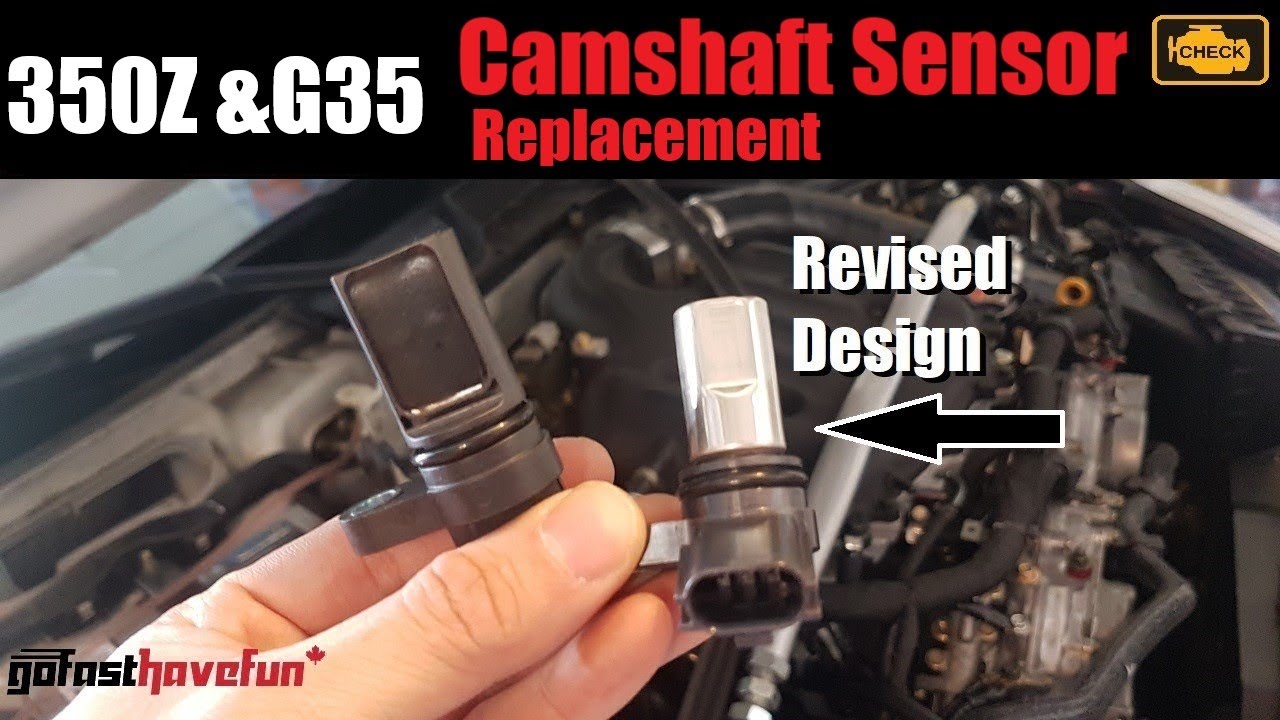
The Nissan 350Z, a sports car celebrated for its performance and iconic design, relies on a network of sensors to ensure optimal engine operation. Among these crucial components, the Camshaft Position Sensor (CMP Sensor) plays a vital role. This article delves into the intricacies of the 350Z's CMP sensor, covering its function, common failure symptoms, diagnostic procedures, replacement tips, and considerations for performance modifications.
Understanding the Camshaft Position Sensor in the 350Z
The CMP sensor's primary function is to monitor the position of the camshaft(s). In the 350Z's VQ35DE and VQ35HR engines, equipped with variable valve timing (VVT), precise camshaft timing is essential for efficient combustion and optimal power delivery. The sensor sends a signal to the engine control unit (ECU), providing information about the camshaft's rotational position. This data is critical for the ECU to accurately control fuel injection timing, ignition timing, and VVT operation. Without a properly functioning CMP sensor, the engine's performance and efficiency suffer significantly.
The 350Z typically uses two CMP sensors, one for each cylinder bank (Bank 1 and Bank 2), ensuring accurate monitoring of both camshafts. These sensors are usually of the Hall-effect type. A Hall-effect sensor detects changes in a magnetic field. As the camshaft rotates, a toothed wheel or reluctor ring attached to the camshaft passes by the sensor. This creates a fluctuation in the magnetic field, which the sensor detects and converts into an electrical signal. The ECU interprets this signal to determine the camshaft's position.
Common Symptoms of a Failing CMP Sensor
A failing CMP sensor can manifest in several ways, impacting the 350Z's performance and drivability. Recognizing these symptoms early can help prevent further engine damage. Here are some telltale signs:
- Check Engine Light (CEL): This is the most common indicator. The ECU will typically store diagnostic trouble codes (DTCs) related to camshaft position, such as P0340 (Camshaft Position Sensor Circuit Malfunction - Bank 1) or P0345 (Camshaft Position Sensor Circuit Malfunction - Bank 2).
- Rough Idling: A faulty CMP sensor can disrupt the engine's timing, leading to an unstable and rough idle. The engine may surge or stall intermittently.
- Difficulty Starting: The ECU relies on the CMP sensor signal to initiate the fuel injection and ignition sequences during startup. A failing sensor can prevent the engine from starting or cause extended cranking.
- Loss of Power: Incorrect camshaft timing can significantly reduce engine power, especially during acceleration. The 350Z may feel sluggish or unresponsive.
- Stalling: In severe cases, a failing CMP sensor can cause the engine to stall unexpectedly, particularly at low speeds or during deceleration.
- Poor Fuel Economy: Inaccurate camshaft timing can lead to inefficient combustion, resulting in decreased fuel economy.
Diagnosing a 350Z CMP Sensor Issue
Diagnosing a CMP sensor problem requires a systematic approach. Here's a step-by-step guide:
- Retrieve Diagnostic Trouble Codes (DTCs): Use an OBD-II scanner to read the DTCs stored in the ECU. Note down all relevant codes, including those related to the CMP sensor.
- Visually Inspect the Sensor and Wiring: Check the CMP sensor and its wiring harness for any signs of damage, such as cracks, frayed wires, or corrosion. Ensure the connector is securely attached to the sensor.
- Check the Sensor's Power Supply and Ground: Use a multimeter to verify that the sensor is receiving the correct voltage (typically 5V) and has a good ground connection. Refer to the 350Z's service manual for the specific wiring diagram and voltage requirements.
- Test the Sensor's Output Signal: Using an oscilloscope or a multimeter set to frequency measurement, monitor the sensor's output signal while the engine is running. The signal should be a square wave with a frequency that varies with engine speed. A distorted or absent signal indicates a faulty sensor.
- Inspect the Reluctor Ring: In some cases, the reluctor ring attached to the camshaft can become damaged or misaligned. Inspect the reluctor ring for any signs of damage or wear.
- Consider a Wiring Harness Issue: Problems within the wiring harness leading to the ECU can mimic a failing CMP sensor. Check the harness continuity using a multimeter.
Important Note: Always consult the 350Z's service manual for specific diagnostic procedures and wiring diagrams. The information provided here is a general guide.
Replacing the CMP Sensor on a 350Z
Replacing a faulty CMP sensor is a relatively straightforward task that can be performed by a DIY mechanic with basic tools and mechanical knowledge. Here's a general guide:
- Gather Tools and Materials: You'll need a new CMP sensor (ensure it's the correct part for your 350Z model and engine), a socket set, a wrench, a screwdriver, and potentially a multimeter.
- Disconnect the Negative Battery Terminal: This is a crucial safety precaution to prevent electrical shocks.
- Locate the CMP Sensor: The CMP sensors are typically located near the front of the engine, on the cylinder heads, near the camshaft sprockets. Refer to your 350Z's service manual for the exact location.
- Disconnect the Electrical Connector: Carefully disconnect the electrical connector from the sensor.
- Remove the Old Sensor: Use a socket or wrench to remove the bolt or screws securing the sensor to the engine. Gently pull the sensor out of its bore.
- Install the New Sensor: Apply a small amount of dielectric grease to the sensor's connector to prevent corrosion. Install the new sensor into the bore and secure it with the bolt or screws. Tighten to the manufacturer's specified torque.
- Reconnect the Electrical Connector: Reconnect the electrical connector to the sensor.
- Reconnect the Negative Battery Terminal: Reconnect the negative battery terminal.
- Clear Diagnostic Trouble Codes: Use an OBD-II scanner to clear any DTCs related to the CMP sensor.
- Test the Engine: Start the engine and allow it to idle for a few minutes. Check for any signs of rough idling, stalling, or loss of power. Use the OBD-II scanner to confirm that no new DTCs have been set.
Important Considerations:
- Use Quality Parts: Always use a high-quality CMP sensor from a reputable manufacturer. Avoid using cheap aftermarket sensors, as they may not meet OEM specifications and can lead to premature failure.
- Proper Torque: Ensure you tighten the sensor's mounting bolts to the manufacturer's specified torque. Overtightening can damage the sensor or the engine block.
CMP Sensors and Performance Modifications
When modifying a 350Z for performance, such as installing aftermarket camshafts or upgrading the ECU, the CMP sensors' role becomes even more critical. Upgraded camshafts often have different lobe profiles, requiring more precise camshaft timing. In these cases, it's essential to ensure the CMP sensors are functioning correctly and providing accurate data to the ECU.
Some aftermarket ECUs allow for fine-tuning of camshaft timing based on CMP sensor feedback. This allows tuners to optimize the engine's performance for specific driving conditions. However, it's crucial to ensure the CMP sensors are capable of handling the increased demands and providing accurate readings at higher RPMs. In some cases, upgrading to higher-quality or more robust CMP sensors may be necessary.
Variable Valve Timing (VVT) modifications often rely heavily on accurate CMP sensor data. If the sensors are not functioning correctly, the VVT system may not operate as intended, leading to reduced performance or even engine damage.
Conclusion
The Camshaft Position Sensor is a vital component in the Nissan 350Z's engine management system. Understanding its function, recognizing the symptoms of failure, and performing proper diagnostic and replacement procedures are crucial for maintaining the 350Z's performance and reliability. Whether you're a seasoned mechanic or a passionate 350Z owner, this knowledge empowers you to address CMP sensor issues effectively and keep your Z running smoothly.