
Nissan Titan Reliability By Year
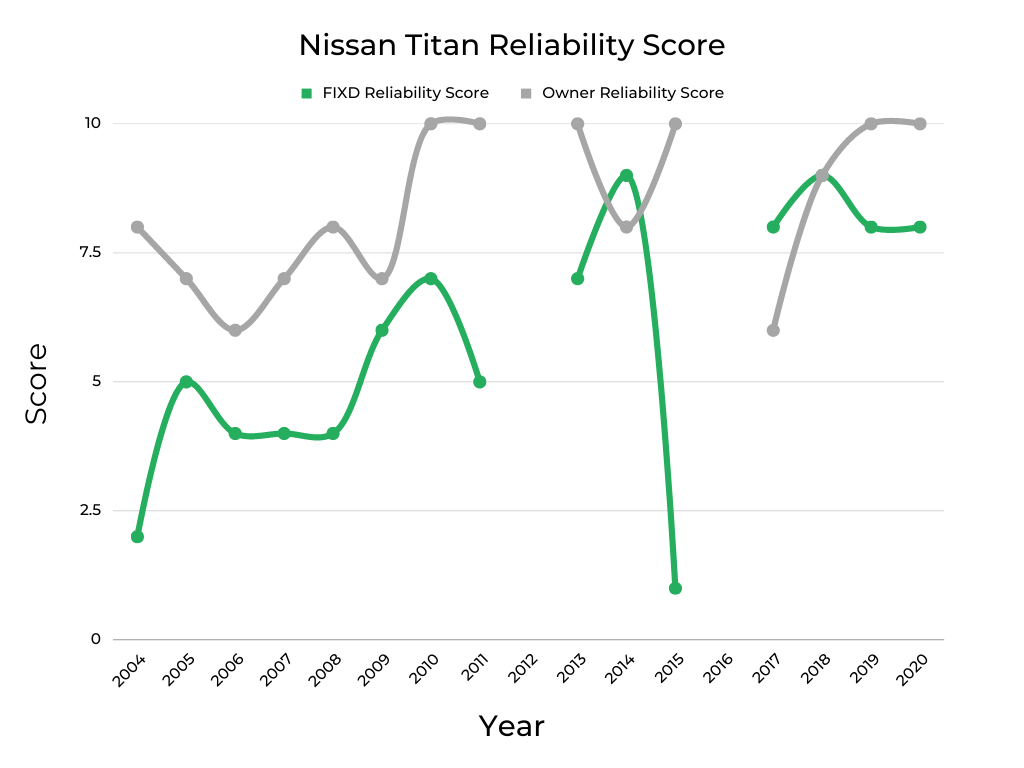
The Nissan Titan, introduced in 2003 as a direct competitor to the established American full-size trucks, has always been a subject of debate regarding its reliability. Unlike the Toyota Tundra, which built a reputation for near-bulletproof reliability, the Titan's journey has been more nuanced. This guide provides an in-depth look at the Nissan Titan's reliability, dissecting its strengths, weaknesses, and common problems by model year.
First Generation (2004-2015): A Rocky Start, Gradual Improvement
The initial years of the Titan were marked by several noteworthy issues. While the 5.6L VK56DE V8 engine, a relatively advanced design for its time, proved to be generally robust, several problems impacted overall reliability. Early models (2004-2007) were particularly susceptible to certain failures.
2004-2007: The "Growing Pains" Years
These early Titans suffered from a laundry list of problems. One of the most prevalent was rear axle seal failure. This issue would cause gear oil to leak onto the rear brake shoes, leading to reduced braking performance and, in severe cases, complete brake failure. The design of the axle vent was prone to clogging, increasing internal pressure and forcing oil past the seals. Nissan issued a technical service bulletin (TSB) addressing this, but not all trucks received the necessary fix.
Another common complaint was exhaust manifold cracking. The cast iron manifolds were prone to thermal stress, particularly in colder climates or under heavy towing conditions. A cracked manifold results in exhaust leaks, reduced engine performance, and increased noise. While some owners opted for aftermarket headers, the factory manifold design remained a weakness.
Furthermore, these early models experienced issues with the transfer case, particularly in 4x4 models. Problems ranged from chain stretch to complete failure, often attributed to inadequate lubrication or excessive strain during off-road use. Symptoms included popping noises, difficulty shifting between 2WD and 4WD, and complete loss of drive in 4WD.
Beyond these major concerns, other problems included:
- Fuel sending unit failure: Resulting in inaccurate fuel gauge readings.
- Brake booster failure: Leading to hard brake pedal and reduced stopping power.
- Instrument cluster issues: Including flickering or non-functional gauges.
- Body rust: Particularly in areas exposed to road salt.
It's crucial to note that not all 2004-2007 Titans were afflicted by all of these issues. However, the sheer number of potential problems significantly impacted their overall reliability ratings.
2008-2015: Refining the Formula
As Nissan gained experience with the Titan, they addressed many of the initial reliability concerns. While not completely problem-free, the 2008-2015 models generally exhibited improved reliability compared to their predecessors. Significant changes and design revisions reduced the frequency of certain failures.
The rear axle seal issue was largely resolved through improved vent design and better sealing materials. While not entirely eliminated, the occurrence rate significantly decreased.
Similarly, the exhaust manifold design was tweaked, though not completely overhauled. This resulted in a reduced, but not eliminated, incidence of cracking. Some owners continued to experience this issue, particularly those who regularly towed heavy loads or lived in harsh climates.
However, some new problems emerged. One notable issue was timing chain tensioner failure. The tensioners, responsible for maintaining proper timing chain tension, could fail prematurely, leading to engine noise, reduced performance, and, in severe cases, engine damage. This issue was more prevalent in higher-mileage vehicles.
Other problems observed in these years include:
- Radiator failure: Leading to coolant leaks and potential engine overheating.
- Automatic transmission issues: Including harsh shifting and torque converter problems, particularly in the 5-speed automatic.
- Wheel speed sensor failure: Affecting ABS and traction control systems.
Despite these issues, the 2008-2015 Titans were generally considered more reliable than the earlier models. Nissan had learned from its mistakes and implemented improvements that addressed many of the initial shortcomings. Regular maintenance, including timely fluid changes and inspections, remained crucial for maximizing reliability.
Second Generation (2016-Present): A Modern Truck, New Challenges
The second-generation Titan, introduced in 2016, represented a significant overhaul. A completely new design, updated technology, and a revised engine (the VK56VD) aimed to elevate the Titan's standing in the full-size truck market. The Titan XD, with its Cummins diesel option, added another layer of complexity to the reliability equation.
2016-2019: Initial Reports and Emerging Trends
Early reports on the second-generation Titan suggested improved reliability over the first generation. However, as these trucks accumulated mileage, certain trends began to emerge. The VK56VD engine, while offering increased power and efficiency, had its own set of potential issues.
One notable concern was direct injection carbon buildup. The VK56VD utilizes direct injection, which, while improving fuel economy and performance, can lead to carbon deposits on the intake valves. This can result in reduced performance, rough idling, and potential engine damage. Regular maintenance, including fuel system cleaning and the use of high-quality fuel, is essential to mitigate this issue.
The automatic transmission (initially a 7-speed, later a 9-speed) also experienced some issues. Some owners reported harsh shifting, delayed engagement, and torque converter problems. While not as widespread as some of the issues in the first-generation Titan, these transmission problems were a cause for concern.
Other reported problems include:
- Electronic issues: Including infotainment system glitches and sensor failures.
- Water pump failure: Leading to coolant leaks and potential engine overheating.
- Differential issues: Including noise and premature wear.
The Titan XD, with its Cummins diesel engine, presented its own unique set of challenges. While the Cummins engine itself is generally regarded as durable, the supporting systems, such as the diesel exhaust fluid (DEF) system, could be problematic. Issues with the DEF system could result in reduced engine power and diagnostic trouble codes.
2020-Present: Refinements and Long-Term Reliability
Nissan has continued to refine the Titan, addressing some of the initial concerns and introducing new features. The 2020 model year saw the introduction of a new 9-speed automatic transmission, which aimed to improve performance and efficiency. It's still too early to definitively assess the long-term reliability of these newer models, but initial reports suggest some improvements.
One area to watch closely is the long-term durability of the 9-speed automatic transmission. As these trucks accumulate mileage, it will be important to monitor for any recurring issues.
Overall, the second-generation Titan appears to be more reliable than the first, but it's not without its potential weaknesses. The direct injection carbon buildup and transmission issues are areas that warrant close attention. Regular maintenance and proactive care are crucial for maximizing the longevity and reliability of these trucks.
Conclusion
The Nissan Titan's reliability has been a mixed bag. The first generation started with numerous issues, which were gradually addressed over time. The second generation represents a significant improvement, but it still has potential weaknesses to be aware of. The Titan XD, with its diesel engine, adds another layer of complexity.
Ultimately, the reliability of any vehicle depends on several factors, including build quality, design, maintenance, and usage. Prospective Titan buyers should thoroughly research the specific model year they are considering, paying close attention to common problems and owner reviews. A pre-purchase inspection by a qualified mechanic is always recommended to identify any potential issues before making a purchase.