
Pressure Washer For Foam Cannon
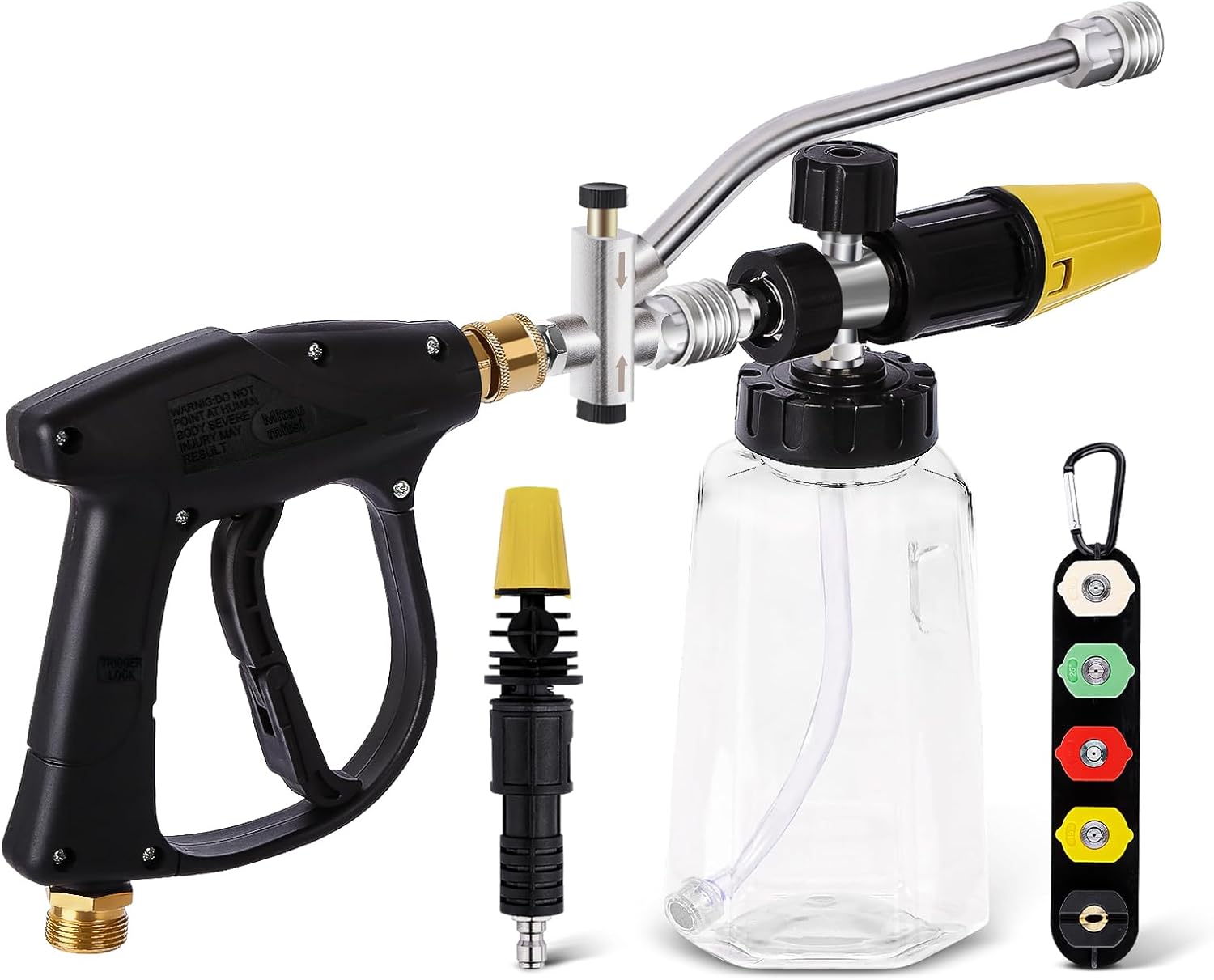
For any car enthusiast, a pristine, gleaming finish is the ultimate goal. Forget those automated car washes that leave swirl marks and missed spots – the true aficionado takes detailing into their own hands. And at the heart of a proper DIY detail setup? A pressure washer coupled with a foam cannon. But with a sea of options available, navigating the world of pressure washers can feel like deciphering hieroglyphics. Fear not, fellow gearheads! We’re diving deep into the pressure washer market to find the perfect match for your foam cannon and, more importantly, your beloved ride.
Electric vs. Gas: The Power Struggle
The first major fork in the road is the choice between electric and gas-powered pressure washers. Both have their strengths and weaknesses, and the "best" option truly depends on your specific needs and circumstances.
Electric Pressure Washers: Silent but Deadly (Clean)
Electric pressure washers are generally lighter, quieter, and require less maintenance than their gas-powered counterparts. They're also more environmentally friendly, emitting no exhaust fumes. However, they typically offer lower PSI (pounds per square inch) and GPM (gallons per minute) than gas models, which translates to less cleaning power. They also require access to a power outlet, limiting their portability.
Spec Table: Electric Pressure Washer Comparison
| Model | PSI | GPM | Motor (Amps) | Price (Approx.) |
|---|---|---|---|---|
| Sun Joe SPX3001 | 2030 | 1.76 | 14.5 | $150 |
| Greenworks Pro 2300 PSI | 2300 | 2.3 | 13 | $250 |
| Ryobi RY142300 | 2300 | 1.2 | 13 | $200 |
Pros of Electric Pressure Washers:
- Quieter operation – your neighbors will thank you.
- Lower maintenance – no oil changes or carburetor cleaning required.
- Lighter and more portable (within reach of an outlet).
- Environmentally friendly.
- Easier to start – just plug it in and go!
Cons of Electric Pressure Washers:
- Lower PSI and GPM compared to gas models.
- Limited by power cord length and outlet availability.
- May struggle with heavily soiled surfaces.
Gas Pressure Washers: Unleashing the Fury
Gas pressure washers pack a serious punch, offering significantly higher PSI and GPM than electric models. This makes them ideal for tackling tough cleaning jobs like removing stubborn dirt, grime, and even paint. They're also completely portable, as they don't rely on a power outlet. The downside? Gas pressure washers are louder, heavier, require more maintenance, and produce exhaust fumes.
Spec Table: Gas Pressure Washer Comparison
| Model | PSI | GPM | Engine (CC) | Price (Approx.) |
|---|---|---|---|---|
| Simpson MegaShot MS60763 | 3100 | 2.4 | 160 | $350 |
| Generac 7122 SpeedWash | 3200 | 2.7 | 196 | $450 |
| Briggs & Stratton PowerFlow+ | 3000 | 2.4 | 190 | $400 |
Pros of Gas Pressure Washers:
- Higher PSI and GPM for superior cleaning power.
- Completely portable – no power outlet needed.
- Ideal for tackling heavily soiled surfaces and large areas.
Cons of Gas Pressure Washers:
- Louder operation.
- Higher maintenance requirements (oil changes, spark plugs, etc.).
- Heavier and less maneuverable.
- Produces exhaust fumes.
- More difficult to start (pull cord).
The Foam Cannon Connection: PSI and GPM Sweet Spots
Now, let's talk about the crucial link between your pressure washer and your foam cannon. Not all pressure washers are created equal when it comes to foam cannon performance. The key is finding the right balance of PSI and GPM.
Too little PSI, and your foam cannon will produce a weak, watery foam. Too much PSI, and you risk damaging your car's paint. Similarly, insufficient GPM will result in poor foam coverage, while excessive GPM can waste water and soap.
For optimal foam cannon performance, aim for a pressure washer with a PSI between 1600 and 2800 and a GPM between 1.5 and 2.5. This range provides the ideal pressure and flow rate to create thick, clinging foam that effectively lifts dirt and grime from your car's surface.
Consider the type of foam cannon you'll be using. Some high-end foam cannons can perform well even with slightly lower PSI, while others require a higher flow rate to achieve their full potential. Read the manufacturer's recommendations for your specific foam cannon to ensure compatibility with your pressure washer.
Real-World Detailing: Our Impressions
We put several pressure washers to the test, pairing them with a popular foam cannon to evaluate their performance in a real-world detailing scenario. Here's what we found:
Sun Joe SPX3001 (Electric): This electric pressure washer proved to be a great entry-level option. While it didn't have the raw power of the gas models, it produced surprisingly good foam with the foam cannon. The foam was thick and clung well to the car's surface, effectively lifting dirt and grime. The quiet operation was a definite plus, and the lightweight design made it easy to maneuver around the car. However, it struggled with heavily soiled areas, requiring multiple passes.
Simpson MegaShot MS60763 (Gas): The MegaShot MS60763 delivered impressive cleaning power. The high PSI blasted away even the most stubborn dirt and grime, and the foam cannon produced incredibly thick, luxurious foam. The completely portable design allowed us to wash the car anywhere, without worrying about a power outlet. However, the loud engine noise was a drawback, and the heavier weight made it slightly less maneuverable than the electric models. Starting the engine also required a bit of effort.
Greenworks Pro 2300 PSI (Electric): The Greenworks Pro offered a nice balance between power and convenience. It delivered a respectable PSI and GPM, producing good foam with the foam cannon. It also featured a longer hose than the Sun Joe, providing more freedom of movement. While it wasn't as powerful as the gas model, it was more than capable of handling most car washing tasks.
The Verdict: Finding Your Perfect Wash Partner
So, which pressure washer is right for you? If you're looking for a convenient, eco-friendly, and quiet option for light to medium-duty car washing, an electric pressure washer is a great choice. The Sun Joe SPX3001 and Greenworks Pro 2300 PSI are both excellent contenders. However, if you need maximum cleaning power and portability for tackling heavily soiled surfaces and large areas, a gas pressure washer like the Simpson MegaShot MS60763 is the way to go.
Ultimately, the best pressure washer for your foam cannon is the one that meets your specific needs and budget. Consider your cleaning requirements, space constraints, and noise sensitivity when making your decision. Don't be afraid to experiment with different pressure washer settings and foam cannon adjustments to find the sweet spot for creating the perfect foam and achieving a flawless, showroom-worthy finish.
No matter which way you lean, remember that proper detailing techniques, quality soaps, and a bit of elbow grease are just as important as the equipment you use. Happy washing!
Now, for the fun part: Debate time! Which is better: a dedicated pressure washer soap or a DIY concoction? Sound off in the comments below and let the detailing wars begin!