
Signs Of A Bad Crankshaft Position Sensor
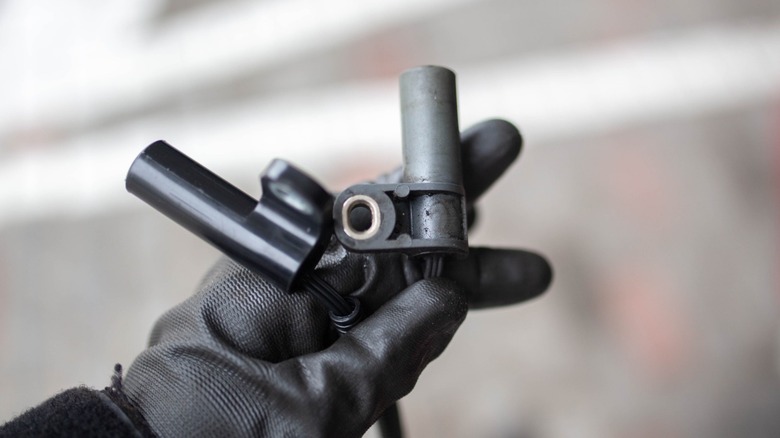
The Crankshaft Position Sensor (CKP), often working in tandem with the Camshaft Position Sensor (CMP), is a critical component in your vehicle's engine management system. It monitors the position and rotational speed of the crankshaft, providing essential data to the Engine Control Unit (ECU) for precise ignition timing and fuel injection. A faulty CKP can lead to a cascade of performance issues, ranging from mild annoyances to complete engine failure. Recognizing the signs of a failing sensor early can save you significant time and money.
Common Symptoms of a Failing Crankshaft Position Sensor
The symptoms of a failing CKP can be subtle at first, gradually worsening over time. Here's a breakdown of the most common indicators:
-
Engine Stalling: This is perhaps the most prevalent and concerning symptom. As the CKP degrades, its ability to accurately report crankshaft position diminishes. This can cause the engine to stall intermittently, especially when idling or coming to a stop. The stalls may occur randomly, making diagnosis challenging.
-
Hard Starting or No Start Condition: The ECU relies on the CKP signal to determine when to fire the spark plugs and inject fuel. A weak or absent signal can result in difficulty starting the engine, or even a complete no-start condition. You might experience prolonged cranking without the engine catching.
-
Check Engine Light (CEL): A failing CKP will almost always trigger the Check Engine Light. The ECU detects the discrepancy between the expected crankshaft position and the actual signal, logging a diagnostic trouble code (DTC). Common codes associated with CKP issues include P0335 (Crankshaft Position Sensor A Circuit Malfunction), P0336 (Crankshaft Position Sensor A Circuit Range/Performance), and related codes. Use an OBD-II scanner to retrieve the stored codes.
-
Engine Misfires: An inaccurate CKP signal can disrupt the timing of the ignition and fuel injection, leading to engine misfires. Misfires can cause rough idling, reduced power, and increased emissions. You may feel vibrations or jerking during acceleration.
-
Reduced Engine Performance: A failing CKP can cause a noticeable decrease in engine power and acceleration. The ECU may enter a "limp mode" to protect the engine, limiting its performance capabilities.
-
Poor Fuel Economy: Inefficient combustion caused by misfires and inaccurate timing can lead to a decrease in fuel economy. You may notice that you are filling up your tank more frequently than usual.
-
Erratic Tachometer Readings: The tachometer, which displays the engine's RPM, relies on the CKP signal. A faulty sensor can cause the tachometer needle to fluctuate erratically or display incorrect readings.
Diagnosing a Faulty Crankshaft Position Sensor
While the symptoms listed above are indicative of a potential CKP problem, further diagnosis is crucial to confirm the issue. Here's a breakdown of common diagnostic procedures:
-
OBD-II Scan: Use an OBD-II scanner to retrieve any stored DTCs. Note the specific codes and research their meaning in relation to your vehicle's make and model.
-
Visual Inspection: Carefully inspect the CKP and its wiring harness for any signs of damage, such as frayed wires, corrosion, or loose connections. Ensure the sensor is properly seated and secured.
-
Resistance Test: Use a multimeter to measure the resistance of the CKP. Compare the readings to the manufacturer's specifications. An out-of-range resistance value indicates a faulty sensor.
-
Voltage Test: With the ignition on and the engine not running, use a multimeter to check the voltage at the CKP connector. Again, compare the readings to the manufacturer's specifications.
-
Oscilloscope Testing: For a more advanced diagnosis, use an oscilloscope to analyze the CKP signal waveform. This allows you to visualize the signal pattern and identify any irregularities or dropouts.
Potential Causes of CKP Failure
Several factors can contribute to the failure of a CKP:
-
Age and Wear: Like any mechanical component, CKPs are subject to wear and tear over time. The sensor's internal components can degrade, leading to inaccurate readings or complete failure.
-
Heat: The CKP is often located near the engine, exposing it to high temperatures. Excessive heat can damage the sensor's electronics and shorten its lifespan.
-
Vibration: Engine vibrations can cause the CKP and its wiring harness to loosen or become damaged.
-
Contamination: Exposure to oil, coolant, or other fluids can contaminate the CKP and interfere with its operation.
-
Electrical Issues: Problems with the vehicle's electrical system, such as voltage spikes or shorts, can damage the CKP.
Replacement and Considerations
If you've confirmed that the CKP is faulty, replacement is typically the best course of action. When replacing the CKP, be sure to use a high-quality replacement part from a reputable manufacturer. Follow the manufacturer's instructions carefully during installation. In some cases, the new CKP may require programming or relearning by the ECU. If you're not comfortable performing the replacement yourself, it's best to take your vehicle to a qualified mechanic. Remember, a properly functioning Crankshaft Position Sensor is essential for optimal engine performance and reliability.