
Torque Specs For Brake Caliper Bolts
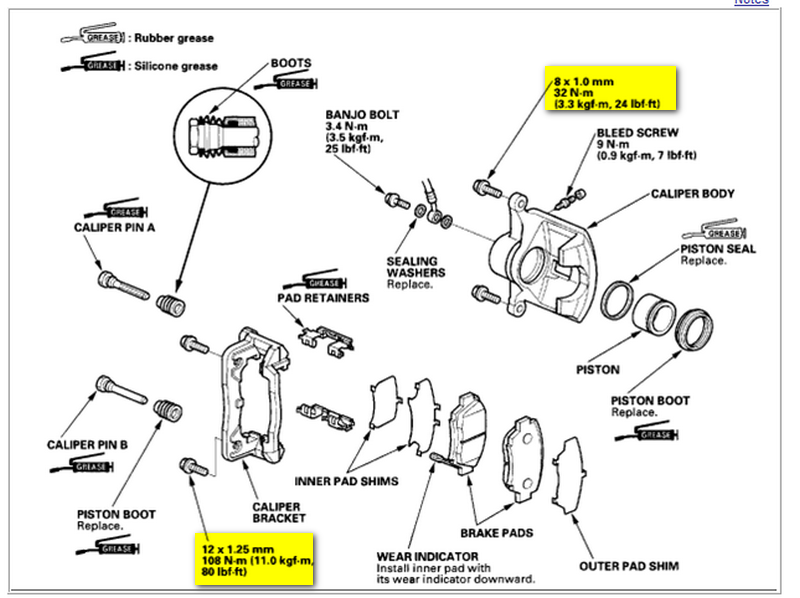
The humble brake caliper bolt: often overlooked, yet absolutely critical to the safe and effective operation of your vehicle's braking system. While swapping brake pads might seem like a straightforward DIY project, neglecting the proper torque specifications for these seemingly insignificant fasteners can have dire consequences. This guide delves into the importance of torque specs for brake caliper bolts, exploring the underlying physics, the potential ramifications of improper torque, and providing best practices for achieving accurate and safe installations.
Why Torque Matters: A Foundation in Physics
Torque, in its simplest form, is a rotational force. Applying torque to a bolt stretches it, creating a clamping force that holds two or more components together. The specified torque value is carefully calculated by engineers to achieve the optimal balance between clamping force and the risk of bolt failure. Too little torque, and the clamping force is insufficient, leading to movement and potential loosening of the bolt. Too much torque, and the bolt can stretch beyond its elastic limit, permanently deforming or even fracturing it. This principle is crucial to understanding why "tightening until it feels right" is a dangerous practice when it comes to brake components.
Several factors contribute to the complexity of determining the correct torque spec:
- Bolt Size and Material: Larger diameter bolts made from stronger materials will generally require higher torque values. The grade of the bolt (often indicated by markings on the bolt head) dictates its tensile strength and yield strength, both crucial considerations in torque calculations.
- Thread Pitch: Finer thread pitches require higher torque values to achieve the same clamping force as coarser threads.
- Friction: Friction between the bolt head, the washer (if applicable), and the mating surface, as well as friction within the threads themselves, significantly impacts the relationship between applied torque and achieved clamping force. Lubrication, or the lack thereof, dramatically alters this friction.
- Material Compatibility: The materials of the caliper bracket, caliper, and bolts themselves play a role. Dissimilar metals can be prone to corrosion, which can further affect friction and clamping force over time.
Because of these interwoven factors, manufacturers conduct rigorous testing and calculations to determine the precise torque specification for each specific application. These values are not arbitrary; they are the result of careful engineering designed to ensure both safety and performance.
Consequences of Incorrect Torque: A Cascade of Problems
The implications of under- or over-torquing brake caliper bolts extend far beyond a simple nuisance. The braking system is a critical safety system, and even minor deviations from the recommended torque can trigger a chain reaction of problems:
Under-Torquing: The Loosening Threat
Insufficient torque leads to insufficient clamping force. This allows the caliper to move slightly during braking, creating several issues:
- Caliper Rattle and Noise: Loose calipers can rattle and clunk, particularly over bumps, signaling a problem and potentially distracting the driver.
- Uneven Brake Pad Wear: Movement of the caliper can cause uneven pressure distribution on the brake pads, leading to premature wear on one side of the rotor or pad.
- Reduced Braking Performance: Inconsistent clamping force reduces overall braking efficiency, increasing stopping distances.
- Bolt Loosening and Failure: Vibration and repeated stress cycles can cause under-torqued bolts to loosen further, eventually leading to complete failure. This could result in the caliper detaching entirely, causing catastrophic brake failure.
Over-Torquing: The Breakage Risk
Applying excessive torque can be equally dangerous, leading to:
- Bolt Stretching and Yielding: Over-tightening stretches the bolt beyond its elastic limit, permanently deforming it. This weakens the bolt and reduces its ability to maintain clamping force.
- Thread Stripping: Excessive torque can strip the threads in the caliper bracket or caliper, rendering the fastener useless. Repairing stripped threads can be costly and time-consuming.
- Bolt Head Fracture: In extreme cases, over-torquing can cause the bolt head to snap off entirely, leaving the broken shank embedded in the component. Removing a broken bolt can be extremely difficult.
- Caliper Distortion: While less common, excessive torque can distort the caliper housing itself, affecting its ability to properly hold the brake pads and operate smoothly.
Both under- and over-torquing compromise the integrity of the braking system and increase the risk of accidents. Preventing these scenarios requires a commitment to precision and the proper tools.
Best Practices for Torqueing Brake Caliper Bolts: Precision is Key
Achieving accurate torque requires a combination of the right tools, the right technique, and a thorough understanding of the procedure. Here's a breakdown of best practices:
1. Consult the Vehicle's Service Manual: The Definitive Source
Always refer to the vehicle's service manual or a reputable repair database for the specific torque specifications for your vehicle's brake caliper bolts. These values can vary significantly between makes, models, and even model years. Online forums can be helpful, but should never be considered a substitute for the official documentation.
2. Invest in a Quality Torque Wrench: The Essential Tool
A torque wrench is a specialized tool designed to measure and control the amount of torque applied to a fastener. There are two main types:
- Click-Type Torque Wrench: This type has an adjustable scale and clicks when the desired torque is reached. They are generally more affordable and easier to use.
- Beam-Type Torque Wrench: This type uses a pointer that moves along a scale to indicate the applied torque. They are generally considered more accurate, but can be more difficult to read.
Regardless of the type, choose a torque wrench that covers the range of torque values required for your vehicle. Invest in a quality wrench from a reputable manufacturer and calibrate it regularly to ensure accuracy. A cheap, inaccurate torque wrench is worse than no torque wrench at all.
3. Prepare the Threads: Cleaning and Lubrication
Clean the bolt threads and the threads in the caliper bracket with a wire brush to remove any dirt, rust, or debris. This ensures accurate torque readings by minimizing friction. The service manual will specify whether the bolts should be lubricated or installed dry. Generally, bolts with a pre-applied thread locker should be installed dry. If lubrication is specified, use the recommended type of lubricant, typically a small amount of anti-seize compound or a specific brake grease.
4. Apply the Torque Correctly: Smooth and Steady
When applying torque, use a smooth, steady motion. Avoid jerking or applying excessive force. If using a click-type torque wrench, listen for the distinct "click" to indicate that the desired torque has been reached. Avoid over-torquing after the click. If using a beam-type torque wrench, carefully monitor the pointer and stop applying force when the desired torque is indicated. It’s best practice to tighten the bolts in a star pattern to evenly distribute the clamping force. This involves tightening each bolt a little at a time, alternating between bolts across the caliper bracket.
5. Double-Check Your Work: Verification is Vital
After torqueing all the bolts, it's a good practice to double-check your work. Use the torque wrench to verify that each bolt is properly torqued. If you suspect that a bolt has been over-torqued, replace it with a new one. It's cheap insurance against a potential failure.
6. Regularly Inspect the Brake System: Proactive Maintenance
Even with proper installation, brake caliper bolts can loosen over time due to vibration and thermal cycling. Regularly inspect the braking system for any signs of looseness, such as caliper rattle or uneven brake pad wear. If you notice any problems, address them immediately.
Conclusion: Torque Specs – Small Numbers, Big Impact
While brake caliper bolts might seem like insignificant components, their proper installation is crucial for the safety and performance of your vehicle's braking system. By understanding the physics behind torque, recognizing the potential consequences of improper torque, and following best practices for installation, you can ensure that your brakes function reliably and safely. Remember, torque specs are not suggestions; they are precise engineering specifications that should be followed meticulously. Paying attention to these small details can make a big difference in your safety and the longevity of your vehicle.