
Torque Specs For Intake Manifold
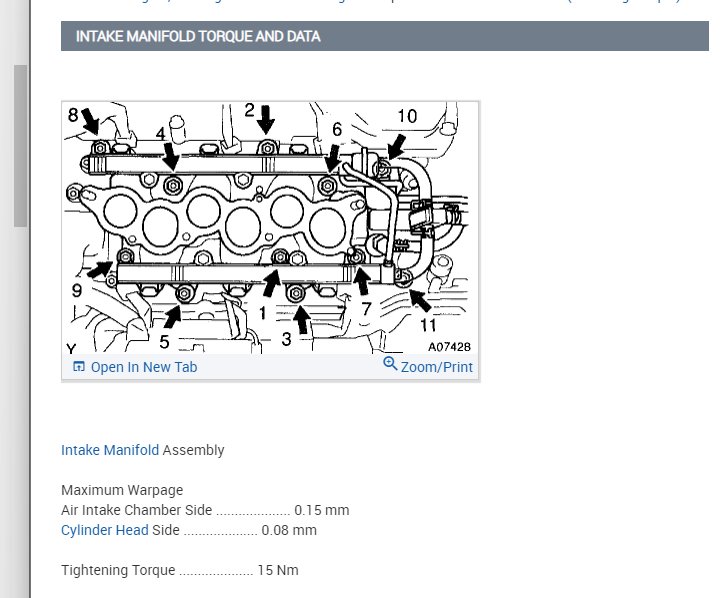
So, you're tackling an intake manifold job? Excellent! Whether you're replacing a leaky gasket, upgrading for performance, or simply doing some maintenance, understanding intake manifold torque specs is absolutely crucial. Getting it wrong can lead to vacuum leaks, engine damage, or a seriously frustrating re-do. This article will walk you through the ins and outs of intake manifold torque specifications, helping you get the job done right.
Why Torque Specs Matter
Before we dive into the numbers, let's understand why following torque specifications is so vital. The intake manifold's primary function is to distribute the air/fuel mixture (or just air in direct injection engines) evenly to each cylinder. To achieve this, it needs to form a perfect seal against the cylinder head. Uneven or incorrect torque on the manifold bolts or studs can compromise this seal, leading to:
- Vacuum Leaks: These are the most common consequence. A vacuum leak allows unmetered air to enter the engine. This throws off the air/fuel ratio, causing rough idling, poor performance, hesitation, and potentially a lean-running condition that can damage the engine.
- Coolant Leaks: Some intake manifolds incorporate coolant passages. Improper torque can crush the gasket or distort the manifold, causing coolant leaks into the engine or externally.
- Oil Leaks: Similar to coolant leaks, oil passages can also be affected.
- Manifold Cracking or Warping: Over-tightening bolts can actually warp or even crack the intake manifold, especially on aluminum or plastic manifolds. This is a costly mistake.
- Thread Damage: Stripping the threads in the cylinder head is a nightmare. This often requires expensive repairs, like thread inserts (e.g., Helicoil) or even head replacement.
- Uneven Cylinder Performance: If the seal isn't uniform across all cylinders, some cylinders will receive more air/fuel than others, leading to inconsistent combustion and reduced power.
In short, precise torque is essential for proper sealing and preventing damage.
Understanding Torque Units
Torque is a measure of rotational force. The most common units you'll encounter are:
- Foot-Pounds (ft-lbs): This is probably the most familiar unit for those in the US. It represents the force of one pound applied at the end of a lever one foot long.
- Inch-Pounds (in-lbs): Used for smaller fasteners or more precise applications. One foot-pound is equal to 12 inch-pounds.
- Newton-Meters (Nm): The standard unit in the metric system. You'll often see this in European and Japanese car repair manuals. To convert ft-lbs to Nm, multiply by 1.356. To convert Nm to ft-lbs, multiply by 0.7376.
Always double-check the units specified in your repair manual and ensure your torque wrench is set to the correct unit. Mixing them up can lead to disastrous results!
Finding the Correct Torque Specs
The most important piece of advice: always refer to the manufacturer's service manual or a reputable online database for the specific torque specs for your vehicle's engine. Do not guess! Torque specifications vary widely depending on engine type, manifold material, bolt size, and gasket type.
Here's where you can typically find the information:
- Factory Service Manual (FSM): This is the gold standard. It provides detailed information, including torque specs, tightening sequences, and illustrations.
- Online Repair Databases: Services like AlldataDIY, Mitchell OnDemand, and others offer access to manufacturer-specific repair information for a subscription fee.
- Reputable Automotive Forums: Experienced mechanics and enthusiasts often share information on forums. However, always verify the information against a reliable source.
- Aftermarket Parts Manufacturers: Sometimes, if you are installing an aftermarket intake manifold, the manufacturer will provide torque specifications different than OEM. Follow their instructions in this case.
When searching, be sure to specify the exact year, make, model, and engine of your vehicle. A slight difference in engine configuration can mean a different torque spec.
Torqueing Procedure: The Steps to Success
Once you have the correct torque specs, follow these steps for a proper installation:
- Cleanliness is Key: Ensure the mating surfaces of the cylinder head and intake manifold are clean and free of any debris, old gasket material, oil, or coolant. Use a scraper, wire brush (carefully!), and solvent to remove any residue.
- Inspect the Manifold: Check the manifold for any cracks, warps, or damage to the bolt holes. If you find any issues, replace the manifold.
- Install the Gasket: Use a new intake manifold gasket. Follow the manufacturer's instructions for installation. Some gaskets require sealant; others are designed to be installed dry. Pay close attention to the orientation of the gasket.
- Install the Manifold: Carefully position the intake manifold onto the cylinder head, aligning the bolt holes.
- Install the Bolts/Studs: Hand-tighten all the bolts or studs evenly. This ensures the manifold is seated properly before applying torque.
- Follow the Torque Sequence: This is critical. The torque sequence specifies the order in which to tighten the bolts. It's designed to distribute the clamping force evenly across the manifold. The correct sequence is usually provided in the service manual and often resembles a spiral pattern starting from the center and working outwards.
- Torque in Stages: Don't try to reach the final torque spec in one step. Typically, you'll torque the bolts in three stages:
- First Pass: Torque all bolts to about 30-50% of the final torque spec.
- Second Pass: Torque all bolts to about 70-80% of the final torque spec.
- Final Pass: Torque all bolts to the final specified torque spec.
Using a multi-stage approach helps prevent warping and ensures even clamping force.
- Angle Torque (Torque-to-Yield): Some engines use a torque-to-yield (TTY) bolt design. After reaching a specified torque, these bolts are tightened a specific number of degrees. This stretches the bolt to a precise point, creating a very strong clamping force. TTY bolts are typically one-time-use and must be replaced after being loosened. Always follow the manufacturer's instructions for TTY bolts. An angle meter will be required for this step.
- Post-Torque Check (Optional): After a short break-in period (e.g., after the engine has reached operating temperature and cooled down), it's a good idea to re-check the torque on the manifold bolts. Heat cycling can sometimes cause the gasket to compress slightly, requiring a slight adjustment.
Tools of the Trade
Having the right tools makes the job much easier and helps ensure accuracy:
- Torque Wrench: A must-have. Use a quality torque wrench that is properly calibrated. There are two main types:
- Click-Type Torque Wrench: This type clicks when the set torque is reached.
- Beam-Type Torque Wrench: This type has a pointer that indicates the torque on a scale.
Digital torque wrenches are also available, offering high accuracy and features like angle measurement for TTY bolts.
- Socket Set: You'll need sockets that fit the intake manifold bolts/studs. Use sockets designed for torque wrenches, which are typically heavier-duty.
- Torque Angle Meter (for TTY bolts): This is essential if your engine uses torque-to-yield bolts.
- Extension Bars and Universal Joints: These can help you reach bolts in tight spaces.
- Clean Rags and Solvent: For cleaning the mating surfaces.
- Scraper or Gasket Remover: For removing old gasket material.
- Service Manual: Absolutely essential!
Common Mistakes to Avoid
- Using the Wrong Torque Specs: This is the biggest mistake. Always double-check the specs in the service manual.
- Using an Uncalibrated Torque Wrench: Torque wrenches can lose accuracy over time. Have them calibrated periodically.
- Over-Tightening Bolts: This can strip threads, warp the manifold, or even crack it.
- Not Following the Torque Sequence: This can lead to uneven sealing and vacuum leaks.
- Reusing Old Gaskets: Always use a new gasket. Old gaskets are compressed and may not seal properly.
- Ignoring TTY Bolt Instructions: Using TTY bolts incorrectly can cause serious engine damage.
- Using Lubricant on Dry Torque Bolts: Unless specified by the manufacturer, avoid applying lubricant to the bolt threads, as this can alter the torque reading and lead to over-tightening. Some bolts are designed to be installed with threadlocker and some with anti-seize depending on what the service manual calls for.
By understanding the importance of torque specs, following the correct procedures, and using the right tools, you can successfully install your intake manifold and ensure your engine runs smoothly.