
Torque Specs For Lower Ball Joints
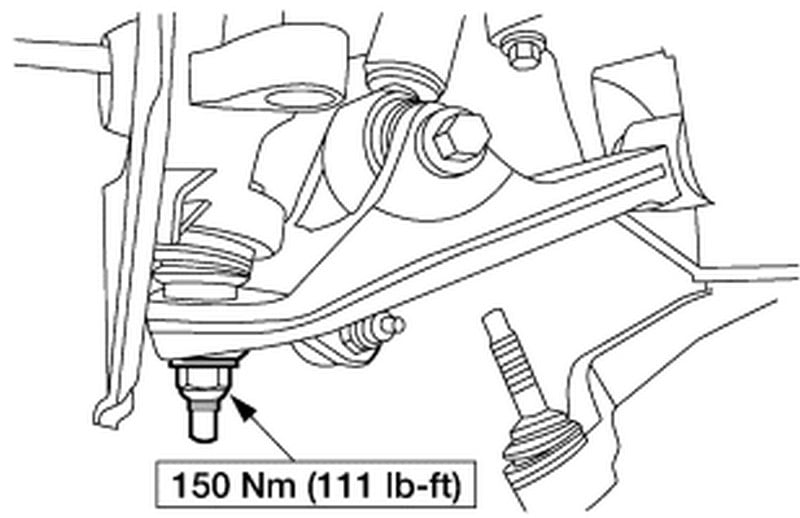
The lower ball joint is a critical component of your vehicle's front suspension, responsible for allowing the wheel to pivot for steering and absorbing bumps for a smooth ride. A properly installed and torqued lower ball joint is essential for vehicle safety and handling. Insufficient torque can lead to joint failure, while excessive torque can damage the joint or surrounding components. This article delves into the crucial aspects of torque specifications for lower ball joints, providing comprehensive information for enthusiasts, DIYers, and professional mechanics alike.
Understanding Lower Ball Joint Torque
Torque, in the context of bolting and fastening, refers to the rotational force applied to tighten a fastener, typically measured in foot-pounds (ft-lbs) or Newton-meters (Nm). The torque specification for a lower ball joint is the precise amount of rotational force required to properly secure it to the control arm and steering knuckle.
Achieving the correct torque is vital for several reasons:
- Ensuring Joint Integrity: Proper torque ensures the ball joint is seated correctly and can withstand the forces exerted upon it during driving.
- Preventing Premature Wear: Under-torquing can cause movement and excessive wear, leading to premature failure of the ball joint and related suspension parts. Over-torquing can stretch or damage the fastener, also compromising its integrity.
- Maintaining Vehicle Handling: Correctly torqued ball joints contribute to proper suspension geometry and alignment, which are critical for safe and predictable handling.
- Avoiding Safety Risks: A loose or failed ball joint can cause loss of steering control, leading to potentially dangerous situations.
Locating Torque Specifications
The most reliable source for lower ball joint torque specifications is the vehicle's repair manual or service information database. These resources provide detailed instructions and torque values specific to the vehicle's make, model, and year. Alternatively, reputable online databases like ALLDATA and Mitchell OnDemand offer access to OEM repair information.
When searching for torque specs, be precise in your search criteria. For example, specify: "2015 Honda Civic lower ball joint torque specification" rather than a generic search.
Beware of generic torque charts or recommendations. While they might offer general guidelines for bolt sizes, they cannot account for the specific design, materials, and application of a lower ball joint. Always prioritize the manufacturer's recommended torque values.
Example: Common Torque Specification Scenarios
To illustrate, here are some hypothetical (and simplified) torque specifications:
Example 1: 2010 Ford F-150 Lower Ball Joint to Control Arm: 85 ft-lbs
Example 2: 2018 Toyota Camry Lower Ball Joint to Steering Knuckle: 70 ft-lbs
Example 3: 2022 Subaru Outback Lower Ball Joint Pinch Bolt: 45 ft-lbs + 90 degrees
Note that some torque specifications involve a torque-angle method (Example 3), where you tighten the fastener to a specific torque value and then rotate it an additional number of degrees. This method ensures proper fastener stretch and clamping force.
Tools Required for Torqueing Lower Ball Joints
Accurate torqueing requires the right tools:
- Torque Wrench: A properly calibrated torque wrench is essential. Choose a torque wrench with a range that encompasses the specified torque value. Common types include click-type, beam-type, and digital torque wrenches. Digital torque wrenches offer the highest accuracy and ease of use.
- Sockets and Wrenches: Use high-quality sockets and wrenches that fit the ball joint fasteners precisely. Avoid using worn or damaged tools, as they can affect torque accuracy.
- Extension Bars: If necessary, use extension bars to reach the fasteners. Keep in mind that extension bars can affect torque readings, so it's crucial to calibrate your torque wrench with the extension bar attached, or use a torque adapter that accounts for the added length.
- Jack and Jack Stands: Safely lift and support the vehicle using a jack and jack stands before working on the suspension. Never work under a vehicle supported only by a jack.
- Penetrating Oil: Apply penetrating oil to corroded fasteners before attempting to loosen them. This can help prevent damage and make removal easier.
Step-by-Step Torqueing Procedure
Follow these steps to properly torque a lower ball joint:
- Preparation: Ensure the vehicle is safely supported on jack stands. Clean the threads of the fasteners and the mating surfaces.
- Initial Tightening: Hand-tighten the fasteners until snug. Avoid using excessive force.
- Torque Application: Set the torque wrench to the specified torque value. Slowly and smoothly apply torque to the fastener until the torque wrench clicks (if using a click-type wrench) or reaches the specified value (if using a beam-type or digital wrench).
- Torque-Angle Method (if applicable): If the specification includes a torque-angle method, use an angle gauge or a torque wrench with angle measurement capability to rotate the fastener the specified number of degrees after reaching the initial torque value.
- Verification: After torqueing all fasteners, double-check the torque values with the torque wrench.
Common Mistakes to Avoid
Several common mistakes can compromise the integrity of a torqued lower ball joint:
- Using the Wrong Torque Specification: Always verify the correct torque specification for your vehicle's make, model, and year.
- Using an Uncalibrated Torque Wrench: Torque wrenches lose accuracy over time and with use. Calibrate your torque wrench regularly to ensure accurate readings.
- Over-Torquing: Over-torquing can damage the fastener or the ball joint, leading to premature failure.
- Under-Torquing: Under-torquing can allow the ball joint to loosen, causing excessive wear and potentially leading to a loss of steering control.
- Ignoring Torque-Angle Specifications: Failing to follow torque-angle specifications can result in improper fastener stretch and clamping force.
- Using Damaged Tools: Worn or damaged sockets and wrenches can affect torque accuracy and potentially damage the fasteners.
- Cross-Threading Fasteners: Ensure the fasteners are properly aligned before tightening to avoid cross-threading.
- Lubricating Dry Torque Applications: Unless specifically called for in the service information, do NOT lubricate threads on fasteners requiring a "dry" torque application. The presence of lubricant drastically alters the friction and can result in a significant over-torque.
Troubleshooting Torque-Related Issues
If you suspect a torque-related issue with a lower ball joint, such as looseness or excessive play, take the following steps:
- Visual Inspection: Inspect the ball joint for signs of damage, such as cracks, corrosion, or excessive wear.
- Torque Check: Use a torque wrench to check the torque of the fasteners. If the fasteners are loose, retorque them to the specified value.
- Joint Play Inspection: Use a pry bar to check for excessive play in the ball joint. If there is excessive play, the ball joint may need to be replaced.
- Professional Inspection: If you are unsure about the condition of the ball joint, have it inspected by a qualified mechanic.
Conclusion
Understanding and adhering to torque specifications for lower ball joints is paramount for vehicle safety, handling, and longevity. By using the correct tools, following the proper procedure, and avoiding common mistakes, you can ensure that your lower ball joints are properly installed and torqued, contributing to a safe and reliable driving experience. Always consult the vehicle's repair manual or service information database for the specific torque values for your vehicle.