
Voltage Of 12v Battery When Fully Charged
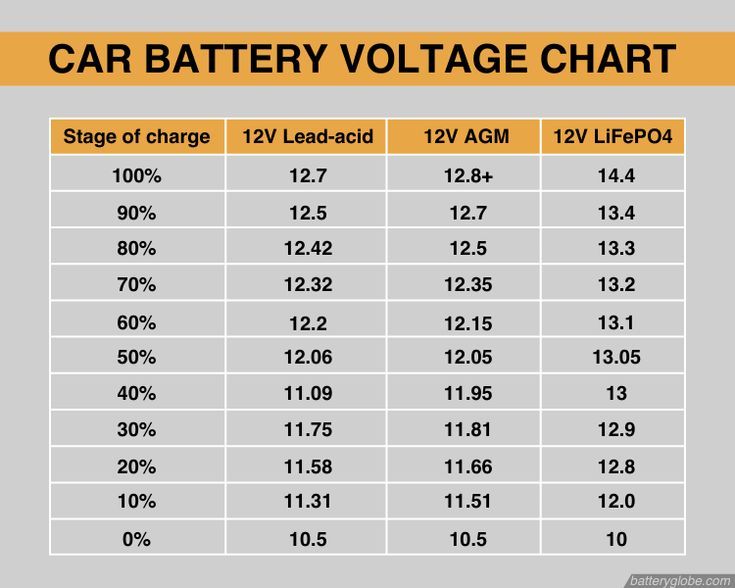
Alright, let's talk about something that comes up a lot: your car battery, specifically what voltage you should see when it's fully charged. It sounds simple, but a lot of factors can influence that number, and understanding it can save you from a roadside breakdown.
The Ideal 12V Battery Voltage
Generally speaking, a healthy, fully charged 12-volt car battery should read between 12.6 and 12.8 volts when measured with a multimeter. This is with the engine off and the battery at rest for a few hours, preferably overnight. Think of it like this: 12.6 volts and above is a happy battery. Below that, and you might have a problem brewing.
However, it's not *always* that straightforward. Let's break down some scenarios and what they might mean.
Why "Between" and Not Just 12V?
That .6 to .8 volt difference is crucial. A 12-volt battery isn't *exactly* 12 volts when fully charged. It's a nominal voltage. A fully charged lead-acid battery has six cells, each producing approximately 2.1 volts. Multiply that, and you get the 12.6 volts we're aiming for.
What Affects Battery Voltage?
Several things can influence the voltage reading you get on your battery. Here are some of the most common culprits:
- Surface Charge: Immediately after charging (either from the alternator while driving or from an external charger), the battery might display a higher voltage than its true state of charge. This is called a surface charge. Letting the battery sit undisturbed for a few hours dissipates this charge and gives you a more accurate reading. This is why the "at rest" period is so important.
- Temperature: Temperature significantly affects battery performance and voltage. Cold weather slows down the chemical reactions inside the battery, reducing its voltage. Conversely, extreme heat can accelerate corrosion and damage the battery, also impacting voltage.
- Load: Anything drawing power from the battery (even small parasitic draws like the car's computer or security system) will lower the voltage. Make sure everything is off – headlights, interior lights, radio – before testing.
- Age and Condition: As a battery ages, its ability to hold a charge diminishes. Internal resistance increases, leading to lower voltage readings, even when "fully charged." Sulfation, the buildup of lead sulfate crystals on the battery plates, is a common cause of this decline.
- Charging System Issues: A malfunctioning alternator can undercharge or overcharge the battery, both leading to voltage problems and potentially shortening the battery's lifespan.
Troubleshooting Low Battery Voltage
So, you checked your battery, and it's reading below 12.6 volts. What now? Don't panic! Here's a step-by-step troubleshooting approach:
- Wait: As mentioned earlier, ensure the battery has been at rest for several hours to eliminate any surface charge. Overnight is ideal.
- Clean the Terminals: Corrosion on the battery terminals can create resistance, leading to inaccurate voltage readings and poor electrical connections. Use a battery terminal cleaner (available at any auto parts store) and a wire brush to thoroughly clean the terminals and cable clamps. Always disconnect the negative terminal first.
- Check for Parasitic Draw: Even with everything turned off, your car draws a small amount of current to power things like the clock and security system. An excessive parasitic draw can drain the battery over time. Diagnosing a parasitic draw often requires a multimeter capable of measuring small currents (milliamps) and a bit of patience to isolate the circuit causing the problem. This can be a tricky process, and you might consider taking it to a mechanic if you're not comfortable with electrical testing.
- Load Test: A load test simulates starting the engine and puts a significant load on the battery. This test reveals the battery's ability to deliver the necessary current under stress. Most auto parts stores offer free battery load testing. This is a crucial step in determining battery health.
- Check the Charging System: If the battery repeatedly drains, the alternator might not be charging it properly. A mechanic can test the alternator's output voltage and current to ensure it's functioning correctly.
Tools You'll Need
Here's a basic toolkit you'll need for most battery-related troubleshooting:
- Multimeter: A digital multimeter is essential for measuring voltage, current, and resistance. Get one that's auto-ranging and can measure both DC and AC voltage. A decent multimeter will cost you between $20 and $50.
- Battery Terminal Cleaner: A spray-on cleaner specifically designed for cleaning battery terminals.
- Wire Brush: A small wire brush for scrubbing corrosion off the terminals and cable clamps.
- Wrench: For loosening and tightening the battery terminal clamps (usually 10mm or 13mm).
- Safety Glasses: Always protect your eyes when working with batteries.
- Gloves: Nitrile or rubber gloves to protect your hands from battery acid.
Approximate Repair Costs
Here's a rough estimate of what you might expect to pay for common battery-related repairs:
- Battery Cleaning and Terminal Cleaning: DIY – cost of cleaner and wire brush ($10-$20).
- Battery Replacement: $100 - $300 (including the cost of the battery and labor if done by a mechanic). The price varies depending on the battery's type (standard lead-acid, AGM, etc.) and your vehicle's requirements.
- Alternator Replacement: $300 - $800 (including the cost of the alternator and labor).
- Parasitic Draw Diagnosis and Repair: $100 - $300+ (depending on the complexity of the issue and the mechanic's hourly rate). Diagnosing and fixing parasitic draws can be time-consuming.
When to Seek Professional Help
While some battery issues are easy to diagnose and fix yourself, others require professional attention. Here are some situations where you should take your car to a mechanic:
- You're not comfortable working with electricity. Safety is paramount.
- You suspect a parasitic draw that you can't isolate. Diagnosing parasitic draws can be challenging.
- The battery is physically damaged (cracked case, bulging sides). Damaged batteries can leak acid and pose a safety hazard.
- You've replaced the battery, and the problem persists. This could indicate a more serious issue with the charging system or another electrical component.
Remember: Regular battery maintenance, including cleaning the terminals and having the battery tested periodically, can help prevent unexpected breakdowns and extend the life of your battery. A little preventative care can save you a lot of hassle and money down the road.
Hopefully, this guide has helped you understand the voltage of a fully charged 12-volt battery and how to troubleshoot common issues. If you have any doubts or are unsure about any step, always consult a qualified mechanic. Stay safe and keep your battery charged!