
What Cables Go To What When Jumping A Car
Okay, so you're staring at two cars, a set of jumper cables, and a sinking feeling in your stomach. You're not alone! Knowing what cable goes where when jumping a car is a common source of stress, but it's really not that complicated once you understand the basics. Messing it up, however, *can* damage your car's electrical system, so let's get this right.
The Problem: Dead Battery and a Need for a Jump Start
The core issue is a dead or severely weakened car battery. This can happen for a variety of reasons:
- Leaving your lights on: The classic culprit. Even interior lights can drain a battery overnight.
- Cold weather: Cold temperatures significantly reduce a battery's cranking power.
- Short trips: If you mostly drive short distances, your alternator might not have enough time to fully recharge the battery.
- Old battery: Car batteries typically last 3-5 years. After that, their performance deteriorates.
- Parasitic drain: A faulty electrical component (like a radio or alarm system) could be constantly drawing power, even when the car is off.
When your battery is dead, your car won't start. You might hear a clicking sound when you turn the key, or you might get absolutely nothing at all. That's where jump-starting comes in.
The Solution: Safe and Effective Jump-Starting
Jump-starting essentially uses the power from a good battery in another car to temporarily "boost" your dead battery and allow your engine to start. Here's a step-by-step guide to doing it safely:
Step 1: Gather Your Supplies and Ensure Safety
You'll need:
- Jumper cables: Make sure they're in good condition, without any cracks or exposed wires. Heavier gauge cables are better, as they can deliver more current.
- A working car: The "donor" car needs a healthy battery.
- Safety glasses (recommended): Better safe than sorry!
- Gloves (recommended): Protect your hands from dirt and potential battery acid.
Before you even touch the cars, make sure both vehicles are turned off. Engage the parking brakes on both cars, and ensure both cars are in Park (Automatic) or Neutral (Manual). You don't want either car rolling!
Also, inspect both batteries for any visible damage, such as cracks, leaks, or corrosion. If you see any of these, it's best to call a professional. Trying to jump-start a damaged battery can be dangerous.
Step 2: Positioning the Cars
Position the two cars close enough that the jumper cables can easily reach both batteries. Ideally, they should be facing each other, but sometimes you'll have to position them side-by-side. Make sure the cars aren't touching each other.
Step 3: Connecting the Jumper Cables
This is where it gets crucial. Follow this sequence carefully:
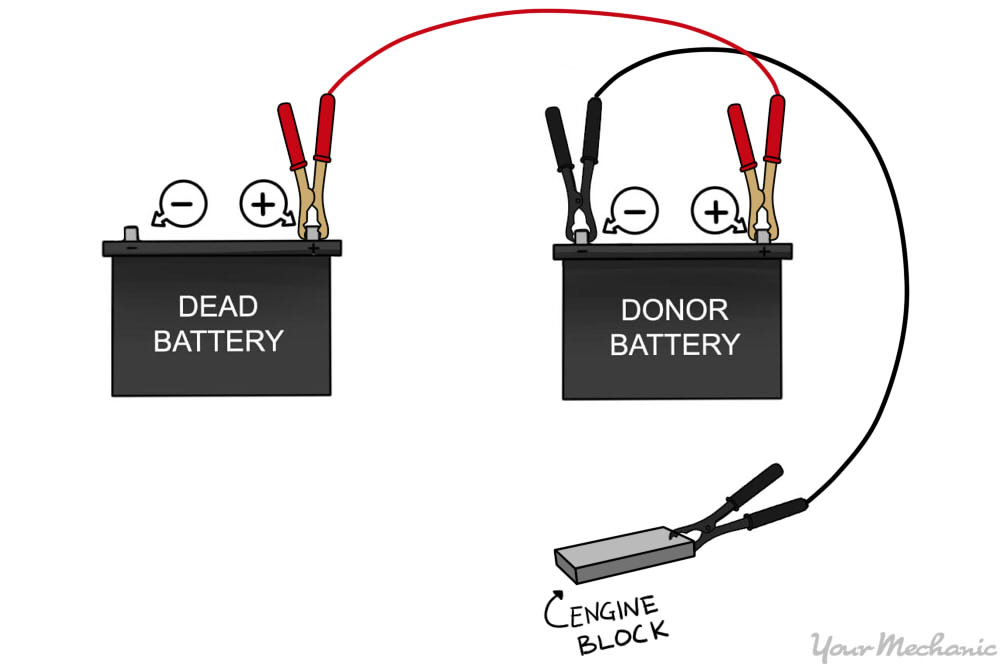
- Red Clamp to Positive (+) Terminal on the Dead Battery: Locate the positive terminal on your dead battery. It's usually marked with a "+" sign or is red in color. Firmly attach one of the red clamps to this terminal.
- Red Clamp to Positive (+) Terminal on the Good Battery: Attach the other red clamp to the positive terminal of the good battery in the donor car.
- Black Clamp to Negative (-) Terminal on the Good Battery: Attach one of the black clamps to the negative terminal of the good battery in the donor car. The negative terminal is usually marked with a "-" sign or is black in color.
- Black Clamp to Ground on the Dead Car: This is important! Do not attach the final black clamp to the negative terminal of the dead battery. Instead, attach it to a clean, unpainted metal surface on the dead car's engine block or chassis, away from the battery and any fuel lines. This grounds the circuit and minimizes the risk of sparks igniting flammable fumes. A good spot is often a metal strut or bracket.
Important Notes:
- Double-check your connections: Ensure all clamps are securely attached to the terminals or ground.
- Don't let the clamps touch each other: This can cause a short circuit.
- Follow the order: Connecting in the correct order is crucial for safety.
Step 4: Starting the Cars
- Start the Donor Car: Let the donor car run for a few minutes to charge the dead battery slightly. Revving the engine a bit (not excessively) can help.
- Try to Start the Dead Car: After a few minutes, try starting the car with the dead battery. If it starts, great! Let it run for at least 20-30 minutes to allow the alternator to recharge the battery. If it doesn't start, wait a few more minutes and try again. If it still doesn't start after several attempts, the battery might be too far gone, or there could be another problem.
Step 5: Disconnecting the Jumper Cables
Once the dead car is running, disconnect the jumper cables in the reverse order of how you connected them:
- Remove the black clamp from the ground on the formerly dead car.
- Remove the black clamp from the negative terminal of the good battery.
- Remove the red clamp from the positive terminal of the good battery.
- Remove the red clamp from the positive terminal of the formerly dead battery.
Make sure the clamps don't touch each other during disconnection.
Step 6: After the Jump Start
After successfully jump-starting your car, it's essential to drive it for at least 20-30 minutes to allow the alternator to recharge the battery. If the car dies again shortly after, it's a strong indication that the battery needs to be replaced.
Potential Problems and Solutions
Car won't start even with jumper cables connected:
- Poor connections: Double-check that all clamps are making good contact.
- Faulty cables: The jumper cables themselves might be damaged. Try a different set.
- Underlying issue: There might be a problem other than a dead battery, such as a faulty starter motor or alternator.
Car starts but dies soon after disconnecting the cables:
- Battery won't hold a charge: The battery is likely too old or damaged and needs to be replaced.
- Alternator problem: The alternator might not be charging the battery properly.
Sparks when connecting the final clamp:
- Normal, but minimize it: A small spark is normal, but if it's a large spark, double-check that you're connecting the final black clamp to a good ground point away from the battery.
Estimated Repair Costs
These are rough estimates and can vary depending on your location and the specific shop:
- New car battery: $100 - $300 (including installation)
- Alternator replacement: $300 - $800 (including labor)
- Starter motor replacement: $250 - $700 (including labor)
- Battery test: Many auto parts stores offer free battery testing.
When to Call a Professional
If you're uncomfortable jump-starting your car, or if you've tried jump-starting it and it still won't start, it's best to call a professional. A tow truck can take your car to a mechanic who can diagnose the problem and recommend the appropriate repairs. Also if you see any damage to the battery such as cracks, leaks or swelling, call a professional.
Don't hesitate to consult a mechanic or your car's owner's manual if you have any questions or concerns. A little bit of knowledge and caution can go a long way in keeping you safe and your car running smoothly!