
What Does Abs Light Mean When It Comes On
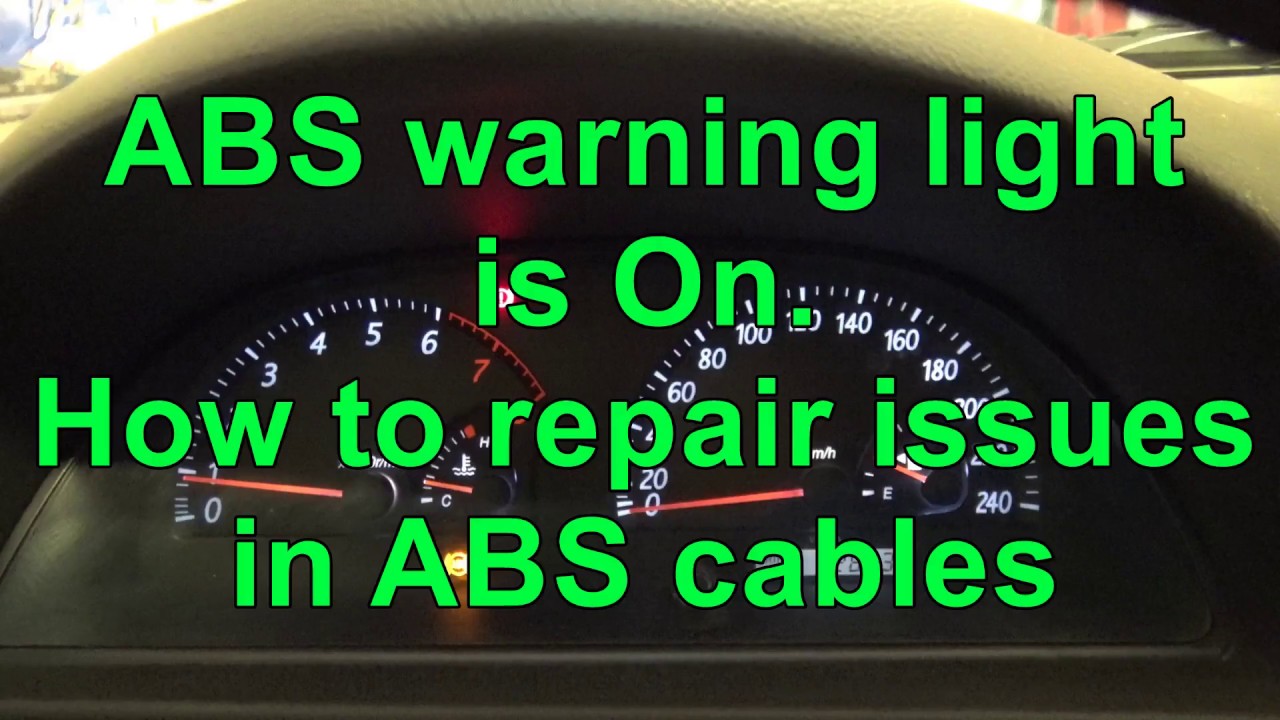
So, the ABS light has illuminated on your dash. That little yellow (or sometimes red) icon can be a source of mild annoyance to outright panic, depending on your understanding of what it signifies. Let's break down what the ABS light means, potential causes, diagnostic steps, and what you can realistically tackle yourself versus when it's time to call in a professional. We'll aim for a deeper understanding than just "take it to a mechanic," empowering you to troubleshoot and potentially resolve the issue.
Understanding the ABS System
First, a quick refresher on what the Anti-lock Braking System (ABS) actually *does*. ABS prevents wheel lock-up during braking, especially in slippery conditions or during hard stops. When a wheel locks, you lose steering control. ABS mitigates this by rapidly modulating brake pressure at each wheel individually. This allows the tire to maintain traction with the road surface, improving stopping distance and directional control. The system relies on a network of sensors, a control module, and hydraulic components.
- Wheel Speed Sensors: These are typically inductive or Hall-effect sensors located at each wheel hub. They constantly monitor wheel speed and send this data to the ABS control module. A discrepancy in wheel speeds is a key indicator of potential lock-up.
- ABS Control Module (ECU): The "brains" of the system. It receives data from the wheel speed sensors, compares it to predetermined thresholds, and determines if ABS intervention is necessary.
- Hydraulic Control Unit (HCU): This unit contains valves and a pump that modulate brake pressure to each wheel as commanded by the ECU. Think of it as the muscle that carries out the ECU's instructions.
The ABS light indicates a fault within the ABS system itself. It does not necessarily mean your entire braking system is failing. You still have regular braking function. However, the ABS functionality is compromised, meaning in an emergency braking situation, you might experience wheel lock-up.
Common Causes of the ABS Light
The ABS light can illuminate for various reasons, ranging from simple sensor issues to more complex hydraulic problems. Here's a breakdown of the most frequent culprits:
Wheel Speed Sensor Issues
This is often the first place to investigate. The sensors are exposed to road debris, moisture, and extreme temperatures, making them prone to failure. Common problems include:
- Sensor Failure: The sensor itself may be faulty, not providing an accurate signal to the ECU.
- Sensor Wiring/Connections: Damaged wiring, corroded connectors, or a loose connection can disrupt the signal. Look for frayed wires, broken connectors, and corrosion.
- Sensor Reluctor Ring Damage: The reluctor ring (or tone ring) is a toothed ring that rotates with the wheel. The sensor reads these teeth to determine wheel speed. If the reluctor ring is damaged (e.g., cracked, broken, or covered in debris), the sensor will not get a consistent signal.
Hydraulic Control Unit (HCU) Problems
The HCU is a more complex component, and issues here usually require specialized equipment and expertise. Potential HCU-related causes include:
- Valve Malfunction: Solenoid valves within the HCU control brake pressure. If a valve is stuck open or closed, it can trigger the ABS light.
- Pump Failure: The HCU contains a pump that pressurizes the brake fluid. If the pump fails, the ABS system cannot function correctly.
- Internal HCU Fault: The HCU's internal electronics can fail, leading to communication errors or incorrect operation.
ABS Control Module (ECU) Issues
While less common, the ABS ECU can also fail. These failures can be due to:
- Internal ECU Failure: Like any electronic module, the ECU can experience internal component failures.
- Power Supply Issues: A problem with the power supply to the ECU (e.g., a blown fuse or faulty relay) can prevent it from functioning properly.
- Communication Errors: The ECU communicates with other modules in the vehicle (e.g., the engine control unit). If there is a communication error, it can trigger the ABS light.
Low Brake Fluid
While not directly an ABS issue, low brake fluid can sometimes trigger the ABS light because it can affect the overall hydraulic pressure in the system. It's a good practice to check your brake fluid level regularly. Remember to use the correct type of brake fluid specified for your vehicle.
Blown Fuses
A blown fuse in the ABS circuit is a simple, but often overlooked, cause. Check your vehicle's fuse box (refer to your owner's manual for the location and function of the ABS fuse) and replace any blown fuses with the correct amperage rating.
Diagnosing the ABS Light
Here's a step-by-step approach to diagnosing the ABS light, suitable for the experienced DIYer:
- Visual Inspection: Start with a thorough visual inspection. Check the wheel speed sensors, wiring, and connectors at each wheel. Look for any signs of damage, corrosion, or loose connections. Inspect the reluctor rings for cracks or debris. Also, check your brake fluid level.
- OBD-II Scan: The most crucial step is to use an OBD-II scanner to read the diagnostic trouble codes (DTCs). ABS codes are typically prefixed with "C" (for chassis). These codes provide valuable information about the specific problem within the ABS system. A basic code reader can often retrieve ABS codes, but a more advanced scanner might be needed for more detailed information.
Note: Generic OBD-II scanners may not always read ABS codes effectively. A scanner specifically designed to read ABS codes is recommended.
- Code Interpretation: Once you have the DTCs, research their meaning. Online resources, repair manuals, and automotive forums can help you understand the codes and their possible causes.
- Sensor Testing (Multimeter): If the code indicates a wheel speed sensor issue, you can use a multimeter to test the sensor's resistance or output voltage. Consult your vehicle's service manual for the correct testing procedure and specifications. You can also check the continuity of the wiring harness to the sensor.
- Live Data Monitoring (Advanced Scanners): Some advanced scanners can display live data from the wheel speed sensors. This allows you to monitor the sensor signals while the wheels are rotating. This can help you identify intermittent sensor problems.
DIY Repairs vs. Professional Help
Some ABS-related repairs are within the scope of a skilled DIYer, while others are best left to a professional mechanic.
DIY-Friendly Repairs:
- Wheel Speed Sensor Replacement: Replacing a faulty wheel speed sensor is often a straightforward task. However, ensure you disconnect the battery before working on any electrical components.
- Wiring/Connector Repair: Repairing damaged wiring or cleaning corroded connectors is often a manageable task, requiring basic electrical skills and tools.
- Reluctor Ring Cleaning: Removing debris from a reluctor ring can sometimes resolve the issue. However, be careful not to damage the ring itself.
- Fuse Replacement: Simple fuse replacement.
Professional Help Recommended:
- HCU Problems: Diagnosing and repairing HCU issues often requires specialized equipment and expertise. The HCU contains hydraulic components that can be dangerous if not handled properly.
- ECU Problems: ABS ECU replacement or reprogramming typically requires specialized tools and software.
- Brake Bleeding After HCU Repair: Any repair involving the HCU will require proper brake bleeding to remove air from the system. This can be tricky and requires specialized equipment (pressure bleeder) for ABS systems.
Important Considerations
- Safety First: Always disconnect the battery before working on any electrical components of the ABS system.
- Proper Tools: Use the correct tools for the job. Improper tools can damage components and make the repair more difficult.
- Service Manual: Consult your vehicle's service manual for specific repair procedures and specifications.
- Brake Fluid: Use the correct type of brake fluid specified for your vehicle. Mixing different types of brake fluid can damage the ABS system.
- Brake Bleeding: After any hydraulic work on the ABS system, it is crucial to properly bleed the brakes to remove air from the system.
By understanding the ABS system, common causes of the ABS light, and diagnostic procedures, you can approach the issue with confidence and potentially save yourself money by performing some of the simpler repairs yourself. However, always prioritize safety and don't hesitate to seek professional help when needed. Remember, the ABS system is a critical safety feature, and ensuring it functions correctly is paramount.