
What Does It Mean For Brakes To Be Glazed
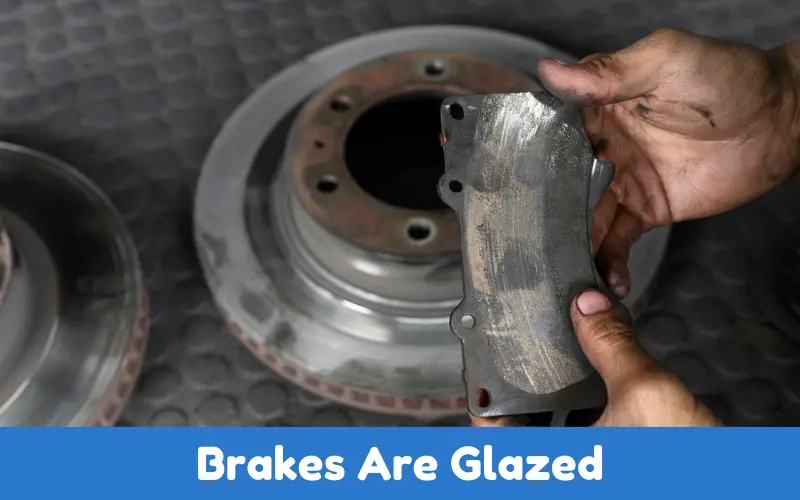
For generations, the screech of brakes has been a familiar, albeit unpleasant, soundtrack to urban life. But what happens when that screech turns into a persistent squeal, a lack of bite, and a general feeling of diminished braking power? You might be dealing with glazed brakes. Understanding this phenomenon, its causes, and, more importantly, the future of braking systems, is crucial as we navigate the evolving landscape of mobility.
Understanding Glazed Brakes: A Primer
Brake glazing occurs when the friction material of your brake pads overheats, creating a smooth, hardened surface. This significantly reduces the coefficient of friction between the pad and the rotor (or drum), leading to reduced braking efficiency. Common causes include aggressive driving with frequent hard stops, prolonged use of brakes downhill, and even using low-quality brake pads that are more susceptible to overheating. In essence, the heat changes the composition of the brake pad material, creating a glass-like sheen on the surface.
The Electric Vehicle (EV) Revolution and Braking Systems
The rise of EVs and hybrids introduces a fascinating new dimension to the world of braking. Regenerative braking, a cornerstone of these vehicles, uses the electric motor to slow the car, recovering kinetic energy and recharging the battery. This inherently reduces the reliance on traditional friction brakes, potentially leading to longer brake pad life. However, this also presents a new set of challenges. Because friction brakes are used less frequently, they are more prone to rust, corrosion, and ironically, glazing! Imagine a brake pad sitting idle for extended periods, exposed to the elements. When finally called upon, it might not perform optimally. This intermittent usage requires a shift in thinking about brake maintenance and design.
The future likely involves advanced brake pad materials designed to withstand extended periods of inactivity without degradation. Self-cleaning brake systems, utilizing small vibrations or pulsations to remove surface rust and debris, are also being explored. Furthermore, smart braking systems integrated with the vehicle's control unit can actively manage brake temperature and pressure to prevent glazing.
Hybrid Systems: A Balancing Act
Hybrid vehicles present a unique balancing act. They utilize both regenerative and friction braking. The complexity lies in seamlessly integrating the two systems to ensure smooth and efficient deceleration. Glazing can still be a concern, particularly if the regenerative braking system is heavily relied upon, leaving the friction brakes underutilized. Therefore, advanced control algorithms are crucial to intelligently distribute the braking load and prevent premature wear or glazing of either system. Monitoring brake pad condition through sensors and incorporating predictive maintenance schedules will become increasingly important.
Smart Automotive Solutions and the Future of Braking
The evolution of smart automotive solutions, including Advanced Driver-Assistance Systems (ADAS) and autonomous driving technologies, will profoundly impact braking systems. Features like Automatic Emergency Braking (AEB) rely heavily on precise and reliable braking performance. Glazed brakes, with their inconsistent performance, pose a significant safety risk in these scenarios. Consequently, future braking systems will need to be incredibly robust, self-monitoring, and capable of adapting to various driving conditions and ADAS interventions. This might involve using advanced sensors to monitor brake pad temperature, pressure, and wear in real-time, providing feedback to the vehicle's control system for optimal performance.
Furthermore, AI-powered systems could learn a driver's braking habits and proactively adjust brake parameters to minimize the risk of glazing. Imagine a system that detects a tendency for aggressive braking downhill and automatically activates engine braking or adjusts the regenerative braking profile to protect the friction brakes. The possibilities are vast.
Challenges and Opportunities
While the future of braking is brimming with potential, there are challenges to overcome. Developing cost-effective, durable, and reliable brake pad materials that can withstand both extreme heat and prolonged inactivity is a significant hurdle. Ensuring seamless integration between regenerative and friction braking systems requires sophisticated engineering and control algorithms. And maintaining cybersecurity is paramount, as malicious actors could potentially compromise braking systems in connected vehicles.
However, these challenges also present significant opportunities for innovation. Material scientists are developing new ceramic and composite brake pad formulations with enhanced thermal stability and wear resistance. Software engineers are creating advanced control algorithms that optimize braking performance and prevent glazing. And cybersecurity experts are working to protect vehicle systems from cyber threats. The automotive industry is on the cusp of a braking revolution.
A Visionary Note
Imagine a future where the screech of brakes is a relic of the past. Where braking systems are intelligent, self-monitoring, and seamlessly integrated with the vehicle's overall control system. Where regenerative braking captures and reuses energy, minimizing waste and maximizing efficiency. Where AI algorithms predict and prevent brake glazing, ensuring optimal performance and safety. This isn't just a dream; it's a vision that is rapidly becoming a reality. The future of mobility hinges on innovation in areas like braking, promising a safer, more efficient, and more sustainable transportation ecosystem for all. We are moving toward a world where the very act of slowing down becomes an integral part of a harmonious, interconnected transportation system. This is the future of braking, and it is an exciting journey to be a part of.