
What Does It Mean If Your Abs Light Is On
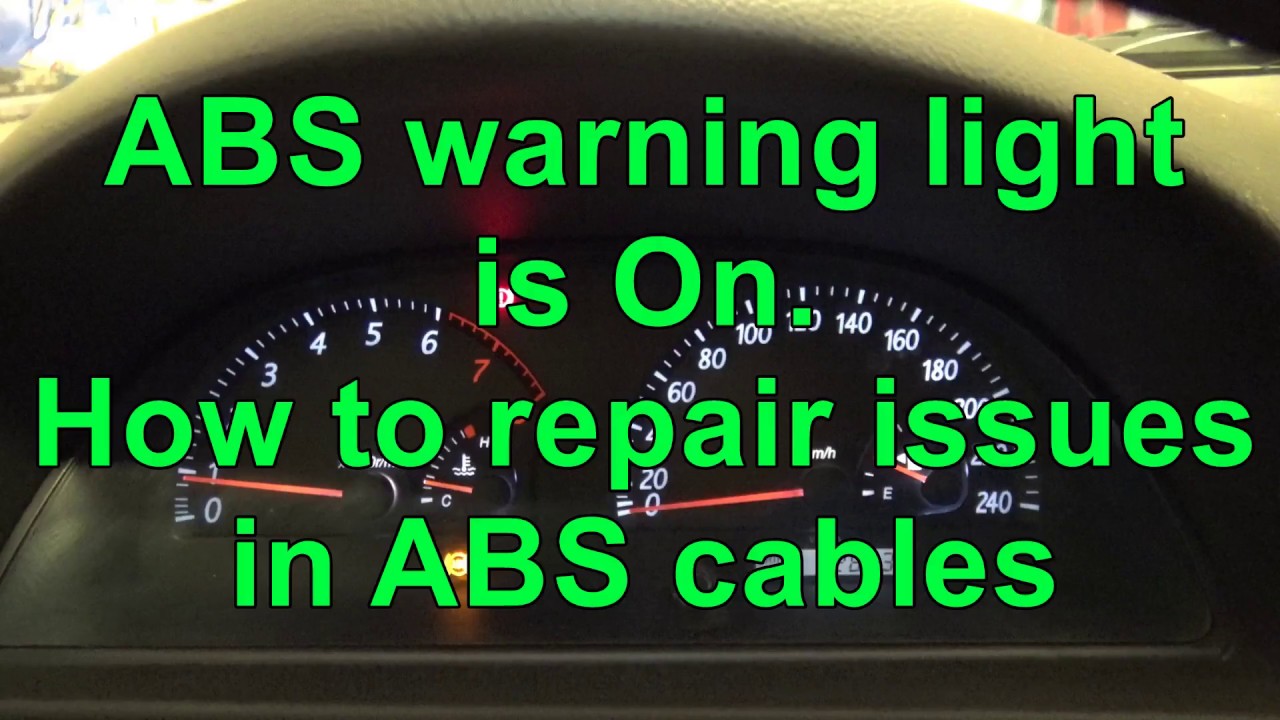
The illumination of the Anti-lock Braking System (ABS) warning light on a vehicle's dashboard signals a potential malfunction within the ABS. While seemingly straightforward, the underlying causes and diagnostic approaches are complex, demanding a thorough understanding of the system's architecture and operational principles.
Understanding ABS Architecture and Functionality
Modern ABS is a sophisticated electro-hydraulic system designed to prevent wheel lock-up during braking, thereby maintaining steering control and minimizing stopping distances. It typically comprises several key components: wheel speed sensors, a hydraulic control unit (HCU), an electronic control unit (ECU), and the brake lines themselves.
Wheel speed sensors, often variable reluctance sensors or Hall-effect sensors, are located at each wheel. These sensors generate a signal proportional to the wheel's rotational speed. The ECU continuously monitors these signals. A sudden deceleration or a significant disparity in wheel speeds indicates an impending wheel lock-up. In response, the ECU activates the HCU.
The HCU contains a series of solenoid valves and a pump. When wheel lock-up is detected, the ECU modulates the pressure applied to individual brake calipers via these valves. This modulation involves rapidly decreasing, holding, or increasing brake pressure, preventing the wheel from locking. The pump is used to restore brake pressure after a pressure release. Early ABS systems used simpler two-channel or three-channel configurations, modulating pressure to either the front wheels independently or both rear wheels together. Modern systems typically employ a four-channel setup, allowing independent control of each wheel for optimal performance.
The ECU is the brain of the system, processing sensor data, executing control algorithms, and managing the hydraulic actuators. It also performs self-diagnostics, and it is the ECU that triggers the ABS warning light when a fault is detected.
Common Causes of ABS Light Activation
Several issues can trigger the ABS warning light. These can range from minor glitches to significant system failures. Some common causes include:
- Faulty Wheel Speed Sensors: Damaged, dirty, or improperly installed sensors are a frequent culprit. Wiring issues, such as broken wires or corrosion, can also disrupt sensor signals.
- Hydraulic Control Unit (HCU) Malfunction: Internal failures within the solenoid valves or pump can impede the HCU's ability to regulate brake pressure.
- Electronic Control Unit (ECU) Problems: Although less common, ECU failures can occur due to internal component damage or software glitches.
- Low Brake Fluid: While typically associated with the general brake warning light, significantly low brake fluid levels can sometimes indirectly trigger the ABS light, especially if it impacts the HCU's operation.
- Air in the Brake Lines: Air trapped in the hydraulic system can interfere with the ABS's ability to accurately modulate brake pressure.
- Fuse or Relay Issues: A blown fuse or a faulty relay powering the ABS can disable the system.
Diagnostic Procedures and Tools
Diagnosing an ABS fault requires specialized tools and knowledge. The primary tool is a diagnostic scan tool capable of reading ABS fault codes. These codes provide valuable information about the specific component or circuit that is malfunctioning. Technicians should consult the vehicle's service manual for a comprehensive list of fault codes and their corresponding troubleshooting procedures.
In addition to reading fault codes, a thorough visual inspection of the wheel speed sensors, wiring harnesses, and hydraulic components is crucial. Multimeters can be used to test sensor resistance and voltage, while oscilloscopes can visualize sensor signals to identify intermittent problems. Hydraulic pressure gauges can be connected to the HCU to assess its ability to generate and regulate brake pressure.
Repair Considerations and Alternatives
Repairing an ABS fault may involve replacing a faulty sensor, repairing wiring, replacing the HCU, or flushing and bleeding the brake system. In some cases, ECU replacement may be necessary, which often requires reprogramming to match the vehicle's specific configuration.
While aftermarket ABS components are available, it's generally recommended to use original equipment manufacturer (OEM) parts, especially for critical components like the HCU and ECU. Aftermarket parts may not meet the same quality standards as OEM parts, potentially leading to reduced performance or reliability. Additionally, ensure that replacement wheel speed sensors are properly calibrated to the vehicle's ABS system to maintain accurate wheel speed monitoring.
In older vehicles, removing or disabling the ABS might seem like a simple solution. However, this is strongly discouraged. ABS is a critical safety system that significantly enhances braking performance and vehicle stability. Disabling it can increase stopping distances and reduce steering control, especially in emergency braking situations.
Reliability and Maintenance
The reliability of ABS systems has improved significantly over the years, but regular maintenance is still essential. Routine brake fluid flushes are crucial to prevent corrosion and maintain optimal hydraulic performance. Inspecting wheel speed sensors and wiring harnesses during regular service intervals can help identify potential problems before they escalate. It is also critical to address any general braking system problems promptly, as they can impact ABS functionality.
Future Trends in ABS Technology
Future trends in ABS technology focus on integrating it with other advanced driver-assistance systems (ADAS). For example, ABS is increasingly being integrated with electronic stability control (ESC), which uses ABS to selectively brake individual wheels to prevent skidding. Furthermore, ABS is playing a role in autonomous emergency braking (AEB) systems, which can automatically apply the brakes to avoid or mitigate collisions. As vehicles become more autonomous, ABS will become even more critical for ensuring safe and reliable braking performance.
Another trend is the use of more sophisticated sensors and control algorithms. Future ABS systems may incorporate sensors that can detect road surface conditions and adjust braking force accordingly. Advanced control algorithms will allow for even more precise brake pressure modulation, further reducing stopping distances and enhancing vehicle stability. The continued electrification of vehicles will likely lead to the development of integrated electro-mechanical braking systems that combine traditional hydraulic braking with electric regenerative braking.
Conclusion
The ABS warning light serves as a vital indicator of potential issues within this critical safety system. A systematic diagnostic approach, coupled with a thorough understanding of the system's architecture and function, is essential for effective troubleshooting and repair. Maintaining the ABS system through regular inspections and fluid changes will help ensure optimal performance and reliability. The future of ABS lies in its integration with other ADAS technologies, further enhancing vehicle safety and paving the way for autonomous driving.