
What Is The Function Of The Oxygen Sensor
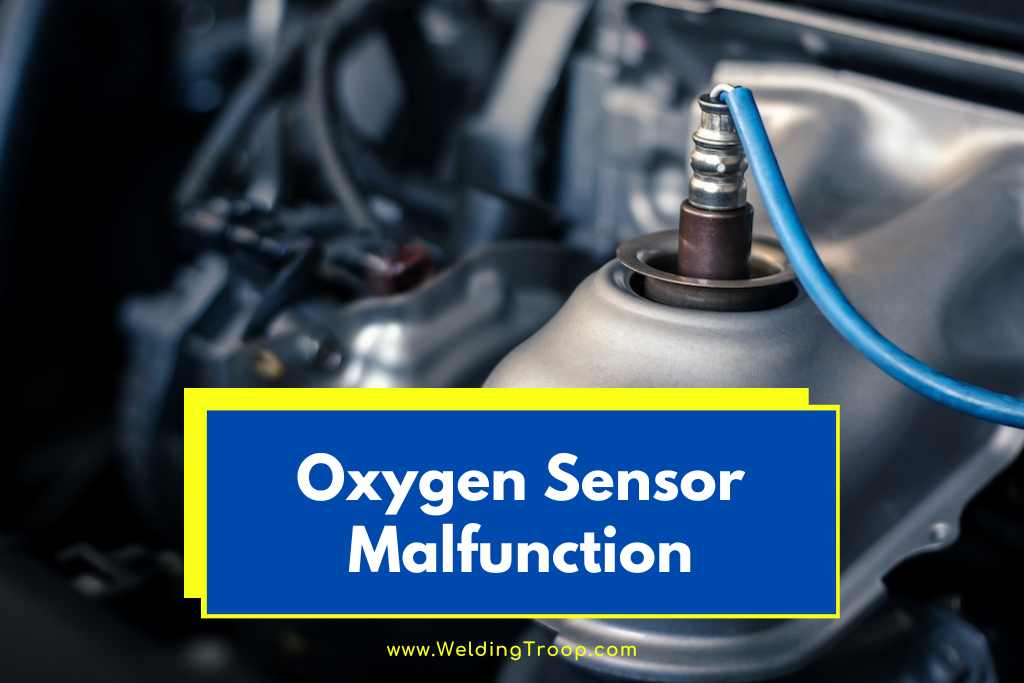
Alright, let's dive into the fascinating world of oxygen sensors, often called O2 sensors or lambda sensors. You probably know they're important, but understanding exactly *what* they do and *how* they do it is crucial for proper diagnostics and maintenance, especially if you're tinkering under the hood yourself.
The Core Function: Monitoring Exhaust Gases
At its heart, the oxygen sensor is a sophisticated little device designed to measure the amount of oxygen present in your vehicle's exhaust gases after combustion has occurred in the engine's cylinders. This measurement is vital for the Engine Control Unit (ECU), also sometimes called the Powertrain Control Module (PCM), your car's brain, to fine-tune the air-fuel mixture. The goal is to maintain the ideal stoichiometric ratio, which for gasoline engines is approximately 14.7:1 (air to fuel by mass). That magic number allows the catalytic converter to operate at peak efficiency.
Why is stoichiometry so important? If the air-fuel mixture is too lean (too much air), the engine can run hotter, leading to potential damage, reduced power, and increased NOx (oxides of nitrogen) emissions. Conversely, if the mixture is too rich (too much fuel), you'll experience poor fuel economy, increased hydrocarbon (HC) and carbon monoxide (CO) emissions, and potentially foul spark plugs.
How Oxygen Sensors Work: A Technical Deep Dive
Most modern oxygen sensors are based on a ceramic element, typically made of zirconium dioxide (ZrO2) or titanium dioxide (TiO2). Let's break down how each type operates.
Zirconium Dioxide (ZrO2) Sensors
These are the most common type. The ZrO2 sensor functions as a miniature oxygen concentration cell. The ceramic element is coated with platinum electrodes on both the exhaust side (exposed to the exhaust gases) and the reference side (exposed to atmospheric air). At high temperatures (typically above 600°F or 315°C), zirconium dioxide becomes an oxygen ion conductor. The platinum electrodes catalyze oxygen dissociation.
Here's the crucial part: if there's a difference in oxygen concentration between the exhaust and reference sides, an electrical potential (voltage) is generated across the ceramic element. A lean mixture (high oxygen content in the exhaust) produces a low voltage (around 0.1V), while a rich mixture (low oxygen content in the exhaust) produces a high voltage (around 0.9V). The ECU monitors this voltage signal to determine whether the mixture needs adjustment.
Key aspects of ZrO2 sensors:
- They require a certain operating temperature to function correctly. Hence, many ZrO2 sensors are heated to reach operating temperature quickly, especially during cold starts. These are called heated oxygen sensors (HO2S).
- The voltage output is non-linear. The voltage change is most sensitive around the stoichiometric point (14.7:1).
- They are relatively durable but can be affected by contamination, such as silicone or oil.
Titanium Dioxide (TiO2) Sensors
TiO2 sensors operate on a different principle. Instead of generating a voltage, they change their electrical resistance based on the oxygen concentration in the exhaust. The titanium dioxide element is essentially a semiconductor whose resistance varies with the amount of oxygen present.
In a lean mixture (high oxygen), the resistance of the TiO2 element is high. In a rich mixture (low oxygen), the resistance is low. The ECU supplies a reference voltage to the sensor and monitors the voltage drop across the TiO2 element. This voltage drop is then used to determine the air-fuel ratio.
Key aspects of TiO2 sensors:
- Like ZrO2 sensors, they require a high operating temperature and are often heated (HO2S).
- The voltage output is generally more linear compared to ZrO2 sensors.
- TiO2 sensors are less common than ZrO2 sensors, but you'll find them in certain vehicle makes and models.
- They use a 5V reference signal from the ECU, unlike ZrO2 sensors which generate their own voltage.
Sensor Placement: Upstream and Downstream
Most modern vehicles have at least two oxygen sensors: an upstream sensor (also called a pre-catalyst sensor) and a downstream sensor (also called a post-catalyst sensor).
- Upstream Sensor: This sensor is located before the catalytic converter, typically in the exhaust manifold. Its primary function is to provide the ECU with real-time feedback about the air-fuel mixture so the ECU can make adjustments to maintain stoichiometry. It's the primary sensor used for air-fuel control.
- Downstream Sensor: This sensor is located after the catalytic converter. Its primary function is to monitor the efficiency of the catalytic converter. If the catalytic converter is functioning properly, it should significantly reduce the levels of pollutants (HC, CO, NOx) in the exhaust gases. The downstream sensor's signal should be relatively stable compared to the upstream sensor. If the downstream sensor's signal starts to mimic the upstream sensor's signal, it indicates that the catalytic converter is failing.
Some vehicles, particularly those with multiple catalytic converters, may have even more oxygen sensors to monitor the performance of each converter individually.
Signal Interpretation and Troubleshooting
Understanding the oxygen sensor signal is critical for diagnosing engine problems. A healthy upstream sensor should rapidly switch between lean and rich voltage levels. A slow or sluggish sensor can indicate contamination or a failing sensor element. A "stuck" sensor (fixed voltage) is almost always indicative of a failed sensor.
The downstream sensor should have a relatively stable voltage, typically around 0.45V-0.7V, if the catalytic converter is working correctly. Large fluctuations in the downstream sensor signal often mean the catalytic converter is not efficiently converting pollutants.
When troubleshooting oxygen sensor issues, remember to:
- Check for fault codes: Use an OBD-II scanner to retrieve any Diagnostic Trouble Codes (DTCs) related to the oxygen sensors or air-fuel mixture.
- Visually inspect the sensor: Look for signs of damage, contamination (oil, coolant), or corrosion.
- Test the sensor's voltage output: Use a multimeter to measure the sensor's voltage signal while the engine is running.
- Inspect the wiring: Check for damaged or corroded wiring, connectors, or grounds.
- Consider replacing the sensor: Oxygen sensors have a finite lifespan (typically 60,000-100,000 miles). If the sensor is old or suspected of being faulty, replacement is often the best course of action.
Remember to use the proper tools and follow safety precautions when working on your vehicle's electrical system. A little bit of knowledge about oxygen sensors can go a long way in keeping your engine running smoothly and efficiently!