
What Is The Function Of The Throttle Body
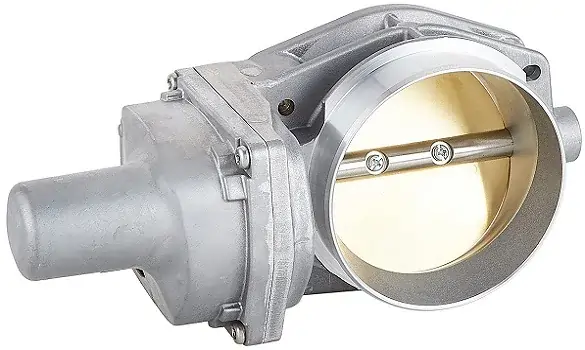
Alright, let's talk throttle bodies. You probably know it's something to do with the engine's air intake, but understanding exactly *how* it works is crucial for diagnostics, maintenance, and even performance modifications. We're going to dive deep, but I'll keep it approachable, like I'm explaining it in your garage over a cup of coffee.
The Throttle Body's Core Function: Airflow Control
At its heart, the throttle body is responsible for controlling the amount of air that enters the engine's intake manifold. Think of it as the gatekeeper to the engine's oxygen supply. This air is, of course, absolutely vital for combustion. Without the right amount of air mixed with fuel, your engine won't run properly – or at all.
To accomplish this, the throttle body uses a throttle plate (also sometimes called a butterfly valve). This plate is a flat, circular disc that pivots inside the throttle body's bore. Its angle dictates how much of the bore is open, and therefore, how much air can flow through. The more open the plate, the more air flows into the engine.
The position of the throttle plate is directly controlled by the accelerator pedal (or gas pedal) via a mechanical linkage (in older vehicles) or, more commonly these days, an electronic system. We'll touch on both.
Mechanical Throttle Bodies (Cable-Driven)
In older vehicles, the throttle body is directly connected to the accelerator pedal by a cable. When you press the pedal, you physically pull on the cable, which in turn rotates the throttle plate. The further you depress the pedal, the more the plate opens. It's a simple and direct system, offering a very immediate feel.
A key component here is the throttle position sensor (TPS). Even in cable-driven systems, the engine control unit (ECU) needs to know the exact angle of the throttle plate. The TPS, a potentiometer, measures this angle and sends a voltage signal to the ECU. The ECU uses this information, along with other sensor inputs (like mass airflow, coolant temperature, etc.), to calculate the correct amount of fuel to inject into the engine.
Electronic Throttle Bodies (Drive-By-Wire)
Modern vehicles almost universally use electronic throttle control (ETC), often referred to as "drive-by-wire." In this system, there is no direct mechanical connection between the accelerator pedal and the throttle plate. Instead, the pedal is connected to an accelerator pedal position sensor (APPS). This sensor tells the ECU how far you've pressed the pedal.
The ECU then uses this information, along with a host of other data points (engine speed, vehicle speed, traction control status, etc.), to determine the optimal throttle plate angle. It achieves this by controlling a small electric motor within the throttle body. This motor precisely positions the throttle plate.
Electronic throttle bodies offer several advantages over cable-driven systems:
- Improved Fuel Efficiency: The ECU can precisely control airflow to optimize fuel economy.
- Enhanced Traction Control: The ECU can limit throttle opening to prevent wheel spin during acceleration.
- Cruise Control Integration: Easier to implement and control.
- Reduced Emissions: More precise control over air-fuel ratio leads to cleaner combustion.
However, electronic throttle systems can sometimes feel less responsive than cable-driven systems. Manufacturers often program in throttle "mapping" to tailor the engine's response to different driving conditions.
The Intake Manifold Connection
The throttle body doesn't work in isolation. It's bolted directly to the intake manifold. The intake manifold is a network of passages that distributes the air from the throttle body to the individual cylinders. Its design is crucial for ensuring that each cylinder receives an equal amount of air, which is essential for balanced engine performance.
Vacuum is also a critical concept here. When the throttle plate is closed or partially closed, the engine's pistons create a vacuum in the intake manifold. This vacuum is used to operate various engine accessories, such as power brakes, PCV (positive crankcase ventilation) systems, and some types of emissions control devices. Leaks in the intake manifold or throttle body can disrupt this vacuum, leading to poor engine performance, rough idling, and even check engine lights.
Troubleshooting Throttle Body Issues
A malfunctioning throttle body can cause a range of problems. Here are some common symptoms:
- Rough Idle: If the throttle plate is sticking or the idle air control valve (IACV – more on that below) is malfunctioning, the engine may idle erratically or stall.
- Poor Acceleration: If the throttle plate isn't opening fully, the engine may feel sluggish and unresponsive.
- Check Engine Light: The ECU will often detect throttle body problems and trigger a check engine light. Common diagnostic trouble codes (DTCs) include those related to the TPS, throttle actuator control (TAC) system, and idle air control.
- Stalling: Especially at low speeds or when coming to a stop.
- Surging: The engine speed may fluctuate erratically.
Cleaning the throttle body is often the first step in troubleshooting these issues. Over time, carbon deposits and grime can build up on the throttle plate and the inside of the throttle body bore, restricting airflow. Using a throttle body cleaner and a soft brush, you can remove these deposits and restore proper airflow. Always disconnect the battery before cleaning the throttle body to prevent accidental activation of the electronic throttle motor.
The Idle Air Control (IAC) Valve (or System)
Even when the throttle plate is fully closed, the engine needs a small amount of air to idle properly. That's where the idle air control (IAC) valve (or, in newer systems, a dedicated idle control system) comes in. The IAC valve is a small valve that bypasses the throttle plate, allowing a controlled amount of air to flow into the intake manifold. The ECU controls the IAC valve to maintain a stable idle speed, regardless of engine temperature or load.
In older vehicles, the IAC valve is often a separate component mounted on the throttle body. In newer vehicles with electronic throttle control, the ECU often simply uses slight adjustments to the throttle plate itself to control idle air, effectively eliminating the need for a separate IAC valve.
Performance Upgrades: Bigger is Better?
Many enthusiasts consider upgrading their throttle body for improved performance. A larger throttle body allows more air to flow into the engine, which can potentially increase horsepower and torque. However, it's not always a simple "bigger is better" equation.
Simply bolting on a larger throttle body without making other modifications (such as upgrading the intake manifold, exhaust system, and fuel injectors) may not result in significant performance gains. In some cases, it can even lead to decreased low-end torque. The entire intake and exhaust system needs to be properly matched to take full advantage of a larger throttle body.
Furthermore, if you're considering a throttle body upgrade on a vehicle with electronic throttle control, you may need to have the ECU re-calibrated to properly manage the increased airflow. Otherwise, the ECU may not be able to accurately control the air-fuel ratio, which can lead to poor performance and potential engine damage.
So, before jumping into a throttle body upgrade, do your research, understand your engine's needs, and consult with a qualified tuner to ensure that you're making the right choice.
Understanding the throttle body is fundamental to understanding how your engine breathes. Keep it clean, diagnose issues promptly, and think critically about upgrades. You'll keep your engine running smoothly and maybe even squeeze out a little extra performance.