
What Is The Main Job Of The Throttle Body
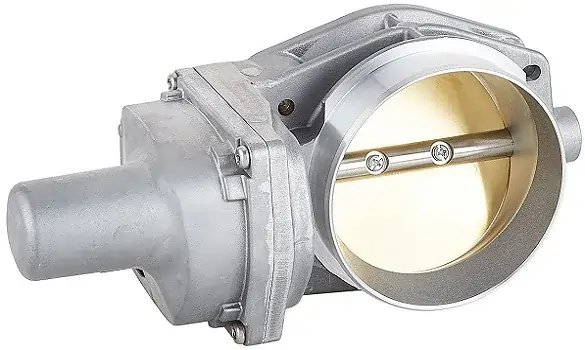
At its heart, the throttle body plays a crucial role in controlling your engine's power output. Understanding its function can help you diagnose performance issues and even perform some basic maintenance.
The Throttle Body: Your Engine's Air Valve
Think of the throttle body as the gateway to your engine's intake manifold. Its primary job is to regulate the amount of air entering the engine. This air is then mixed with fuel, and the resulting mixture is ignited in the cylinders to produce power. The more air that enters, the more fuel is added, and the bigger the bang (explosion), resulting in more power.
Inside the throttle body, you'll find a throttle plate (or valve). This plate pivots open and closed, controlling the cross-sectional area through which air can flow. When the plate is fully closed (at idle), only a small amount of air is allowed to pass. When you press the accelerator pedal, the plate opens wider, allowing more air to rush in.
The opening and closing of this plate is directly controlled by the accelerator pedal, either mechanically or electronically, depending on the car's design. This is why pressing the gas pedal increases engine speed – you're essentially telling the engine to take in more air and burn more fuel.
Mechanical vs. Electronic Throttle Bodies
There are two primary types of throttle bodies: mechanical and electronic (also known as drive-by-wire).
Mechanical throttle bodies are the older, more traditional design. A cable directly connects the accelerator pedal to the throttle plate. When you press the pedal, the cable physically pulls on a lever attached to the throttle plate, causing it to open. This is a simple and reliable system used in many older vehicles. For example, classic Mustangs, older Toyota trucks, and many Hondas built before the early 2000s used mechanical throttle bodies.
Electronic throttle bodies (ETBs), on the other hand, use a more sophisticated approach. There's no direct cable connection. Instead, an electronic sensor on the accelerator pedal sends a signal to the engine control unit (ECU or computer). The ECU then analyzes this signal, along with other sensor data (like engine speed, temperature, and load), and precisely controls a small electric motor that opens and closes the throttle plate. This system offers several advantages, including improved fuel efficiency, smoother throttle response, and the ability to integrate features like traction control and cruise control. Most modern cars, from a Toyota Camry to a BMW 3 Series, use electronic throttle bodies.
The transition to electronic throttle bodies allows for sophisticated engine management. For example, in a 2020 Ford Mustang GT, the ECU can independently control the throttle plate position even if the driver has their foot fully planted on the gas. This allows for features like launch control (limiting wheelspin at the start of a race) and active rev matching (automatically blipping the throttle during downshifts for smoother gear changes).
The Role of Sensors
Several sensors work in conjunction with the throttle body to ensure proper engine operation. Key sensors include:
- Throttle Position Sensor (TPS): This sensor monitors the position of the throttle plate and sends this information to the ECU. The ECU uses this data to determine how much fuel to inject into the engine.
- Mass Airflow Sensor (MAF): Located upstream of the throttle body, the MAF sensor measures the amount of air entering the engine. This information is critical for the ECU to calculate the correct air/fuel ratio. Some vehicles use a Manifold Absolute Pressure (MAP) sensor instead of a MAF. The MAP sensor measures the pressure in the intake manifold, which can be used to infer airflow.
- Idle Air Control (IAC) Valve: This valve bypasses the throttle plate, allowing a small amount of air to enter the engine even when the throttle is closed. This is crucial for maintaining a stable idle speed. In modern ETB systems, the IAC valve is often integrated into the electronic control of the throttle plate itself. The ECU simply adjusts the throttle plate position slightly to maintain the desired idle speed.
Symptoms of a Failing Throttle Body
A malfunctioning throttle body can cause a variety of performance problems. Some common symptoms include:
- Rough or unstable idle: The engine may idle too high, too low, or surge up and down erratically.
- Poor acceleration: The engine may feel sluggish or unresponsive when you press the gas pedal.
- Stalling: The engine may stall, especially at idle or when coming to a stop.
- Check Engine Light: A faulty throttle body or its associated sensors can trigger the check engine light. Diagnostic trouble codes (DTCs) related to the throttle body or airflow are common.
- Reduced fuel economy: A dirty or malfunctioning throttle body can cause the engine to run inefficiently, leading to decreased fuel economy.
For example, a dirty throttle body in a Chevrolet Silverado might cause a rough idle and hesitation during acceleration. Similarly, a faulty TPS in a Honda Civic could lead to erratic engine behavior and a check engine light.
Maintenance and Troubleshooting
Regular maintenance can help prevent throttle body problems. Here are a few tips:
- Clean the throttle body periodically: Over time, carbon deposits and other debris can build up on the throttle plate and inside the throttle body, restricting airflow and affecting performance. Use a throttle body cleaner and a soft cloth to carefully clean the throttle body. Disconnecting the battery during this process is often recommended to reset the ECU.
- Inspect the throttle body for damage: Check for cracks, leaks, or other signs of wear and tear.
- Check the throttle body connections: Ensure that all electrical connectors and vacuum hoses are securely attached.
- Use a scan tool to diagnose problems: If you suspect a throttle body problem, use an OBD-II scan tool to read any stored diagnostic trouble codes (DTCs). This can help you pinpoint the cause of the problem. Common codes relate to TPS malfunction, idle air control issues, or general airflow problems.
Important Note: When cleaning an electronic throttle body, avoid manually forcing the throttle plate open or closed. This can damage the delicate electronic components. Follow the manufacturer's recommendations for cleaning and maintenance.
Practical Takeaways
Understanding the throttle body's function empowers you to better diagnose and address engine performance issues. Here are some practical takeaways:
- Listen to your engine: Pay attention to any unusual noises or changes in engine behavior, such as a rough idle or poor acceleration. These could be signs of a throttle body problem.
- Regularly inspect and clean your throttle body: Preventative maintenance can go a long way in avoiding costly repairs down the road.
- Invest in an OBD-II scan tool: This tool can help you diagnose a wide range of engine problems, including those related to the throttle body.
- Don't be afraid to seek professional help: If you're not comfortable working on your car's engine, take it to a qualified mechanic.
By understanding the role of the throttle body and performing regular maintenance, you can keep your engine running smoothly and efficiently for years to come. Keep in mind that the specific design and operation of the throttle body can vary depending on the make and model of your car, so it's always a good idea to consult your owner's manual or a repair manual for more information.