
What Should I See In My Side View Mirrors
The humble side view mirror. Often overlooked, yet absolutely critical for safe and confident driving. They're not just pieces of glass; they're your eyes on the world around you, helping you merge safely, change lanes, and avoid potential collisions. But what exactly should you be seeing in them? It's more than just a reflection; it's about understanding angles, blind spots, and optimizing your mirror settings for maximum visibility.
The Zone of Awareness: Beyond the Glare
Think of your side view mirrors as extensions of your peripheral vision. Their primary purpose is to fill the gaps where your direct vision and rearview mirror leave off. The optimal view achieves what automotive engineers call an “awareness zone,” allowing you to constantly monitor traffic and anticipate potential hazards. This awareness zone shouldn't be a carbon copy of what you see out the front window; it should provide a broader, overlapping view of the lanes beside you.
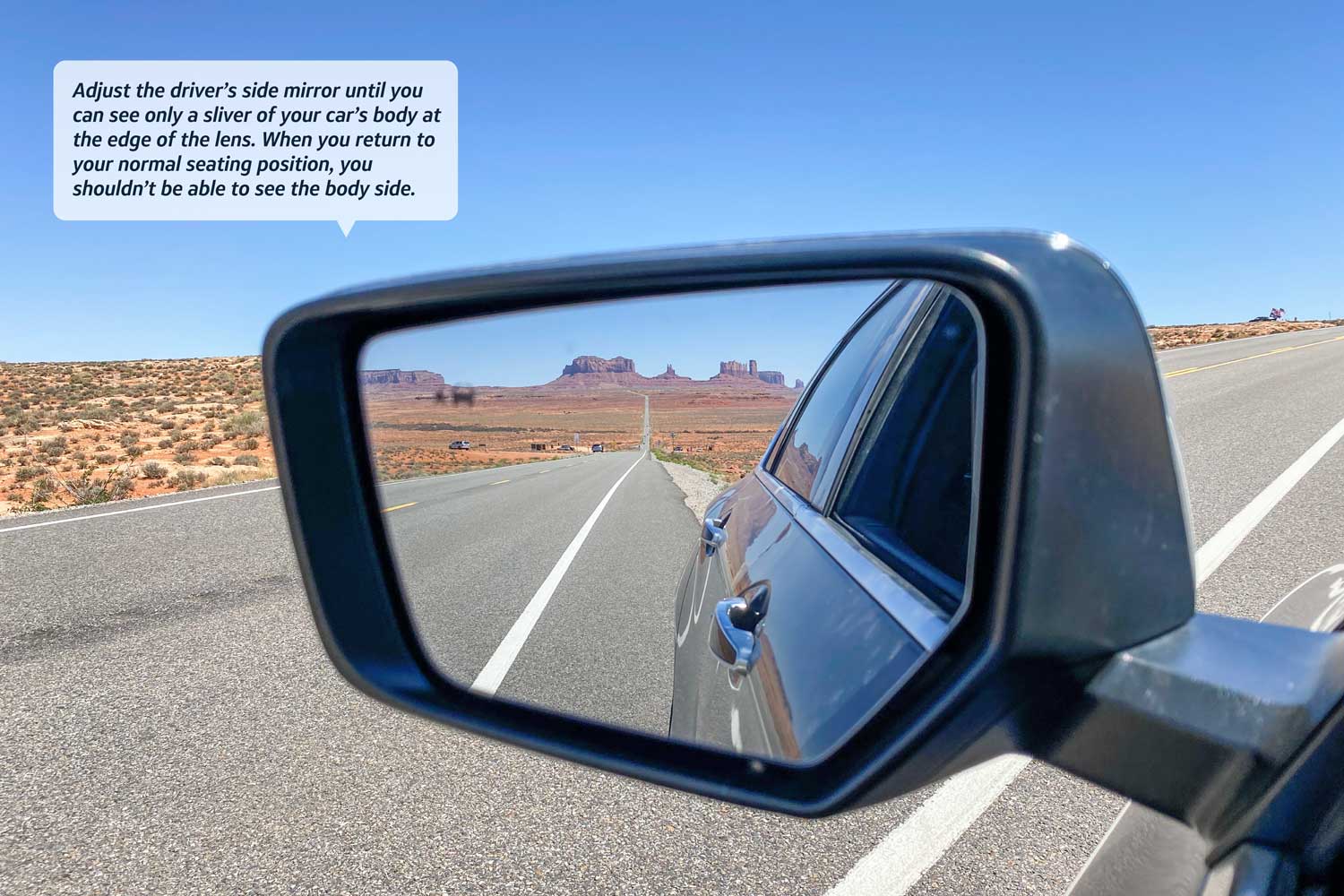
What constitutes a good view? Generally, you want to see the lane next to you, extending backward as far as possible. A small sliver of your own car’s rear quarter panel is acceptable as a reference point, but minimizing this is key. Seeing too much of your own car defeats the purpose, as it takes away from the valuable real estate needed to observe vehicles approaching from the rear. The goal is to eliminate, or at least minimize, the dreaded blind spot.
Minimizing the Blind Spot: A Gradual Transition
The traditional mirror setup often leaves a significant blind spot, particularly on larger vehicles like SUVs and trucks. A better approach is to adjust your mirrors so that the image in your side view mirror begins where the image in your rearview mirror ends. This creates a seamless, overlapping field of vision that dramatically reduces the blind spot.
How do you achieve this? While parked on a level surface, adjust your mirrors outwards. The ideal setting is where, when a car passes you in the adjacent lane, it disappears from your rearview mirror and immediately appears in your side view mirror. This requires a bit of trial and error and may feel unusual at first, but the increased visibility is well worth the adjustment period. This technique is especially helpful on multi-lane highways.
Understanding the Distortion: Objects are Closer Than They Appear
Most side view mirrors utilize a convex lens. This curvature provides a wider field of view, but it also introduces distortion. This distortion compresses the perceived distance, making objects appear farther away than they actually are. That famous warning, "Objects in mirror are closer than they appear," isn't just a legal disclaimer; it's a crucial piece of information to keep in mind.
Because of this distortion, you must judge the speed and distance of vehicles in your side view mirrors with extra caution. A car that appears to be far behind might be approaching much faster than you think. Always use your turn signal and check your blind spot before changing lanes, even if you think the coast is clear. Never solely rely on your mirrors; a quick glance over your shoulder is still the best way to confirm there are no vehicles lurking in your blind spot.
Adjusting for Different Vehicle Types and Driving Conditions
The optimal mirror setup can vary depending on the type of vehicle you're driving and the driving conditions. For example, if you're towing a trailer, you'll likely need to extend your side view mirrors to provide a clear view of the trailer's sides and rear. Many aftermarket towing mirrors are available for this purpose.
In inclement weather, visibility can be significantly reduced. Make sure your mirrors are clean and free of ice, snow, or rain. Many modern vehicles are equipped with heated mirrors, which can be a lifesaver in cold climates. Consider applying a water-repellent coating to your mirrors to improve visibility in wet conditions.
Regular Maintenance and Inspection: A Critical Step
Like any other part of your vehicle, your side view mirrors require regular maintenance and inspection. Check for cracks, chips, or other damage that could impair visibility. Ensure that the mirrors are securely mounted and properly adjusted. If your mirrors are power-operated, test them regularly to ensure they're functioning correctly. A malfunctioning mirror can be a serious safety hazard. If you have aftermarket mirrors, ensure they are properly installed, and the adjustments are secure. Always consult a professional mechanic if you're unsure about mirror adjustments or repairs.
Mastering the art of side view mirror adjustment is an ongoing process. Practice and experience will help you develop a better understanding of your vehicle's blind spots and how to optimize your mirrors for maximum visibility. By paying attention to what you see (and don’t see) in your side view mirrors, you can become a safer and more confident driver.