
Where Do You Find The Color Code On A Car
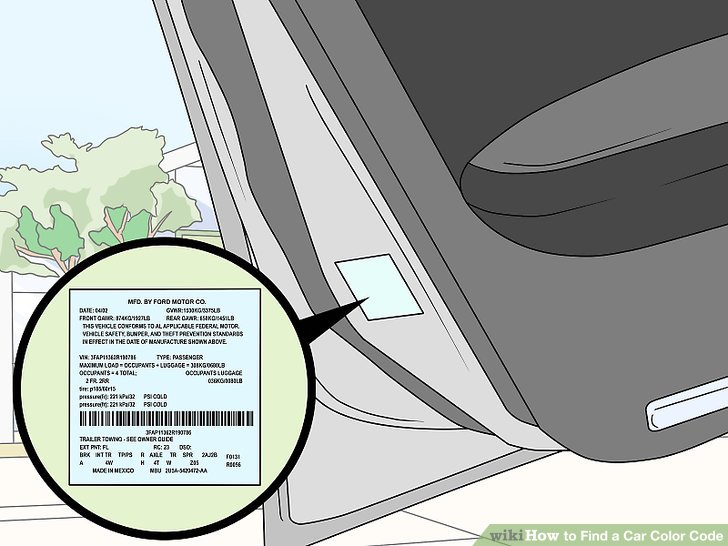
Finding the correct color code for your car is crucial when you need to touch up paint, repair body damage, or even just order matching accessories. Without it, you risk ending up with a shade that clashes, ruining the look of your vehicle. Fortunately, manufacturers usually place this information in easily accessible locations, though the exact spot can vary.
Why is Knowing Your Car's Color Code Important?
Imagine you've got a small scratch on your pristine red 2018 Mazda MX-5 Miata. You head to the auto parts store, browse the red paint options, and pick what looks like a good match. After applying it, you realize it's slightly off – maybe too orange, or too dark. This is because "red" isn't just "red." Automotive paints come in a vast spectrum of shades, and even within a single manufacturer's lineup, different "reds" exist. The color code acts as a precise identifier, ensuring you get the exact paint formula your car originally used.
Knowing the color code is also essential for ensuring consistency during more extensive repairs. If you're replacing a bumper or a fender, the body shop will use the color code to perfectly match the new panel to the rest of the car. This prevents noticeable color differences, maintaining the vehicle's resale value and aesthetic appeal.
Common Locations for Finding the Color Code
The most common place to find your car's color code is on a sticker or plate located somewhere on the vehicle's body. Here's a breakdown of typical locations by brand, but keep in mind that these can vary depending on the year and specific model:
Driver's Side Door Jamb
This is perhaps the most frequently used location. Look for a sticker on the door jamb (the area exposed when the door is open), either on the door itself or on the frame of the car. This sticker often contains the vehicle's VIN (Vehicle Identification Number), tire pressure information, and, importantly, the paint code. For instance, on many Honda vehicles, like a Civic or CR-V, you might find a sticker on the driver's side door jamb with a code like "NH-731P" for Crystal Black Pearl. Similarly, on Toyota models such as the Camry or Corolla, the color code might be displayed prominently on a sticker in the same location.
Under the Hood
Another common location is under the hood, usually on the radiator support or on the underside of the hood itself. Look for a sticker or plate that lists various vehicle specifications, including the paint code. For example, on some Ford models, such as the Mustang or F-150, you might find a sticker under the hood with a code like "PQ" for Race Red, sometimes accompanied by a descriptive name like "Redfire Clearcoat." The placement of this sticker can vary, so check both the radiator support (the metal piece at the front of the engine bay) and the underside of the hood.
Inside the Glove Compartment
While less common than the door jamb or under the hood, some manufacturers place the color code information inside the glove compartment. On certain BMW models, for example, you might find a sticker located on the inside of the glove compartment door or on the side wall. This sticker often includes a list of option codes, including the paint code. The paint code on a BMW might be a three-digit number, such as "475" for Black Sapphire Metallic. Make sure to check carefully inside the glove compartment, as the sticker can sometimes be small and easily overlooked.
Spare Tire Well or Trunk Area
In some instances, particularly on older vehicles, the color code might be located in the spare tire well or trunk area. Look for a sticker or plate affixed to the body of the car in these locations. This is less common on newer vehicles but worth checking if you've exhausted the other options. For example, some classic Volkswagen Beetles or Buses might have the paint code stamped on a plate located in the engine bay or spare tire well.
Owner's Manual
While not a primary source, the owner's manual *may* contain the color code. This is less common, but it's worth checking, especially if you're having trouble locating it elsewhere. Look for a section on vehicle specifications or paint information. However, relying solely on the owner's manual can be risky, as printing errors or omissions can occur.
Decoding the Color Code
Once you've located the sticker or plate, you need to identify the actual color code. This can be tricky because manufacturers use different formats. Some use simple two- or three-digit codes, while others use longer alphanumeric codes. Here are a few examples:
- General Motors (GM): GM often uses a two- or three-digit code, sometimes accompanied by a "WA" prefix. For example, "WA8555" represents Black. You might find this on a sticker in the glove compartment or on the door jamb of a Chevrolet or GMC vehicle.
- Ford: Ford uses a two-letter or two-digit code. For example, "YZ" represents Oxford White. This is typically found on a sticker under the hood or on the driver's side door jamb.
- Toyota: Toyota often uses a three-digit code. For example, "070" represents Blizzard Pearl. Look for this on a sticker on the driver's side door jamb.
- Honda: Honda uses a combination of letters and numbers. For example, "NH-731P" represents Crystal Black Pearl. This is commonly found on a sticker on the driver's side door jamb.
- BMW: BMW frequently uses a three-digit numeric code. For instance, "475" denotes Black Sapphire Metallic. This code can often be found on a sticker inside the driver's side door jamb or inside the glove compartment.
- Mercedes-Benz: Mercedes typically uses a three-digit numeric code. For example, "197" represents Obsidian Black Metallic. You'll usually find this code on a plate under the hood.
Pay close attention to any prefixes or suffixes associated with the code. These can be important for accurate identification. Also, be aware that some stickers may list both an exterior and interior color code. Make sure you're identifying the *exterior* paint code.
If you're still unsure, you can try searching online using your vehicle's year, make, and model to find a chart or database that lists the corresponding color codes. Many automotive paint suppliers and online forums offer this information.
What if You Can't Find the Color Code?
Sometimes, the sticker or plate containing the color code might be missing or damaged, making it impossible to read. In this case, you have a few options:
- Contact the Dealership: Provide your vehicle's VIN to the dealership's parts department. They should be able to look up the original color code based on your VIN.
- Professional Paint Matching: Take your car to a reputable auto body shop. They can use a paint spectrometer to analyze the existing paint and determine the closest possible match. This is a good option for older cars where the paint may have faded or changed over time.
- Online VIN Decoder: Many websites offer free VIN decoders. While they may not always provide the exact color code, they can often give you the official color name, which you can then use to research the corresponding code.
Practical Takeaways
Here are some practical tips to help you find and use your car's color code:
- Start with the Door Jamb: This is the most common location for the color code sticker.
- Check Under the Hood: If you don't find it on the door jamb, look under the hood.
- Document the Code: Once you find the code, write it down or take a picture of the sticker. Keep this information in a safe place for future reference.
- Double-Check the Code: Before ordering paint, double-check the code against online databases or with an auto parts store to ensure you have the correct one.
- Consider Fading: For older vehicles, even with the correct color code, the new paint might not be a perfect match due to fading. Blending the new paint into the surrounding area can help minimize the difference.
- Use the Correct Product: When ordering paint, make sure you're getting the correct type (basecoat, clearcoat, etc.) and that it's compatible with your car's existing paint system.
- Seek Professional Help: If you're unsure about any aspect of the paint matching process, don't hesitate to consult with a professional auto body shop.
By following these tips, you can confidently find your car's color code and ensure a perfect paint match for any touch-up or repair project. Remember, taking the time to find the correct code is crucial for maintaining the appearance and value of your vehicle.