
Where Is Ambient Air Temperature Sensor Located
Ever wondered how your car "knows" the temperature outside? Or why that temperature display on your dashboard sometimes seems a little off? The answer lies in a small but crucial component: the Ambient Air Temperature (AAT) sensor. This sensor plays a surprisingly significant role in your vehicle's operation, from climate control to engine performance. Let's delve into where this sensor is typically located, how it works, and why it matters.
Why Does the AAT Sensor Matter?
Before we go hunting for the sensor itself, it's important to understand why it's there in the first place. The AAT sensor, as the name suggests, measures the temperature of the air surrounding your car. This information is then used by various systems within the vehicle:
- Climate Control: Your car's automatic climate control system relies heavily on the AAT sensor. It uses the outside temperature, along with the inside temperature and your desired setting, to adjust the heating or cooling output. Without an accurate reading, the system might struggle to maintain a comfortable cabin temperature. For example, in a Honda Civic with automatic climate control, a faulty AAT sensor could lead to the air conditioning blowing cold air even on a relatively cool day.
- Engine Management: The Engine Control Unit (ECU) uses the AAT reading, along with other sensor data (like engine coolant temperature and intake air temperature), to optimize fuel delivery and ignition timing. Colder air is denser and contains more oxygen, so the ECU might adjust the fuel mixture to compensate, improving performance and efficiency. Modern cars, especially those with turbochargers, are heavily reliant on accurate air temperature readings for optimal performance.
- Dashboard Display: Of course, the most obvious function is displaying the outside temperature on your dashboard. While this might seem purely for convenience, it can also be important for safety, especially in areas with icy conditions.
- Other Systems: Some advanced driver-assistance systems (ADAS) might use the AAT sensor. For instance, the windshield defogger system might activate automatically in cold and humid conditions.
Where to Find the AAT Sensor
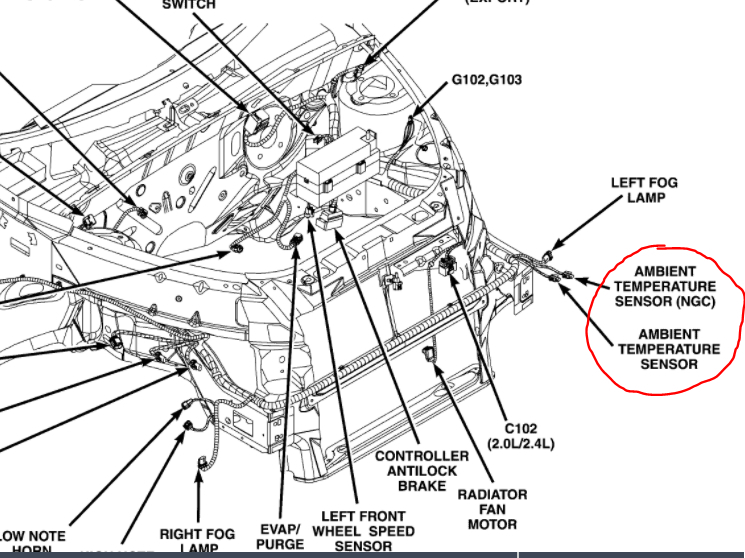
The location of the AAT sensor varies depending on the make and model of your vehicle, but there are some common spots. The goal is to place the sensor in a location that provides a relatively accurate reading of the ambient air temperature, away from direct engine heat or sunlight. Here's a breakdown of typical locations:
Behind the Front Bumper
This is perhaps the most common location. The sensor is often mounted on a bracket or clipped to the bumper support, somewhere behind the front grille or lower bumper opening. This placement provides good airflow and shields the sensor from direct sunlight. Locating it here means it's usually protected from road debris kicked up by the front wheels. Think of a Toyota Camry – the AAT sensor is often tucked away behind the lower part of the front bumper, requiring you to remove a few plastic clips to access it.
Near the Radiator Support
Similar to the bumper location, some manufacturers place the AAT sensor near the radiator support. This area also benefits from good airflow, but it's important to note that heat radiating from the radiator could potentially affect the sensor's accuracy, especially when the engine is running hot. Check around the edges of the radiator frame. You'll commonly find this placement in European cars.
Inside the Side Mirror
While less common than the front bumper, some vehicles, especially higher-end models, integrate the AAT sensor into the side mirror housing. This location provides a relatively consistent reading and protects the sensor from road debris. For example, some BMW models have the AAT sensor discreetly embedded within the underside of the side mirror housing. This placement often requires removing the mirror glass to access the sensor.
Underneath the Vehicle
Less frequently, the AAT sensor can be found mounted underneath the vehicle, near the front. This location aims for a more consistent reading, shielded from direct sunlight and engine heat. However, it's also more vulnerable to damage from road debris and moisture. If you're looking under your car, check along the frame rails near the front bumper.
Identifying the AAT Sensor
Once you've located a potential spot, how do you know it's *the* AAT sensor? Here are some clues:
- Small Size: The AAT sensor is typically a small, plastic or metal sensor, often cylindrical or rectangular in shape.
- Two Wires: It usually has a two-wire connector. This is because most AAT sensors are simple thermistors, which change resistance based on temperature.
- Exposed Thermistor: You might see a small, exposed thermistor or temperature-sensitive element. This is the part that actually measures the air temperature. Be careful not to damage it.
- Wiring: Trace the wires. The wires from the AAT sensor will lead directly to the vehicle's wiring harness and eventually to the ECU.
If you're unsure, consult your vehicle's repair manual or a wiring diagram. These resources will provide specific information about the AAT sensor location and wiring for your particular make and model. Online forums dedicated to your car are also a great source of information, with many members having experience locating and replacing the AAT sensor.
Troubleshooting AAT Sensor Issues
A faulty AAT sensor can cause a variety of problems, from inaccurate temperature readings on your dashboard to issues with your climate control system and even engine performance. Here are some common symptoms:
- Incorrect Temperature Display: The most obvious symptom is an inaccurate temperature reading on the dashboard. The display might show a temperature that is significantly higher or lower than the actual ambient temperature.
- Erratic Temperature Readings: The temperature display might fluctuate wildly or show unrealistic temperatures.
- Climate Control Problems: The air conditioning might not blow cold air, or the heater might not produce warm air, even when set to the appropriate temperature.
- Poor Fuel Economy: In some cases, a faulty AAT sensor can affect engine performance and fuel economy, although this is less common.
If you suspect a problem with your AAT sensor, here's a simple troubleshooting process:
- Check for Obvious Damage: Visually inspect the sensor and its wiring for any signs of damage, such as cracks, breaks, or corrosion.
- Scan for Codes: Use an OBD-II scanner to check for diagnostic trouble codes (DTCs) related to the AAT sensor. Common codes include P0070, P0071, P0072, and P0073.
- Test the Sensor's Resistance: Use a multimeter to measure the sensor's resistance at different temperatures. Compare your readings to the manufacturer's specifications.
- Check the Wiring: Use a multimeter to check the continuity of the wiring between the sensor and the ECU. Look for any breaks or shorts.
- Replace the Sensor: If the sensor is faulty, replace it with a new one. Make sure to use a sensor that is specifically designed for your vehicle.
Practical Takeaways
- Know Where to Look: Understanding the common locations for the AAT sensor – behind the front bumper, near the radiator support, or in the side mirror – will save you time and effort when troubleshooting.
- Use Your Resources: Consult your vehicle's repair manual, wiring diagrams, and online forums for specific information about your make and model.
- Don't Ignore the Symptoms: Pay attention to any signs of a faulty AAT sensor, such as inaccurate temperature readings or climate control problems. Addressing these issues promptly can prevent more serious problems down the road.
- Simple DIY Replacement: Replacing an AAT sensor is often a relatively simple DIY job, requiring basic tools and a new sensor. You can save money by doing it yourself.
- Clean the Area: When replacing the sensor, clean the surrounding area. Road salt and debris can accumulate near the sensor and cause corrosion or inaccurate readings.
The AAT sensor may be a small component, but its impact on your vehicle's performance and comfort is significant. By understanding its location, function, and troubleshooting tips, you can ensure that your car "knows" the temperature outside and operates at its best. So, the next time your temperature display seems off, you'll know where to start looking!