
Where Is Bank 2 O2 Sensor Located
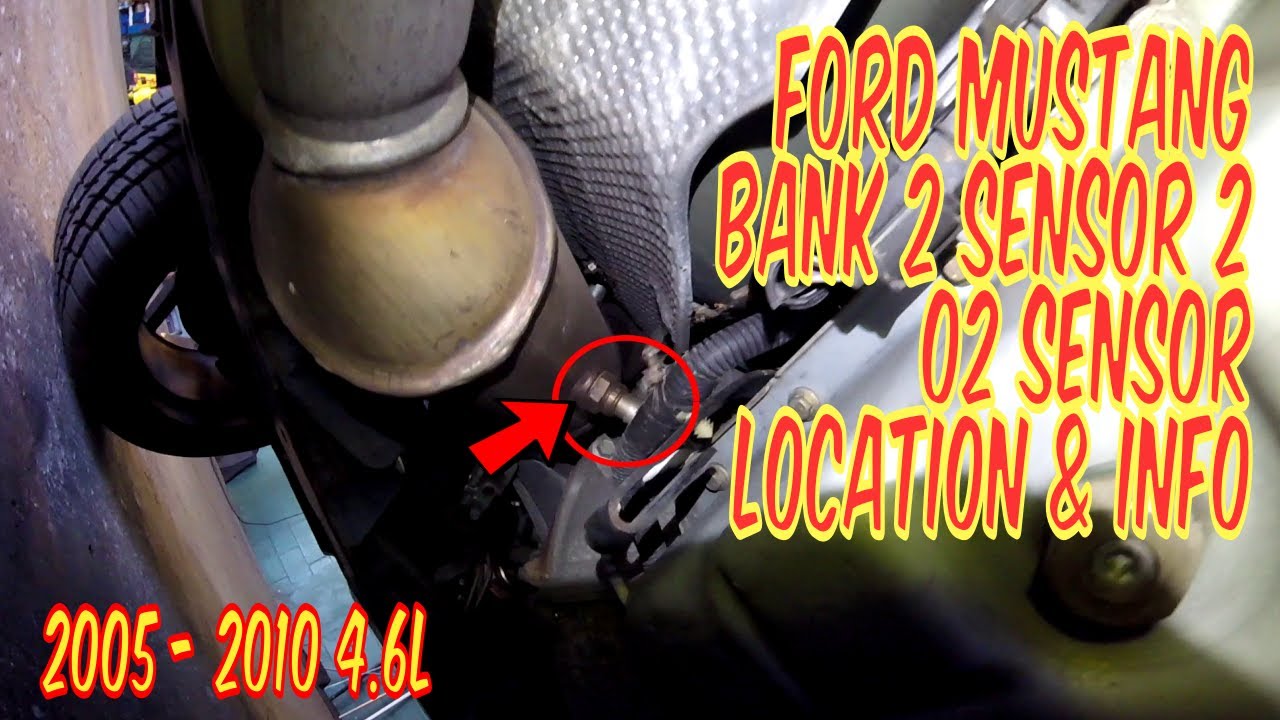
For decades, the oxygen sensor, often shortened to O2 sensor, has been a silent guardian in our combustion engines, diligently monitoring exhaust gases and providing critical feedback to the engine control unit (ECU). This feedback loop allows the engine to fine-tune the air-fuel mixture for optimal performance, fuel efficiency, and reduced emissions. While the fundamental principle of operation remains the same, the complexities surrounding O2 sensors, especially the notorious "Bank 2," are evolving rapidly in the face of electrification and advanced combustion technologies.
Understanding the location of Bank 2 O2 sensors is crucial for diagnostics and repair. In essence, Bank 1 refers to the side of the engine containing cylinder number 1. Consequently, Bank 2 refers to the opposite side of a V-shaped or horizontally opposed engine. For inline engines, which only have one cylinder bank, there is no Bank 2. The O2 sensors themselves are strategically positioned upstream (before) and downstream (after) the catalytic converter on each bank. So, the "Bank 2 O2 sensor" refers to the sensor located on the bank opposite cylinder #1.
The Shifting Landscape of Oxygen Sensing
The automotive industry is undergoing a monumental transformation. Electric vehicles (EVs) are gaining prominence, hybrid systems are becoming increasingly sophisticated, and traditional internal combustion engines (ICEs) are incorporating advanced technologies like gasoline direct injection (GDI) and variable valve timing (VVT). These advancements directly impact the role and future of O2 sensors.
The Electric Revolution: A Bye-Bye to Banks?
At first glance, the rise of EVs appears to spell the end for O2 sensors. EVs, by their very nature, don't have internal combustion engines, therefore rendering the need for exhaust gas monitoring obsolete. This is partially true. As pure electric vehicles gain a larger market share, the demand for traditional O2 sensors *will* decrease. However, the transition will be gradual. The vast majority of vehicles on the road today, and for many years to come, will still rely on ICEs or hybrid powertrains.
Hybrid Systems: A More Nuanced Approach
Hybrid vehicles present a more complex scenario. While they incorporate electric motors, they also retain a downsized and often highly optimized ICE. In these systems, O2 sensors remain essential for managing the engine's performance and ensuring minimal emissions, especially during cold starts and high-load situations where the electric motor might not be the primary source of power. We're seeing more advanced strategies in hybrids, such as lean-burn operation, which require even more precise O2 sensor data to prevent NOx emissions from spiking. The placement and type of O2 sensors in hybrid systems may differ from traditional ICE vehicles, demanding a deeper understanding of the specific vehicle architecture.
Advanced Combustion: The Sensor's Last Stand?
Even as EVs and hybrids proliferate, significant advancements are being made in ICE technology. GDI, VVT, turbocharging, and cylinder deactivation are all aimed at squeezing more power and efficiency out of every drop of fuel. These technologies demand even more precise control over the combustion process. Advanced O2 sensors, coupled with sophisticated engine management software, play a crucial role in achieving this level of control. For instance, some modern engines utilize wideband O2 sensors that offer a much broader measurement range than traditional narrowband sensors. This allows for more accurate air-fuel ratio control, leading to improved fuel economy and reduced emissions. Furthermore, some manufacturers are exploring the use of virtual O2 sensors, which rely on complex algorithms and other sensor data to estimate exhaust gas composition. While these virtual sensors can reduce the cost and complexity of the exhaust system, they also rely heavily on the accuracy and reliability of the other sensors in the system.
Challenges and Innovations in O2 Sensor Technology
The future of O2 sensors is not without its challenges. As engines become more complex and emission regulations become stricter, the demands on O2 sensor performance will only increase. One of the biggest challenges is maintaining accuracy and reliability over the sensor's lifespan. O2 sensors are exposed to extreme temperatures, corrosive exhaust gases, and other contaminants, which can degrade their performance over time. This degradation can lead to inaccurate readings, reduced fuel economy, and increased emissions. Furthermore, diagnosing O2 sensor problems can be challenging, especially with the increasing complexity of modern engine management systems.
However, these challenges are also driving innovation in O2 sensor technology. Manufacturers are developing more durable and reliable sensors using advanced materials and manufacturing processes. They are also incorporating self-diagnostic capabilities into the sensors, which can help to identify potential problems early on. In addition, advanced algorithms and software are being developed to compensate for sensor drift and degradation, ensuring that the engine continues to operate optimally even as the sensor ages.
The integration of artificial intelligence (AI) and machine learning (ML) into engine management systems holds immense potential for improving the accuracy and reliability of O2 sensor data.
AI and ML algorithms can be trained on vast amounts of sensor data to identify patterns and anomalies that would be difficult for humans to detect. This can help to diagnose O2 sensor problems more quickly and accurately, as well as optimize engine performance based on real-time sensor data. Furthermore, AI and ML can be used to predict O2 sensor failure, allowing for proactive maintenance and preventing costly repairs.
Smart Automotive Solutions and the Internet of Things (IoT)
The rise of smart automotive solutions and the Internet of Things (IoT) is also transforming the role of O2 sensors. Connected vehicles can transmit real-time sensor data to the cloud, allowing for remote diagnostics and predictive maintenance. This data can be used to identify potential problems before they occur, preventing breakdowns and reducing downtime. Furthermore, connected vehicles can share O2 sensor data with other vehicles, creating a network of information that can be used to optimize traffic flow and reduce emissions. Imagine a scenario where a vehicle detects a malfunctioning O2 sensor and automatically alerts the driver and the nearest service center. Or a system where O2 sensor data is used to dynamically adjust engine parameters based on real-time traffic conditions and weather patterns.
However, the integration of O2 sensors into the IoT also raises concerns about data privacy and security. It is crucial to ensure that O2 sensor data is protected from unauthorized access and misuse. Manufacturers and service providers must implement robust security measures to safeguard this data and protect the privacy of vehicle owners. The ethical considerations surrounding data collection and usage are paramount as we move towards a more connected automotive ecosystem.
The Road Ahead: A Visionary Perspective
The future of mobility is undoubtedly electric. But the transition will be a multifaceted journey involving a diverse range of powertrain technologies. While the role of the traditional O2 sensor might diminish in the long term, its legacy will live on in the sophisticated sensor technologies that will monitor and optimize the performance of future powertrains, whether they be hybrid, hydrogen fuel cell, or even entirely new propulsion systems that we cannot yet imagine.
We envision a future where vehicles are seamlessly integrated into a smart, sustainable transportation ecosystem. Sensors of all kinds, including advanced successors to the O2 sensor, will play a crucial role in this ecosystem, providing the data needed to optimize traffic flow, reduce emissions, and enhance safety. Vehicles will communicate with each other and with the infrastructure, sharing information about their location, speed, and sensor data. AI and ML algorithms will analyze this data in real-time, optimizing traffic patterns and preventing accidents. In this future, mobility will be not just a means of transportation, but a harmonious blend of technology, sustainability, and human experience. The humble O2 sensor, in its evolved forms, will be a silent, but essential, contributor to this future.