
Where Is Cylinder 1 Located
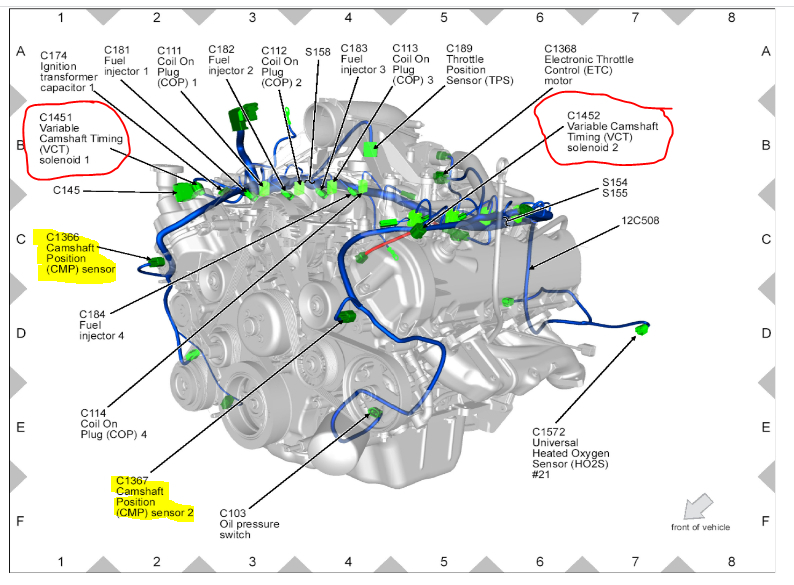
The question seems simple enough, right? Where is cylinder number one located in your car's engine? You might think it's always at the front, near the belts and pulleys. And sometimes, you'd be right. But the reality is far more complex, a veritable rabbit hole of engineering decisions influenced by everything from engine layout to manufacturer preference. Knowing the location of cylinder one is crucial for everything from basic maintenance like spark plug replacement to more complex diagnostics like compression testing. So, let's dive in and unravel this mystery!
Why Does Cylinder One Location Matter?
Before we pinpoint specific locations, let's understand why this knowledge is important. Think of your engine's cylinders as individual performers in a meticulously choreographed dance. The firing order dictates the sequence in which these cylinders ignite, and this order is built around cylinder one. Improper timing, misdiagnosis, or even incorrect spark plug wiring can result in poor performance, misfires, or even engine damage. Knowing where cylinder one sits allows you to:
- Accurately perform timing adjustments.
- Correctly diagnose misfires using OBD-II scanners (understanding which cylinder the code refers to).
- Properly install and maintain spark plugs and ignition wires.
- Conduct compression tests accurately.
The Most Common Location: Front and Center (Usually)
In most inline engines (straight-4, straight-6, etc.), cylinder one is indeed the cylinder closest to the front of the engine, nearest the timing belt or chain and accessory pulleys. This is the easiest and most intuitive layout. However, even within inline engines, variations exist.
Example: Inline-4 Honda K20/K24
These ubiquitous engines found in countless Hondas (Civic Si, Accord, CR-V) follow the typical convention. Cylinder one is closest to the timing chain side of the engine, the side with all the pulleys and belts. However, it's always good practice to double-check with a specific engine diagram if you are unsure.
But what about engines that aren't so...straightforward?
V-Engines: Now Things Get Interesting
V-engines (V6, V8, V10, V12) introduce another layer of complexity. The two banks of cylinders add a crucial question: which bank houses cylinder one? The answer, predictably, isn't universal.
General Rule (With Exceptions): On most V-engines, cylinder one is located on the driver's side bank (in left-hand drive markets) or the right side bank (in right-hand drive markets). This bank is often referred to as Bank 1.
However, don't assume! Some manufacturers deviate from this. Here are a few examples:
Example 1: Ford Modular V8 (4.6L, 5.4L)
Ford's Modular V8s, found in Mustangs, F-150s, and countless other vehicles, place cylinder one on the passenger side (in left-hand drive markets) bank. This is a crucial detail to remember when working on these engines. Bank 1 is the right bank, when facing the engine from the front of the vehicle.
Example 2: GM LS V8 Engines
GM's legendary LS series V8 engines (LS1, LS3, LS7, etc.) adhere to the more common convention. Cylinder one is located on the driver's side bank (Bank 1). Remember, however, that the cylinder numbering order differs between the left and right banks. On the left bank (Bank 1), cylinders are numbered 1, 3, 5, 7 from front to back. On the right bank (Bank 2), they are numbered 2, 4, 6, 8 from front to back.
Example 3: BMW V12 Engines
BMW's V12 engines are known for their complexity, and the cylinder numbering is no exception. While BMW uses the Bank 1 = Right side, Bank 2 = Left side rule, the exact cylinder numbering can vary slightly depending on the specific engine generation. Always consult a repair manual or engine diagram specific to the BMW V12 you're working on.
Quick Spec Table: V-Engine Cylinder 1 Location Examples
| Engine Family | Configuration | Cylinder 1 Location |
|---|---|---|
| Ford Modular V8 (4.6L, 5.4L) | V8 | Passenger Side (Right Bank) |
| GM LS Series V8 | V8 | Driver Side (Left Bank) |
| BMW M70 (V12) | V12 | Right Side (Bank 1) |
Horizontally Opposed (Boxer) Engines: A Different Kind of Flat
Horizontally opposed, or "boxer" engines, like those found in Subarus and some Porsches, present another unique situation. Like V-engines, they have two banks of cylinders. The general rule is that cylinder one is located on the front bank (relative to the vehicle's direction of travel) on the right side. Think of it as the "front right" cylinder.
Example: Subaru EJ Series Engines
Subaru's EJ series engines (EJ20, EJ25, etc.) generally follow this convention. Cylinder one is located on the right-hand side (when sitting in the driver's seat) and is the front-most cylinder on that bank.
The Importance of Verification
With all these variations, it's clear that assuming anything is a recipe for disaster. Always verify the cylinder one location for your specific engine and vehicle. Here's how:
- Consult the Vehicle's Repair Manual: This is the most reliable source of information.
- Use Online Engine Diagrams: Many reputable websites offer detailed engine diagrams and schematics.
- Look for Markings: Some engines may have subtle markings indicating cylinder one.
Real-World Driving Impressions (And Why Cylinder One Matters)
Imagine you're troubleshooting a misfire in your beloved Subaru WRX. You hook up your OBD-II scanner and get a code for a misfire on cylinder one. If you incorrectly assume cylinder one is on the left bank, you'll be chasing the wrong problem. This can lead to wasted time, unnecessary parts replacements, and continued frustration. Understanding the correct cylinder one location allows you to focus your diagnostic efforts and get your car back on the road faster.
Similarly, with a classic Ford Mustang equipped with a 4.6L Modular V8, mistakenly assuming cylinder one is on the driver's side could lead to incorrectly timed ignition or incorrect spark plug wiring, dramatically affecting engine performance and fuel economy. The difference between smooth acceleration and a sputtering, hesitant engine could come down to knowing which cylinder is number one.
Pros and Cons: Knowing vs. Guessing
Knowing Cylinder One Location
- Pros:
- Accurate diagnostics and repairs.
- Improved engine performance and fuel economy.
- Reduced risk of engine damage.
- Increased confidence in your mechanical abilities.
- Cons:
- Requires a bit of research and verification.
Guessing Cylinder One Location
- Pros:
- None. Seriously. Don't do it.
- Cons:
- Potentially catastrophic engine damage.
- Frustration and wasted time.
- Empty wallet.
Conclusion: Knowledge is Horsepower!
While the location of cylinder one might seem like a trivial detail, it's a fundamental piece of information for anyone working on engines. Whether you're a seasoned mechanic or a weekend warrior, taking the time to verify cylinder one's location can save you time, money, and a whole lot of headaches. So, the next time you're wrenching on your car, remember this article and double-check your work. Your engine will thank you!
And now, for the fun part... Let's spark a debate!
Fun Fact: Some older European cars, particularly those with front-wheel drive and transversely mounted engines, have cylinder numbering that starts from the flywheel end of the engine. That's right, the cylinder furthest away from the belts is number one! What obscure or unconventional cylinder one locations have *you* encountered? Share your stories in the comments below!