
Where Is The Catalytic Converter In A Car
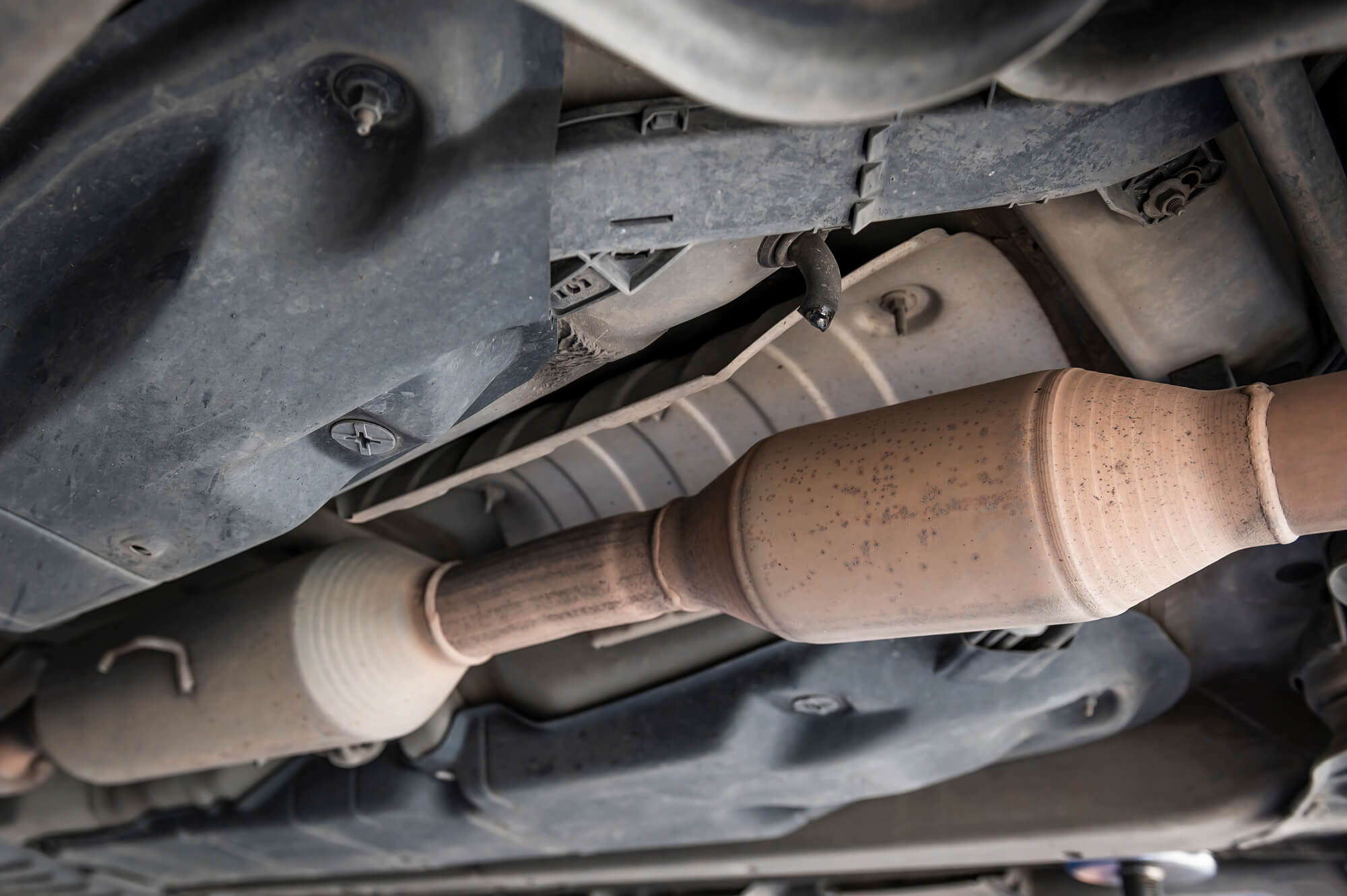
Alright, let's talk catalytic converters – a vital piece of emissions control hardware that every modern car has. Knowing where it lives on your vehicle isn't just trivia; it can be crucial for maintenance, troubleshooting, and even theft prevention. While the exact location can vary depending on the make, model, and year of your car, there are some general principles and common placements we can explore. Consider this your comprehensive guide to finding your catalytic converter.
Understanding the Catalytic Converter
Before we dive into the hunt, let’s quickly recap what a catalytic converter actually does. Its primary function is to reduce the harmful pollutants in your car's exhaust gases. Inside, it uses catalysts – typically platinum, palladium, and rhodium – to trigger chemical reactions that convert these gases into less harmful substances. Think of it as a chemical processing plant within your exhaust system.
Specifically, it aims to convert:
- Hydrocarbons (HC), unburnt fuel, into water (H2O) and carbon dioxide (CO2).
- Carbon monoxide (CO), a poisonous gas, into carbon dioxide (CO2).
- Nitrogen oxides (NOx), which contribute to smog and acid rain, into nitrogen (N2) and oxygen (O2).
This process happens at high temperatures, usually between 400 and 800 degrees Celsius (752-1472 degrees Fahrenheit). This is why catalytic converters are located downstream of the engine, closer to the hottest part of the exhaust stream.
General Location Principles
The golden rule is that the catalytic converter is always located in the exhaust system. Beyond that, there are a few factors that influence the exact spot:
- Engine Configuration: The engine layout (inline, V-engine, etc.) significantly impacts exhaust manifold design, and consequently, converter placement.
- Drive Configuration: Front-wheel drive (FWD), rear-wheel drive (RWD), or all-wheel drive (AWD) vehicles have different drivetrain layouts that affect undercarriage space.
- Model Year: Emissions regulations have become stricter over time. Older cars might have a single converter, while newer ones may have multiple.
- Number of Oxygen Sensors: The number and placement of O2 sensors is a clue, as one is always present before and often after the converter.
Here's a breakdown of the common locations:
Directly After the Exhaust Manifold(s)
This is a very common location, particularly in older vehicles and some newer ones. The catalytic converter is bolted directly to the exhaust manifold, or very close to it, immediately after the engine. In a V-engine configuration (V6, V8), you'll usually find two converters, one for each bank of cylinders.
Pros: Quick light-off (reaching operating temperature) due to proximity to the hot exhaust gases. This is important for minimizing emissions during cold starts.
Cons: Subjected to higher temperatures, which can shorten its lifespan. Also, can be harder to access for maintenance or replacement.
Under the Car, Downstream of the Exhaust Manifold(s)
Another very common location is further down the exhaust system, usually underneath the car, but still relatively close to the engine. This placement allows for better heat dissipation and can prolong the life of the converter. You'll typically find it somewhere between the exhaust manifold(s) and the muffler. This is especially true on vehicles with longer exhaust systems, such as large sedans or SUVs.
Pros: Lower operating temperatures, potentially longer lifespan. Easier access for replacement or inspection.
Cons: Slower light-off time, which can lead to higher emissions during cold starts.
Integrated into the Exhaust Downpipe
On some vehicles, especially those with turbocharged engines, the catalytic converter is integrated into the downpipe. The downpipe is the section of exhaust pipe that connects the turbocharger outlet to the rest of the exhaust system. Integrating the converter here helps to reduce backpressure and improve turbocharger performance.
Pros: Compact design, reduced backpressure (especially with high-flow converters).
Cons: Can be expensive to replace if the downpipe and converter are integrated into a single unit. Subjected to very high temperatures from the turbocharger.
Multiple Catalytic Converters
Many modern vehicles, especially those adhering to stringent emissions standards (like California's), employ multiple catalytic converters. This is often a combination of the above locations. For example, a car might have a small "pre-cat" directly attached to the exhaust manifold for quick light-off, followed by a larger main converter further downstream.
The reasoning is to maximize emissions reduction efficiency. The pre-cat quickly gets up to temperature and starts converting pollutants, while the main converter handles the bulk of the exhaust flow once it's warmed up.
Identifying the Catalytic Converter
Okay, so we know *where* it might be. How do you actually *identify* it under the car? Here are some key characteristics:
- Shape and Size: Catalytic converters are typically oval or rectangular in shape, and they're relatively large – about the size of a loaf of bread (or larger, depending on the vehicle).
- Heat Shield: Because they operate at high temperatures, catalytic converters are usually surrounded by a heat shield, a metal covering designed to protect nearby components from excessive heat. This shield is a dead giveaway.
- Oxygen Sensors: Look for oxygen sensors (O2 sensors) – small, cylindrical sensors screwed into the exhaust pipe. There will almost always be an O2 sensor *before* the catalytic converter (upstream) and often one *after* it (downstream) to monitor its performance. The sensors have wires leading to them.
- Exhaust Piping: The catalytic converter is an inline component of the exhaust system. So, it is connected on both ends by exhaust pipes.
- Rust: Unfortunately, catalytic converters are prone to rusting, especially in areas with road salt. So, don't be surprised if you see some surface rust on the converter or its heat shield.
Practical Steps to Locate Your Catalytic Converter
Here's a step-by-step approach to finding your catalytic converter:
- Safety First: Always work on your car in a well-ventilated area and use jack stands to safely support the vehicle if you need to get underneath it. Never work under a car supported only by a jack! Wear safety glasses and gloves.
- Consult Your Vehicle's Manual: Your car's owner's manual or repair manual may have diagrams or descriptions of the exhaust system, including the location of the catalytic converter(s).
- Visual Inspection: Start by visually inspecting the exhaust system, beginning at the exhaust manifold(s) near the engine. Follow the exhaust pipes downstream, looking for the characteristic shape, heat shield, and oxygen sensors.
- Listen for Leaks: With the engine running (and the exhaust system cooled down!), listen for exhaust leaks. Leaks are common around the connections to the catalytic converter.
- Online Resources: Search online forums or parts websites specific to your vehicle's make and model. Other owners may have posted photos or diagrams showing the location of the catalytic converter.
Important Note: Tampering with or removing a catalytic converter is illegal in many jurisdictions and can result in hefty fines. It's also harmful to the environment. Only replace a catalytic converter if it's genuinely faulty and needs replacement, and always use a replacement that meets or exceeds the original equipment manufacturer (OEM) specifications.
In conclusion
Finding the catalytic converter is a process of understanding general placements, looking for key identifiers and systematically checking the exhaust system. This know-how is invaluable for diagnostic work and maintenance.