
Where Is The Catalytic Converter On A Car
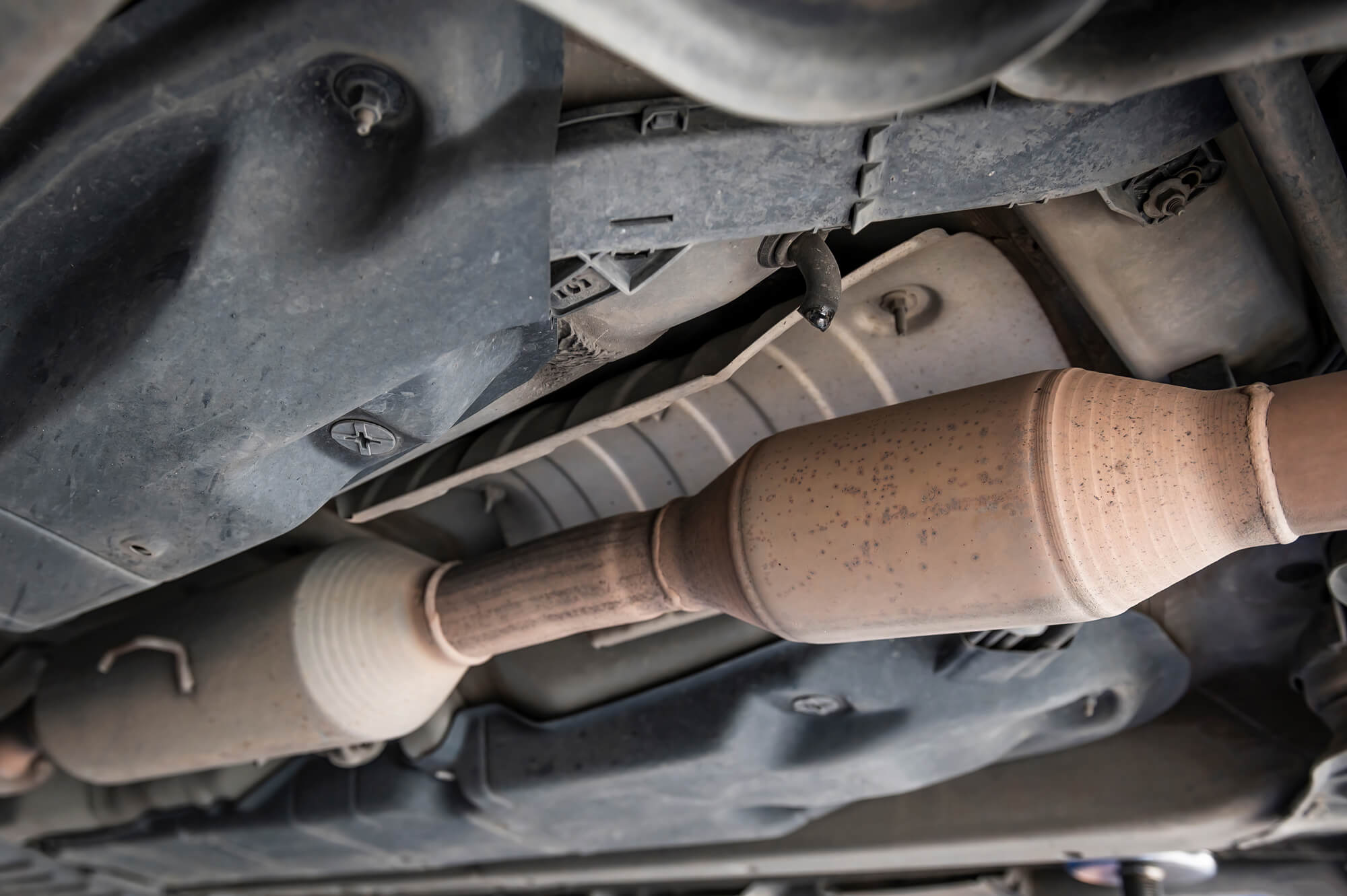
The catalytic converter, a seemingly unassuming component nestled beneath your car, plays a vital role in reducing harmful emissions. Understanding its location isn't just about satisfying curiosity; it's about appreciating its function within the intricate ecosystem of your vehicle and potentially safeguarding it from theft. This article delves into the typical and atypical locations of catalytic converters, exploring the factors influencing their placement and offering visual cues for identification.
The Conventional Location: Underneath the Car, Part of the Exhaust System
The vast majority of vehicles house their catalytic converter within the exhaust system, usually between the engine's exhaust manifold(s) and the muffler. This placement is strategically chosen to ensure the converter operates at optimal temperatures. The hot exhaust gases exiting the engine provide the necessary heat to initiate and maintain the chemical reactions within the converter. Think of it as an afterburner, cleaning up what the engine couldn't fully combust.
More specifically, you'll typically find the converter located downstream of the oxygen sensors that monitor the exhaust gases. These sensors provide feedback to the engine control unit (ECU), allowing it to adjust the air-fuel mixture for optimal engine performance and emissions control. The converter's placement after the sensors ensures that the ECU has accurate data before the exhaust gases enter the converter.
Visually, the catalytic converter appears as a bulged section within the exhaust pipe. It's usually a cylindrical or oval-shaped metal casing, often made of stainless steel to withstand high temperatures and corrosion. Depending on the vehicle, you might see one or more converters. Some cars have a single converter handling the exhaust from all cylinders, while others, particularly those with V-shaped engines, may have separate converters for each bank of cylinders. These are often referred to as dual-catalyst systems.
Visual Cues and Identification
Identifying a catalytic converter involves a combination of visual inspection and understanding its position within the exhaust system. Look for the following:
- Shape and Size: A cylindrical or oval-shaped metal casing, larger than the surrounding exhaust pipe sections.
- Placement: Located within the exhaust system, typically between the engine manifold and the muffler. Check along the exhaust pipe for a bulge or section that appears different from the rest of the piping.
- Heat Shield: Often, a heat shield surrounds the converter to protect the undercarriage and passengers from the high temperatures. The heat shield may be made of metal or a heat-resistant composite material. This shield, while seemingly innocuous, is a strong indicator of a catalytic converter underneath.
- Oxygen Sensors: Observe the exhaust pipe for oxygen sensors (small, threaded metal cylinders with wires extending from them). The catalytic converter is usually located downstream of at least one oxygen sensor.
It's important to note that some aftermarket exhaust systems may alter the appearance of the exhaust system, potentially making the converter less obvious. Also, some older vehicles may have their catalytic converters integrated directly into the exhaust manifold, making them look like part of the manifold itself.
Variations in Location: Engine Configuration and Vehicle Design
While the general principle of locating the converter within the exhaust system remains consistent, the specific placement can vary considerably based on several factors, including:
- Engine Configuration: As mentioned earlier, V-shaped engines often have separate converters for each cylinder bank, leading to dual-catalyst systems. Inline engines typically have a single converter handling the exhaust from all cylinders.
- Front-Wheel Drive vs. Rear-Wheel Drive: Front-wheel drive vehicles often have the converter located closer to the engine, as the exhaust system typically runs under the engine bay. Rear-wheel drive vehicles may have the converter further back along the chassis.
- Vehicle Size and Ground Clearance: Smaller vehicles with lower ground clearance may have the converter tucked closer to the body to prevent damage. Larger vehicles may have more room to position the converter further away from sensitive components.
- Emissions Regulations: Increasingly stringent emissions regulations have led to more complex catalytic converter designs and, in some cases, the use of multiple converters in series or parallel to further reduce emissions.
Specific Examples of Location Variations
Consider these scenarios to illustrate the variations:
- High-Performance Vehicles: Some high-performance vehicles utilize "high-flow" catalytic converters, which are designed to reduce backpressure and improve engine performance. These converters may be located closer to the engine to maximize their effectiveness, but they may also be more susceptible to damage due to the increased heat.
- Diesel Vehicles: Diesel vehicles often employ a Diesel Oxidation Catalyst (DOC) and a Diesel Particulate Filter (DPF) in addition to or instead of a traditional three-way catalytic converter. The DOC oxidizes hydrocarbons and carbon monoxide, while the DPF traps particulate matter. These components are often located in close proximity to each other within the exhaust system.
- Hybrid Vehicles: Hybrid vehicles may have catalytic converters that are designed to operate at lower temperatures due to the frequent stop-start nature of hybrid driving. Their placement might be optimized for quick warm-up rather than peak operating temperature.
Why Location Matters: Temperature, Efficiency, and Theft Prevention
The location of the catalytic converter is not arbitrary; it's carefully considered to optimize its performance and ensure its longevity. As previously stated, temperature is a key factor. The converter needs to reach a certain temperature (typically around 400-800 degrees Celsius) to effectively catalyze the chemical reactions that reduce emissions. Locating it close to the engine helps it reach this temperature quickly. However, excessive heat can also damage the converter, so a balance must be struck.
Furthermore, the converter's location affects its susceptibility to damage from road debris and corrosion. Placing it higher up and away from the elements can prolong its lifespan. Heat shields are also crucial in protecting the converter and surrounding components.
Unfortunately, the increasing value of the precious metals (platinum, palladium, and rhodium) used in catalytic converters has made them a target for theft. Thieves often target vehicles with easily accessible converters, such as trucks and SUVs with high ground clearance. Understanding the location of your converter can help you take steps to protect it, such as parking in well-lit areas, installing anti-theft devices, or welding the converter to the exhaust system.
In conclusion, while the catalytic converter generally resides within the exhaust system, its specific location varies based on engine configuration, vehicle design, and emissions regulations. Understanding these nuances and visually identifying the converter is not only intellectually stimulating but also potentially beneficial for protecting your vehicle from theft and ensuring its compliance with environmental standards.
Ultimately, consulting your vehicle's repair manual or a qualified mechanic is the best way to pinpoint the exact location of the catalytic converter and understand any specific requirements for its maintenance or replacement.