
Where Is The Engine Temperature Sensor Located
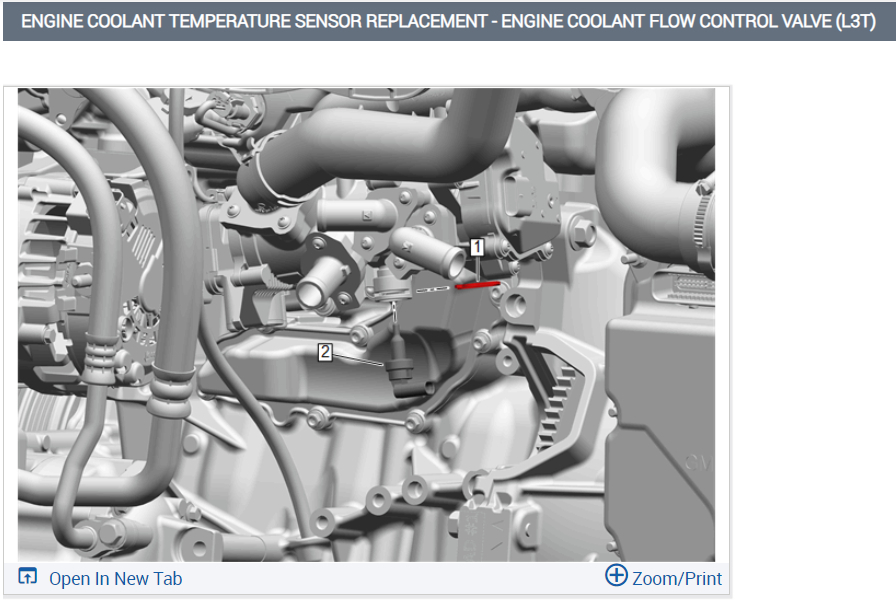
The engine temperature sensor, a seemingly small component, plays a crucial role in modern vehicle operation. Its primary function is to monitor the engine's coolant temperature and relay this information to the Engine Control Unit (ECU). The ECU then uses this data to adjust various engine parameters, including fuel injection, ignition timing, and cooling fan operation, ensuring optimal performance, fuel efficiency, and emissions control. Understanding the sensor's location, function, and potential issues is vital for automotive professionals.
Typical Engine Temperature Sensor Locations
While the exact location can vary depending on the vehicle's make, model, and engine type, the engine temperature sensor is generally found in one of the following areas:
- Engine Block: This is a common location, particularly on older vehicles. The sensor is often screwed directly into the engine block, typically near a coolant passage.
- Cylinder Head: Another frequent location, especially in engines with crossflow cylinder heads. The sensor is usually situated in the cylinder head near the coolant outlet.
- Thermostat Housing: This is an increasingly common location, offering easy access and often incorporating the sensor into the housing itself. This allows for measuring the coolant temperature as it exits the engine towards the radiator.
- Coolant Hoses: In some designs, especially those incorporating multiple temperature sensors, you might find a sensor integrated into a coolant hose or a T-fitting within the coolant hose circuit.
Identifying the sensor usually involves looking for a small, threaded sensor with an electrical connector attached. The connector typically has two or three wires. Wiring diagrams and vehicle-specific repair manuals are invaluable resources for pinpointing the exact location.
Technical Specifications and Engineering Choices
The engine temperature sensor is typically a thermistor, a type of resistor whose resistance changes significantly with temperature. There are two main types of thermistors:
- Negative Temperature Coefficient (NTC) Thermistors: These are the most commonly used type. Their resistance decreases as the temperature increases. The ECU provides a reference voltage (typically 5V) to the sensor circuit and measures the voltage drop across the thermistor. As the temperature rises, the resistance drops, and the voltage drop decreases. The ECU interprets this voltage change to determine the engine temperature.
- Positive Temperature Coefficient (PTC) Thermistors: These are less common in engine temperature sensing. Their resistance increases as the temperature increases.
The choice of thermistor type and its specific resistance-temperature curve is a crucial engineering decision. Engineers carefully select these parameters to ensure accurate temperature readings across the entire operating range of the engine. Factors considered include:
- Operating Temperature Range: The sensor must be able to accurately measure temperatures from cold start conditions (often below freezing) to high operating temperatures (often exceeding 100°C or 212°F).
- Accuracy: The sensor's accuracy directly affects the ECU's ability to control engine parameters. High accuracy is essential for optimal performance and emissions.
- Response Time: The sensor must respond quickly to changes in coolant temperature to allow the ECU to make timely adjustments.
- Durability: The sensor must be able to withstand the harsh environment within the engine compartment, including exposure to high temperatures, vibrations, and corrosive fluids.
The material used for the thermistor element is also critical. Common materials include metal oxides and semiconductors, carefully selected for their stability and sensitivity.
Comparison with Alternatives
While thermistors are the dominant technology for engine temperature sensing, other technologies exist, although they are less frequently used:
- Resistance Temperature Detectors (RTDs): RTDs use a metal resistor (typically platinum) whose resistance changes with temperature. They offer high accuracy and stability but are more expensive and have a slower response time compared to thermistors.
- Thermocouples: Thermocouples generate a voltage proportional to the temperature difference between two dissimilar metals. They can measure very high temperatures but are less accurate than thermistors or RTDs at lower temperatures.
Pros and Cons:
| Technology | Pros | Cons |
|---|---|---|
| Thermistors | Low cost, fast response time, good accuracy for typical engine operating range. | Less accurate at extreme temperatures compared to RTDs, can be susceptible to drift over time. |
| RTDs | High accuracy, good stability, can measure a wider temperature range. | Higher cost, slower response time. |
| Thermocouples | Can measure very high temperatures, rugged. | Lower accuracy at lower temperatures, requires cold junction compensation. |
The cost-effectiveness and sufficient accuracy of thermistors make them the preferred choice for most automotive applications.
Real-World Performance and Diagnostics
A faulty engine temperature sensor can lead to a variety of performance problems, including:
- Poor Fuel Economy: The ECU may over-enrich or lean-out the fuel mixture, resulting in reduced fuel efficiency.
- Rough Idling: Incorrect temperature readings can disrupt the idle control system.
- Difficulty Starting: The ECU may not properly adjust the fuel mixture for cold starts.
- Overheating: The ECU may not activate the cooling fan at the correct temperature, leading to overheating.
- Check Engine Light (CEL): A faulty sensor will often trigger a CEL and store Diagnostic Trouble Codes (DTCs) related to the engine temperature sensor circuit.
Diagnostic procedures typically involve:
- Scanning for DTCs: Using a scan tool to retrieve any stored DTCs related to the engine temperature sensor.
- Checking the Sensor's Resistance: Using a multimeter to measure the sensor's resistance at different temperatures and comparing the readings to the manufacturer's specifications.
- Checking the Sensor's Voltage Signal: Using a multimeter or oscilloscope to monitor the voltage signal from the sensor to the ECU.
- Inspecting the Wiring and Connector: Visually inspecting the wiring and connector for any signs of damage, corrosion, or loose connections.
Reliability Aspects and Maintenance Tips
Engine temperature sensors are generally reliable, but they can fail due to:
- Corrosion: Exposure to coolant and other contaminants can corrode the sensor's electrical contacts.
- Vibration: Constant engine vibrations can damage the sensor's internal components.
- Thermal Stress: Repeated exposure to extreme temperature fluctuations can weaken the sensor.
- Electrical Issues: Short circuits or open circuits in the sensor's wiring can cause it to fail.
Maintenance tips:
- Regularly inspect the sensor and its wiring for any signs of damage or corrosion.
- Ensure the connector is clean and securely attached.
- Use the correct coolant type to prevent corrosion.
- When replacing the sensor, use a high-quality replacement from a reputable manufacturer.
- Apply dielectric grease to the connector to prevent corrosion.
Future Trends
Future trends in engine temperature sensing include:
- Miniaturization: Smaller sensors are being developed to allow for more flexible placement and integration into engine components.
- Wireless Sensors: Wireless sensors could eliminate the need for wiring harnesses, reducing weight and complexity.
- Advanced Materials: New materials are being developed to improve sensor accuracy, stability, and durability.
- Integration with Other Sensors: Engine temperature sensors may be integrated with other sensors, such as pressure sensors, to provide more comprehensive engine monitoring.
The increasing complexity of modern engines and the growing demand for improved fuel efficiency and emissions control will continue to drive innovation in engine temperature sensing technology. Furthermore, with the rise of electric vehicles (EVs), temperature sensing will play an increasingly vital role in monitoring battery health and performance, albeit in a different application context.
Conclusion: As automotive professionals, a thorough understanding of the engine temperature sensor - its location, functionality, potential failure modes, and future trends - is essential for effective diagnostics, repair, and maintenance. The sensor's seemingly simple task belies its critical role in ensuring optimal engine performance and contributing to the industry's ongoing pursuit of efficiency and sustainability.