
Where Is The Mass Air Flow Sensor Located
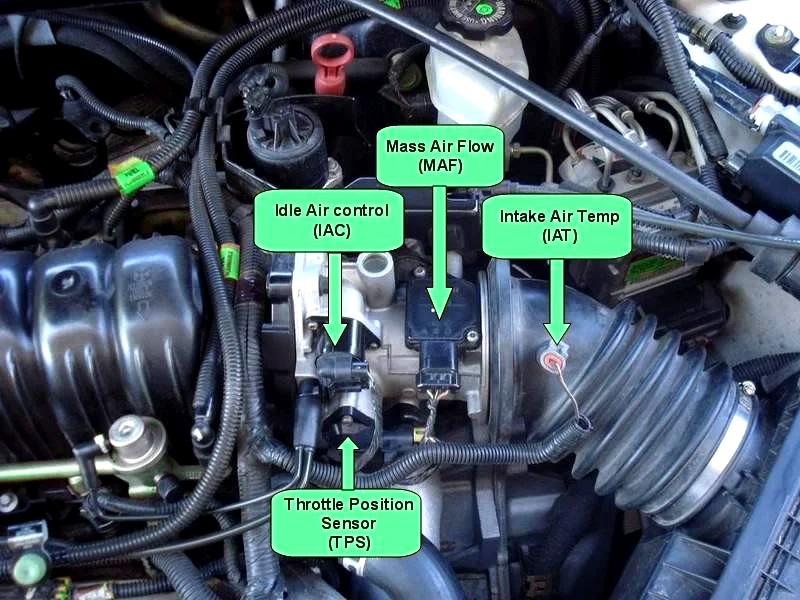
Experiencing engine trouble? A rough idle, poor acceleration, or a check engine light staring you down? These issues could stem from a faulty Mass Air Flow (MAF) sensor. The MAF sensor is a critical component responsible for measuring the amount of air entering your engine, allowing the engine control unit (ECU) to precisely regulate the fuel mixture. If the MAF sensor isn't working correctly, your engine's performance will definitely suffer. But before you start troubleshooting, you need to know: where is this vital sensor located? Let's dive in.
Understanding the MAF Sensor's Purpose
Before we pinpoint its location, let's quickly recap what the MAF sensor does. Think of it as your engine's "air intake accountant." It constantly monitors the volume and density of air entering the intake manifold. This information is crucial because the ECU uses it to calculate the optimal amount of fuel to inject, ensuring efficient combustion. An incorrect reading from the MAF sensor can lead to a variety of problems, including:
- Reduced fuel economy
- Hesitation or stalling
- Rough idling
- Increased emissions
- Check engine light illumination
Locating the MAF Sensor: A Model-Specific Guide
Unfortunately, there's no single "one-size-fits-all" answer to the MAF sensor's location. It varies depending on the make, model, and year of your vehicle. However, there are some general principles and common locations to check. The MAF sensor is almost always found in the intake system, specifically between the air filter box and the throttle body. This positioning ensures it measures the incoming air *before* it enters the engine.
General Location Tips:
- Follow the Intake Plumbing: Start by tracing the air intake ducting from the air filter box towards the engine. The MAF sensor is usually inline with this ducting.
- Look for the Connector: The MAF sensor will always have an electrical connector plugged into it. This connector provides power and transmits the sensor's readings to the ECU. Spotting this connector can help you quickly identify the MAF sensor.
- Shape and Size: MAF sensors come in various shapes and sizes, but they're typically cylindrical or rectangular. They are usually made of plastic or metal and have a noticeable sensor element inside the housing.
Specific Examples (Keep in mind this varies GREATLY!):
To give you a better idea, here are some examples of where you might find the MAF sensor on common vehicle types:
- Older Vehicles (Pre-2000s): On older cars, you might find the MAF sensor directly attached to the air filter box outlet or as a separate unit inline with the intake hose, closer to the throttle body.
- Modern Vehicles (2000s and Newer): Many newer vehicles integrate the MAF sensor directly into the air filter box assembly itself. In some cases, it's part of a combined unit that also includes the intake air temperature (IAT) sensor. Some are still located inline near the throttle body.
- Trucks and SUVs: On larger vehicles, the intake system is often more complex. The MAF sensor is commonly found further down the intake tube, sometimes requiring you to remove sections of the ducting to access it.
- European Cars (BMW, Mercedes, Audi): European cars often have unique intake designs. The MAF sensor may be located in a less obvious position, sometimes integrated into a larger air intake housing. It's always best to consult your vehicle's repair manual for precise location details.
Important: Always refer to your vehicle's service manual or a reliable online database (like ALLDATA or Mitchell OnDemand) for the *exact* location of the MAF sensor for your specific year, make, and model. Searching online forums specific to your car can also provide valuable insights from other owners.
Tools You Might Need
Once you've located the MAF sensor, you might need a few tools to access or remove it:
- Screwdrivers: Phillips head and flathead screwdrivers are commonly needed to loosen hose clamps or remove screws holding the air filter box or intake ducting in place.
- Socket Set: A socket set with various sizes is essential for removing bolts or nuts securing the MAF sensor housing.
- Pliers: Pliers might be needed to loosen hose clamps or disconnect the electrical connector.
- Mass Air Flow Sensor Cleaner: If you're planning to clean the MAF sensor (more on that later), make sure you use a dedicated MAF sensor cleaner. Do *not* use carburetor cleaner or brake cleaner, as these can damage the delicate sensor element.
MAF Sensor Issues and Potential Solutions
Now that you know where to find the MAF sensor, let's address some common problems and potential solutions.
1. Dirty MAF Sensor:
Over time, the MAF sensor can become contaminated with dust, dirt, oil, and other debris. This contamination can disrupt its ability to accurately measure airflow.
- Solution: Cleaning the MAF sensor is often the first and easiest step. Use a dedicated MAF sensor cleaner and follow the instructions on the can. Spray the sensor element thoroughly, allow it to air dry completely, and then reinstall it. Important: Never touch the sensor element with your fingers or any objects, as this can damage it.
2. Faulty MAF Sensor:
If cleaning doesn't resolve the issue, the MAF sensor itself might be faulty. Internal components can fail over time.
- Solution: Replacing the MAF sensor is the next logical step. You can purchase a new MAF sensor from an auto parts store or online retailer. Be sure to buy a sensor that is specifically designed for your vehicle's make, model, and year. After installation, it might be necessary to clear the diagnostic trouble codes (DTCs) from your car's computer. This can be done with an OBD-II scanner.
3. Wiring or Connector Problems:
Sometimes, the problem isn't the MAF sensor itself, but rather the wiring or connector that connects it to the ECU.
- Solution: Inspect the wiring and connector for any signs of damage, such as corrosion, frayed wires, or loose connections. Clean the connector with electrical contact cleaner and ensure it's securely connected to the MAF sensor. If you find damaged wiring, you might need to repair or replace the wiring harness.
Approximate Repair Costs
The cost of MAF sensor repair or replacement can vary depending on several factors, including the make and model of your vehicle, the cost of the replacement sensor, and whether you choose to do the work yourself or take it to a mechanic.
- MAF Sensor Cleaning: If you're just cleaning the MAF sensor yourself, the cost is relatively low – around $10-$20 for a can of MAF sensor cleaner.
- MAF Sensor Replacement (DIY): A new MAF sensor can range from $50 to $300 or more, depending on the brand and quality. If you're doing the replacement yourself, you'll only pay for the sensor.
- MAF Sensor Replacement (Mechanic): If you take your vehicle to a mechanic, you can expect to pay for the sensor, labor, and potentially diagnostic fees. The total cost could range from $150 to $500 or more. The diagnostic fee typically runs around $100-$150 at most shops.
Important: Always get a quote from a reputable mechanic before authorizing any repairs. Ask for a breakdown of the costs, including parts and labor.
When to Seek Professional Help
While cleaning or replacing a MAF sensor can be a DIY project for some, there are situations where it's best to seek professional help:
- You're not comfortable working on your car.
- You've tried cleaning the MAF sensor, but the problem persists.
- You suspect there might be more complex issues, such as wiring problems or ECU issues.
- You don't have the necessary tools or equipment.
By understanding the MAF sensor's function, location, and common problems, you'll be better equipped to diagnose and resolve engine performance issues. Remember, a little knowledge can go a long way in saving you time and money. Good luck!