
Why Are All The Lights On My Dashboard On
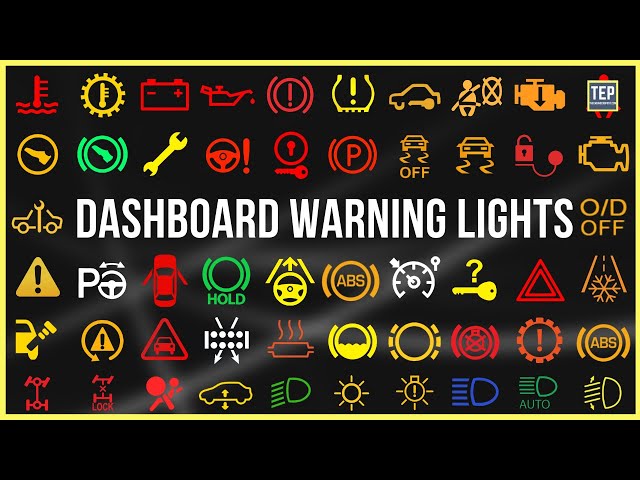
A dashboard illuminated like a Christmas tree is a common automotive nightmare, and understanding the underlying causes requires a deep dive into modern vehicle systems. The simultaneous illumination of multiple warning lights, often referred to as a "Christmas tree" effect, rarely indicates a single, simple failure. Instead, it usually points to a systemic issue affecting multiple electronic control units (ECUs) and their associated sensors.
The Role of the CAN Bus and Sensor Data
At the heart of this phenomenon lies the Controller Area Network (CAN) bus. The CAN bus acts as the central nervous system of the vehicle, facilitating communication between various ECUs responsible for functions ranging from engine management and transmission control to braking systems and safety features. These ECUs rely on a vast network of sensors to gather data about the vehicle's operating conditions. Common sensors include: wheel speed sensors (for ABS and traction control), mass airflow (MAF) sensors, oxygen sensors, throttle position sensors, crankshaft and camshaft position sensors, and various pressure and temperature sensors. The data from these sensors is transmitted over the CAN bus to the relevant ECUs.
A "Christmas tree" effect often originates when one or more of these sensors malfunctions, providing inaccurate or missing data. This corrupted data can then trigger a cascade of errors across multiple systems. For example, a faulty MAF sensor can affect engine performance, triggering the check engine light. Simultaneously, the incorrect engine data can impact transmission shift patterns, illuminating the transmission warning light. The ABS and traction control systems, which rely on engine torque data, might also be affected, leading to their respective warning lights activating. This cascading effect is due to the interdependency of modern automotive systems.
Common Causes and Troubleshooting
Several factors can contribute to the sensor malfunctions:
- Sensor Failure: Sensors themselves can fail due to age, exposure to harsh conditions (heat, vibration, moisture), or manufacturing defects.
- Wiring and Connectors: Damaged wiring harnesses, corroded connectors, or loose connections can disrupt the signal flow between sensors and ECUs. This is particularly common in areas exposed to the elements or where wiring is subject to flexing.
- ECU Malfunction: In some cases, the ECU itself may be faulty, misinterpreting sensor data or failing to process it correctly.
- Low Battery Voltage: Insufficient battery voltage can cause erratic behavior in various electronic systems, triggering false error codes and illuminating multiple warning lights. This is particularly prevalent in vehicles with advanced electronics and stop-start systems.
- Software Glitches: Software bugs in the ECUs' firmware can sometimes cause erroneous error messages and illuminate warning lights.
Diagnosing the root cause requires a systematic approach using a diagnostic scan tool. Modern scan tools can read diagnostic trouble codes (DTCs) stored in the ECUs' memory. These DTCs provide valuable information about the nature of the fault. However, it's crucial to understand that a single DTC can trigger multiple warning lights, and multiple DTCs may stem from a single underlying problem. For example, a P0101 code (MAF sensor circuit range/performance) can lead to ABS and traction control lights due to the incorrect engine torque data. Furthermore, some advanced scan tools allow for live data streaming, enabling technicians to monitor sensor readings in real-time and identify anomalies.
Alternatives and Engineering Choices
While the CAN bus architecture is widely adopted, alternative communication protocols exist, such as Local Interconnect Network (LIN) and Media Oriented Systems Transport (MOST). LIN is often used for less critical systems like window controls and door locks due to its lower cost and complexity. MOST is employed for high-bandwidth applications like infotainment systems. While these protocols serve specific purposes, the CAN bus remains the backbone of most automotive control systems due to its robustness, reliability, and real-time capabilities. Engineering choices around sensor placement, wiring routing, and ECU design are crucial for minimizing the risk of system failures. Redundant sensors and fault-tolerant ECUs are sometimes implemented in critical systems to enhance reliability.
A potential alternative to relying heavily on sensor data is using more advanced modeling and predictive algorithms. For example, instead of directly measuring engine torque, the ECU could estimate it based on other parameters like throttle position, engine speed, and air intake volume. However, these models are still reliant on accurate sensor data for calibration and adaptation, and they may not be as accurate under all operating conditions. The key is a balance between direct sensor measurements and model-based estimation to achieve both accuracy and fault tolerance.
Reliability Aspects and Maintenance Tips
Regular maintenance is crucial for preventing the "Christmas tree" effect. This includes:
- Battery Maintenance: Ensure the battery is in good condition and properly charged. Regularly check and clean battery terminals.
- Wiring Inspection: Periodically inspect wiring harnesses and connectors for signs of damage, corrosion, or looseness. Apply dielectric grease to connectors to prevent corrosion.
- Sensor Cleaning: Clean MAF sensors periodically using a specialized MAF sensor cleaner. Avoid touching the sensor element directly.
- Software Updates: Keep the vehicle's software up-to-date by visiting a qualified service center for ECU reflashing.
- Promptly Address Warning Lights: Do not ignore warning lights. Promptly diagnose and repair any issues to prevent further damage.
Future Trends
The complexity of automotive electronics is only increasing with the advent of autonomous driving, advanced driver-assistance systems (ADAS), and connected car technologies. Future vehicles will rely on even more sensors and ECUs, making robust diagnostics and fault-tolerant designs even more critical. We can expect to see advancements in:
- Advanced Diagnostics: AI-powered diagnostic tools that can analyze vast amounts of data to quickly identify the root cause of complex problems.
- Predictive Maintenance: Using sensor data and machine learning to predict potential failures before they occur, allowing for proactive maintenance.
- Over-the-Air (OTA) Updates: Secure OTA updates for ECU software to fix bugs, improve performance, and add new features.
- Cybersecurity: Enhanced cybersecurity measures to protect vehicle systems from hacking and data breaches.
The automotive industry is moving towards a more software-defined architecture, where software plays an increasingly important role in controlling vehicle functions. This presents both challenges and opportunities. The challenge lies in ensuring the reliability and security of complex software systems. The opportunity lies in the potential for creating more intelligent, efficient, and safer vehicles. Automotive professionals must adapt to these changing technologies and embrace new skills and knowledge to remain competitive in the future. A deep understanding of vehicle electronics, diagnostic tools, and software updates is more critical than ever.