
Why Is One Side Of My Car Blowing Hot Air
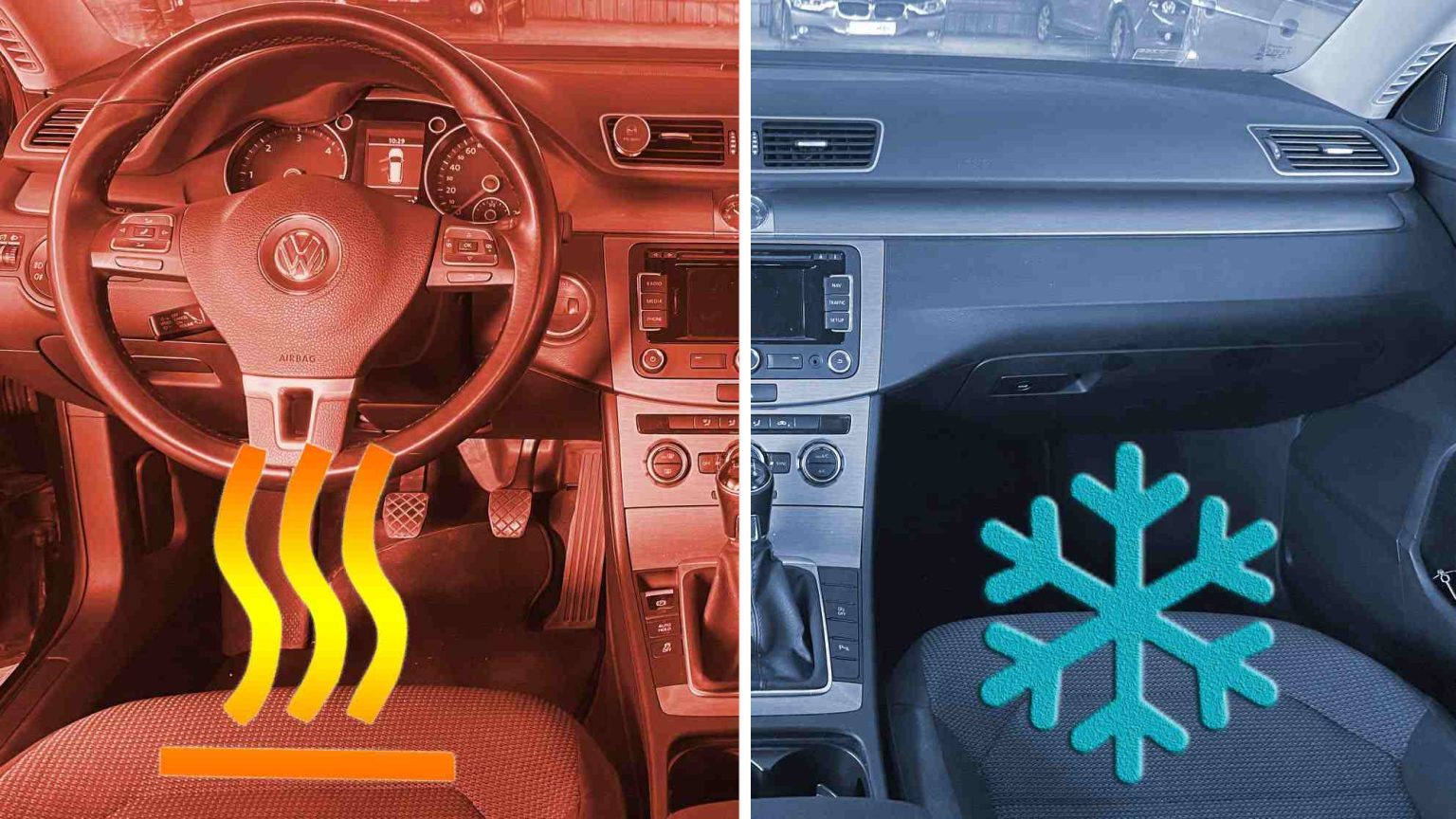
The chilling blast of air conditioning on a sweltering day is a modern automotive marvel we often take for granted. But what happens when that blissful coolness turns temperamental, offering refreshing air on one side of the car while the other blows a stifling heat? This isn't just an annoyance; it's a sign that something's amiss within your vehicle's climate control system. Let's delve into the potential culprits behind this frustrating phenomenon.
Understanding the Core Components
Before we dissect the problem, it's crucial to understand the core components of a car's air conditioning and heating system. At its heart lies the refrigerant cycle, which absorbs heat from the cabin air and expels it outside. This involves the compressor, condenser, evaporator, and expansion valve. Simultaneously, your car's heating system utilizes engine coolant that flows through the heater core, a small radiator located under the dashboard. A blend door, controlled by various means (mechanical linkage, vacuum, or electric servo motors), regulates the ratio of air passing through the heater core versus bypassing it, dictating the temperature of the air entering the cabin.
Possible Causes of Uneven Airflow Temperature
When one side of the car is blowing hot air while the other remains cool, the issue usually stems from a malfunction in the air distribution system, the blend door mechanism, or, in some cases, a more complex problem within the refrigerant system itself. Let's examine these possibilities in detail:
1. Blend Door Actuator Failure
The most common suspect is a faulty blend door actuator. These small electric motors control the position of the blend doors, which direct airflow over the heater core. Many modern vehicles have multiple blend doors to independently control temperature zones for the driver and passenger sides. If an actuator fails, the corresponding blend door may become stuck, either allowing all air to pass through the heater core (resulting in hot air) or blocking it entirely (resulting in cold air). This is particularly prevalent in dual-zone climate control systems.
Symptoms of a failing blend door actuator often include clicking or whirring noises behind the dashboard, difficulty adjusting the temperature on one side of the car, and inconsistent airflow temperatures. Diagnosis typically involves using a scan tool to read diagnostic trouble codes (DTCs) related to the HVAC system. Many scan tools can also command the actuators to move, allowing you to verify their operation.
2. Vacuum Leaks (Older Vehicles)
In older vehicles (particularly those manufactured before the widespread adoption of electronic climate control), the blend doors are often controlled by vacuum actuators. A vacuum leak in the system can prevent the actuator from functioning correctly, leading to a stuck blend door. These leaks can occur in the vacuum lines themselves, at the vacuum reservoir, or within the actuator diaphragm. A thorough inspection of all vacuum lines connected to the HVAC system is necessary to identify and repair any leaks.
3. Damaged or Disconnected Blend Door Linkage
Even without electronic or vacuum actuators, the blend doors are mechanically linked to the temperature control knob. The linkage itself can become damaged, disconnected, or misaligned over time. This can prevent the blend door from moving freely, resulting in inconsistent temperature control. Inspecting the linkage for any signs of damage or disconnection is essential. This typically involves removing the dashboard trim to access the blend door mechanism.
4. Clogged Heater Core
A partially clogged heater core can also contribute to uneven airflow temperatures, although it's less common than blend door issues. If one side of the heater core is significantly more clogged than the other, it can restrict coolant flow and reduce the heat output on that side. This is more likely to manifest as weak heat output on the affected side rather than outright hot air on one side and cold air on the other.
5. Refrigerant Issues (Less Common)
While less common, a severe refrigerant undercharge or a problem with the expansion valve could potentially contribute to uneven air conditioning performance. If the refrigerant level is critically low, the evaporator may not be able to cool the air evenly across its entire surface. Similarly, a malfunctioning expansion valve could restrict refrigerant flow to one side of the evaporator, leading to uneven cooling. However, these issues usually manifest as poor cooling performance across the entire system, not just on one side.
6. Faulty Temperature Sensor(s)
Some advanced climate control systems rely on multiple temperature sensors throughout the cabin to maintain accurate and consistent temperatures. A faulty temperature sensor on one side of the car could provide inaccurate readings to the climate control module, causing it to adjust the blend door position incorrectly. Diagnosing faulty temperature sensors typically requires a scan tool to monitor sensor readings and compare them to expected values.
7. Issues with the Climate Control Module
Although rare, the climate control module itself could be the culprit. This electronic control unit manages the entire HVAC system, interpreting sensor data and controlling the blend door actuators. A malfunction within the module could lead to incorrect commands being sent to the actuators, resulting in uneven air temperatures. Diagnosing a faulty climate control module often requires specialized equipment and expertise.
Diagnosis and Repair
Diagnosing the cause of uneven airflow temperatures requires a systematic approach. Start by checking for any diagnostic trouble codes (DTCs) related to the HVAC system using a scan tool. This can often pinpoint the specific component that is malfunctioning. If no DTCs are present, a visual inspection of the blend door actuators, vacuum lines (if applicable), and blend door linkage is necessary. Monitoring the actuator movement with a scan tool or by manually manipulating the linkage can help determine if the blend doors are moving freely and correctly.
Repairing the problem typically involves replacing the faulty component. Blend door actuators are relatively inexpensive and can often be replaced with basic hand tools. Vacuum leaks can be repaired by replacing the damaged vacuum lines. A clogged heater core can be flushed or replaced. Refrigerant issues require professional diagnosis and repair by a qualified HVAC technician. And, although unlikely, a faulty climate control module may require reprogramming or replacement by a dealer’s service technician.
In conclusion, uneven airflow temperatures in your car's climate control system are usually caused by a malfunctioning blend door actuator, a vacuum leak, or a damaged blend door linkage. By understanding the underlying components and following a systematic diagnostic approach, you can identify and repair the problem, restoring the comfort and consistency of your vehicle's climate control system.