
Power Steering Fluid In Brake
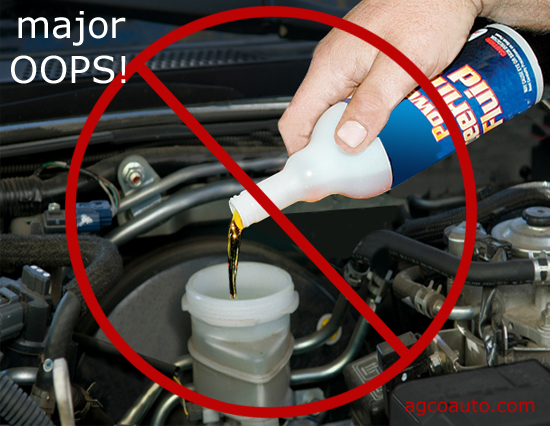
The automotive world is a symphony of interconnected systems, each relying on the others for optimal performance. Sometimes, however, things go wrong. One particularly concerning scenario involves power steering fluid finding its way into the brake system. This is a dangerous situation with potentially catastrophic consequences, and understanding why it happens, how to identify it, and what to do about it is crucial for every car enthusiast and owner.
Understanding the Fluids: Brake Fluid vs. Power Steering Fluid
Before diving into the problem, let's clarify the roles of these two crucial fluids. Brake fluid is a hydraulic fluid specifically designed to transmit the force you apply to the brake pedal to the brake calipers at the wheels. It must be incompressible, meaning it shouldn't compress under pressure, to ensure efficient braking. It also needs a high boiling point to prevent vapor lock (explained later). Common types are DOT 3, DOT 4, and DOT 5.1, each with varying boiling points and compatibility.
Consider a 2015 Honda Civic. The braking system in this car, like most modern vehicles, relies on brake fluid to actuate the calipers and slow the vehicle. If you step on the brake pedal, you're essentially pushing a plunger in the master cylinder, which then pressurizes the brake fluid and forces the brake pads against the rotors.
Power steering fluid, on the other hand, is used to assist the driver in steering the vehicle. It's a hydraulic fluid that provides power assistance to reduce the effort required to turn the steering wheel. Different types exist, including conventional power steering fluid, synthetic blends, and even specific fluids designed for particular vehicle makes. For instance, many older Ford trucks, like the F-150 from the 1990s, used Type F power steering fluid, while more modern vehicles often use power steering fluid specifically engineered to work with electronically assisted power steering systems.
The critical difference? They are *not* interchangeable and have vastly different chemical compositions and operating characteristics. Brake fluid is designed to withstand extremely high temperatures generated during braking, while power steering fluid isn't. Power steering fluid is also typically petroleum-based.
Why Power Steering Fluid in the Brake System is Bad
Introducing power steering fluid into a brake system is a recipe for disaster for several reasons:
1. Seal Degradation:
Power steering fluid can degrade the rubber seals and components within the brake system. Brake systems are designed to work with the specific chemical properties of brake fluid. When exposed to power steering fluid, the rubber seals in the master cylinder, calipers, and wheel cylinders can swell, soften, or even dissolve. This leads to leaks, reduced braking performance, and eventual failure of the brake components. Imagine a scenario where a technician accidentally tops off the brake reservoir of a classic 1967 Mustang with power steering fluid. The seals in the original brake components, not designed for petroleum-based fluids, would quickly deteriorate, leading to brake failure.
2. Reduced Braking Efficiency:
Power steering fluid doesn't possess the same properties as brake fluid when it comes to high temperatures. Brake fluid is designed to have a high boiling point. When brakes are applied hard, they generate a lot of heat due to friction. Brake fluid is engineered to resist boiling under these conditions. Power steering fluid, however, has a much lower boiling point. If it's in the brake system, it can boil under heavy braking, creating air bubbles. These air bubbles are compressible, leading to a spongy brake pedal feel and a significant reduction in braking power – a condition known as vapor lock. This could be catastrophic in a situation where you need to make a sudden stop in a BMW 3 Series, especially on a track day where brakes get excessively hot.
3. Corrosion:
Some types of power steering fluid can promote corrosion within the brake system. This corrosion can damage metal components, leading to leaks and further reducing braking effectiveness. Over time, this corrosion can compromise the structural integrity of the brake lines and other parts, increasing the risk of brake failure.
How Does This Happen? Potential Causes
While accidental mixing is the most obvious cause, there are other potential scenarios:
1. Accidental Top-Off:
This is the most common culprit. During maintenance, someone might mistakenly grab the wrong container and top off the brake fluid reservoir with power steering fluid. The reservoirs can sometimes be located close to each other under the hood, increasing the risk of confusion. This is why clearly labeling all fluids and containers is essential.
2. Contaminated Filling Equipment:
Using the same funnel or fluid transfer device for both power steering fluid and brake fluid can lead to cross-contamination. Even a small amount of power steering fluid can cause problems within the brake system over time. Always use dedicated equipment for each type of fluid to prevent this.
3. Component Failure and Cross-Contamination (Rare):
In very rare cases, a failure within a shared hydraulic system (if one exists, and this is highly unusual in modern passenger cars) could theoretically allow power steering fluid to contaminate the brake system. This is extremely uncommon and typically only occurs in specialized equipment or older vehicles with unusual hydraulic setups.
Identifying the Problem: Symptoms to Watch For
Recognizing the symptoms early can prevent further damage and potential accidents:
1. Spongy Brake Pedal:
As mentioned earlier, the presence of power steering fluid, especially if it's boiled and created vapor, will cause a spongy or soft brake pedal feel. This indicates that the system isn't building pressure effectively.
2. Leaking Brake Fluid:
Deteriorated seals will lead to brake fluid leaks around the master cylinder, calipers, or wheel cylinders. The fluid may also have an unusual color or consistency.
3. Reduced Braking Performance:
You may notice that your brakes are less effective, requiring more pedal pressure to stop the vehicle. Stopping distances will increase significantly.
4. Unusual Fluid Color or Odor:
Brake fluid is typically clear or light amber in color. If it appears dark, cloudy, or has an oily smell (power steering fluid), it could indicate contamination. A visual inspection of the brake fluid reservoir is a crucial first step.
5. ABS Malfunction:
In some cases, contaminated brake fluid can interfere with the operation of the Anti-lock Braking System (ABS), triggering a warning light on the dashboard.
The Solution: Flushing and Repair
If you suspect power steering fluid has contaminated your brake system, immediate action is required. Do not drive the vehicle if you suspect significant contamination, as the brakes may be unreliable.
1. Professional Inspection:
The first step is to have a qualified mechanic inspect the entire brake system. They can confirm the presence of power steering fluid and assess the extent of the damage.
2. Complete Flush and Replacement:
The contaminated brake fluid must be completely flushed from the entire system, including the master cylinder, brake lines, calipers, and wheel cylinders. This process involves using fresh, clean brake fluid to push out all the old fluid. The correct type of brake fluid for your vehicle *must* be used. The owner's manual or a reputable mechanic can provide this information.
3. Component Replacement:
Any rubber seals, hoses, or other components that have been exposed to power steering fluid should be replaced. This is essential to prevent future leaks and ensure the long-term reliability of the brake system. This might include replacing the master cylinder, calipers, and wheel cylinders if the contamination is severe.
4. Brake Bleeding:
After flushing and replacing components, the brake system must be properly bled to remove any air bubbles. This ensures a firm brake pedal and optimal braking performance.
Practical Takeaways for Car Owners and Enthusiasts
- Prevention is Key: Always label all fluids and containers clearly to avoid accidental mixing.
- Use Dedicated Equipment: Use separate funnels and fluid transfer devices for each type of fluid to prevent cross-contamination.
- Know Your Fluids: Understand the differences between brake fluid and power steering fluid, and always use the correct type for your vehicle. Consult your owner's manual.
- Inspect Regularly: Regularly inspect your brake fluid reservoir for unusual color, consistency, or odor.
- Recognize the Symptoms: Be aware of the symptoms of brake fluid contamination, such as a spongy brake pedal, leaks, and reduced braking performance.
- When in Doubt, Seek Professional Help: If you suspect contamination, don't attempt to fix it yourself unless you have the necessary knowledge and experience. Take your vehicle to a qualified mechanic immediately.
By understanding the risks associated with power steering fluid in the brake system and taking preventive measures, you can ensure the safety and reliability of your vehicle's braking system. Remember that the brakes are one of the most critical safety systems on your car, and proper maintenance is essential for preventing accidents.