
Trailer Light Plug For Truck
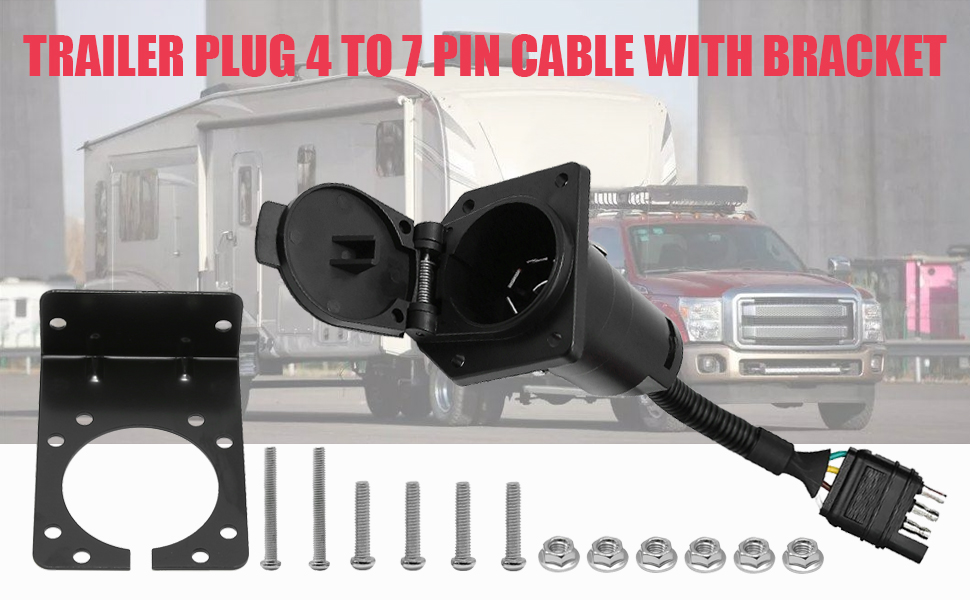
The trailer light plug on a truck is a deceptively simple component that plays a crucial role in safe and legal towing. It's the electrical lifeline connecting the truck's lighting and braking systems to the trailer, enabling essential functions like turn signals, brake lights, running lights, and auxiliary power. This article delves into the technical specifications, engineering considerations, real-world performance, and future trends surrounding trailer light plugs, providing automotive professionals with a comprehensive understanding of these essential connectors.
Technical Specifications and Standards
Several standardized trailer light plug configurations exist, each with its own pin count and wiring arrangement. The most common in North America are the 4-way flat, 5-way flat, 6-way round, and 7-way round (also known as RV blade) connectors. Let's examine each:
- 4-Way Flat: This is the simplest and most basic connector, providing connections for ground, left turn/stop, right turn/stop, and taillights. It's typically used for light-duty trailers without electric brakes. The standard color codes are white (ground), brown (taillights), yellow (left turn/stop), and green (right turn/stop).
- 5-Way Flat: Adds a wire for auxiliary power, typically used for backup lights or other low-power accessories on the trailer. The wire is usually blue.
- 6-Way Round: While less common than the others, it offers the connections of the 4-way, plus a wire for electric brakes and an auxiliary power or backup light wire.
- 7-Way Round (RV Blade): This is the most versatile and widely used connector for trailers with electric brakes and multiple auxiliary functions. It provides connections for ground, taillights, left turn, right turn, electric brakes, reverse lights, and auxiliary power (often used for charging a trailer battery). The pinout is typically as follows: white (ground), brown (taillights), yellow (left turn), green (right turn), blue (electric brakes), black (auxiliary power), and purple (reverse lights).
These connectors adhere to industry standards like those set by the Society of Automotive Engineers (SAE) and the Recreational Vehicle Industry Association (RVIA). These standards define the pin assignments, wire gauges, and connector dimensions, ensuring interoperability between different trucks and trailers. Voltage typically runs at 12V DC.
Understanding the impedance of the wiring and connections is critical, especially for circuits like electric brakes. Increased resistance due to corrosion or poor connections can significantly impact braking performance.
Engineering Choices and Materials
The materials used in trailer light plugs are critical for durability and reliability. The connector housings are typically made from durable plastics such as ABS, polycarbonate, or nylon, which offer resistance to impacts, UV exposure, and temperature extremes. The terminals are typically made from brass or copper alloys, chosen for their excellent conductivity and corrosion resistance. Gold plating is sometimes used on the terminals to further enhance corrosion resistance and improve electrical contact.
Strain relief is a crucial engineering consideration. The plug must be designed to prevent the wires from being pulled or stressed at the point where they connect to the terminals. This is typically achieved through robust clamping mechanisms or molded strain relief boots.
Sealing is also important to prevent water and debris from entering the connector. Weatherproof seals or gaskets are often used to protect the terminals from corrosion and ensure reliable electrical connections. Some higher-end connectors feature potted designs, where the internal wiring is completely encapsulated in a resin to provide maximum protection against the elements.
Consider the different types of wiring: stranded copper wire is preferable due to its flexibility and resistance to vibration-induced fatigue. Wire gauge should be selected according to the current draw of the circuits being powered. Using undersized wire can lead to overheating and voltage drop, while oversized wire adds unnecessary weight and bulk.
Real-World Performance and Alternatives
In real-world applications, trailer light plugs are subjected to harsh conditions, including exposure to water, salt, dirt, vibration, and extreme temperatures. Corrosion is a major enemy, leading to increased resistance, voltage drop, and eventual failure. Physical damage from impacts or abrasion can also compromise the connector's integrity.
Alternatives to standard plugs do exist, primarily in the form of proprietary connector systems offered by specific trailer manufacturers. These systems often offer enhanced features or improved weatherproofing, but they lack the widespread compatibility of the standard connectors.
Pros of Standard Connectors:
- Universally compatible: Easy to connect any truck to any trailer, reducing complexity and cost.
- Readily available: Replacement parts are easy to source at any auto parts store.
- Relatively inexpensive: Manufacturing scale keeps prices competitive.
Cons of Standard Connectors:
- Subject to corrosion: Exposure to the elements can degrade connections over time.
- Vulnerable to physical damage: Plastic housings can crack or break under stress.
- Can be difficult to troubleshoot: Diagnosing wiring problems can be time-consuming.
Proprietary connectors might offer improvements in specific areas, but they often come with trade-offs in terms of cost, availability, and compatibility.
Reliability Aspects and Maintenance Tips
The reliability of trailer light plugs can be significantly improved through proper maintenance and care. Here are some key maintenance tips:
- Regular Inspection: Periodically inspect the plug and receptacle for signs of corrosion, damage, or loose connections.
- Cleaning: Clean the terminals with a wire brush or electrical contact cleaner to remove corrosion and ensure good electrical contact.
- Dielectric Grease: Apply a thin layer of dielectric grease to the terminals to prevent corrosion and moisture intrusion. This is especially important in areas with high humidity or salt exposure.
- Secure Connections: Ensure that all wires are securely connected to the terminals. Use properly sized crimp connectors and heat shrink tubing to protect the connections.
- Strain Relief: Verify that the strain relief mechanisms are functioning properly to prevent stress on the wires.
- Protective Covers: Use protective covers or caps to shield the plug and receptacle from the elements when they are not in use.
When diagnosing trailer light problems, always start by checking the ground connection. A poor ground is a common cause of intermittent or erratic lighting behavior. Use a multimeter to verify that the voltage is reaching the trailer lights and brake controller. Visual inspection of the wiring for damage, such as cuts or chafing, is also crucial.
Future Trends
Several trends are shaping the future of trailer light plugs. One is the increasing adoption of LED lighting on trailers. LED lights draw significantly less current than incandescent bulbs, which can reduce the load on the truck's electrical system and minimize voltage drop. However, some older trucks may require a load resistor to prevent hyper-flashing of the turn signals when using LED trailer lights.
Another trend is the integration of advanced safety features into trailers, such as anti-lock braking systems (ABS) and electronic stability control (ESC). These systems require additional wiring and communication protocols, which may lead to the development of more sophisticated trailer light plug connectors.
Wireless trailer light systems are also emerging as a potential alternative to traditional wired connections. These systems use radio frequency (RF) or Bluetooth technology to transmit lighting and braking signals between the truck and trailer. While wireless systems offer the advantage of eliminating the physical connection, they also raise concerns about reliability, security, and interference. However, the increasing pervasiveness of wireless technology in automotive applications suggests that these issues will be addressed over time.
Conclusion
The trailer light plug, although seemingly simple, is a critical component for safe and legal towing. Automotive professionals must have a thorough understanding of the different types of connectors, their technical specifications, and best practices for maintenance and repair. As the automotive industry continues to evolve, with the increasing adoption of LED lighting, advanced safety features, and potentially wireless technology, trailer light plugs will continue to adapt to meet the demands of modern towing applications. The focus will remain on ensuring reliable, safe, and compatible connections between trucks and trailers, contributing to safer roads for everyone. Understanding the nuances of this connector and its associated systems will become increasingly important for technicians and engineers alike, solidifying its role as a foundational element of the towing ecosystem.