
2001 Nissan Pathfinder Catalytic Converter
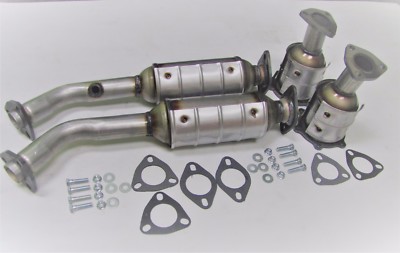
So, you're experiencing some issues with your 2001 Nissan Pathfinder, and you suspect the catalytic converter? You're not alone. The 2001 Pathfinder, while a reliable SUV, is getting up there in years, and catalytic converters are a common wear item. Let's break down the problems, the solutions, and what you can expect.
Understanding the Problem: Catalytic Converter Failure
The catalytic converter is a crucial component of your Pathfinder's exhaust system. Its primary function is to reduce harmful emissions – carbon monoxide, hydrocarbons, and nitrogen oxides – into less harmful substances. Over time, several factors can lead to its failure:
- Age and Wear: Simply put, converters wear out. The internal components can degrade over time due to the extreme temperatures and chemical reactions they endure.
- Contamination: This is a big one. If oil, coolant, or excessive fuel enters the exhaust system, it can severely damage the converter's internal components. A leaky head gasket, faulty fuel injectors, or excessive oil consumption are common culprits.
- Physical Damage: Hitting a large object on the road can physically damage the converter, crushing it or breaking the internal ceramic substrate.
- Engine Misfires: A misfiring engine dumps unburnt fuel into the exhaust system. This excess fuel can overheat the converter, causing it to melt down or become clogged.
Symptoms of a Failing Catalytic Converter
Here are some common symptoms that might indicate a problem with your 2001 Pathfinder's catalytic converter:
- Check Engine Light (CEL): This is the most common indicator. The codes you're likely to see are P0420 ("Catalyst System Efficiency Below Threshold, Bank 1") and potentially P0430 ("Catalyst System Efficiency Below Threshold, Bank 2," if your Pathfinder has two converters).
- Reduced Engine Performance: A clogged converter restricts exhaust flow, which can significantly reduce engine power, especially during acceleration. You might notice sluggishness or hesitation.
- Poor Fuel Economy: A failing converter can affect engine performance and efficiency, leading to a noticeable drop in your miles per gallon.
- Rattling Noise: If the internal components of the converter have broken apart, you might hear a rattling noise coming from underneath the vehicle, especially when the engine is running.
- Failed Emissions Test: This is a clear sign. If your Pathfinder fails an emissions test, the catalytic converter is a prime suspect.
- Overheating: A severely clogged catalytic converter can cause the exhaust system to overheat, potentially damaging other components. You might notice excessive heat radiating from underneath the vehicle.
- Smell of Rotten Eggs: This distinct odor (sulfur) can sometimes be present if the catalytic converter is failing to properly convert harmful gases.
Diagnosing the Problem
Before jumping to the conclusion that the catalytic converter is bad, it's essential to perform some basic diagnostics. Here's a step-by-step approach:
- Scan for Trouble Codes: Use an OBD-II scanner to retrieve any diagnostic trouble codes (DTCs) stored in the vehicle's computer. Pay close attention to P0420 and P0430. However, remember that these codes don't *always* mean the converter is bad.
- Check for Exhaust Leaks: Inspect the exhaust system for any leaks, especially around the flanges and connections. Leaks can throw off the oxygen sensor readings and trigger a P0420 code.
- Inspect the Oxygen Sensors: The Pathfinder has oxygen sensors located before (upstream) and after (downstream) the catalytic converter. The upstream sensor measures the oxygen content of the exhaust gas entering the converter, while the downstream sensor measures the oxygen content of the exhaust gas leaving the converter. Comparing the signals from these sensors can help determine if the converter is functioning properly. Ideally, the downstream sensor's voltage should be relatively stable, while the upstream sensor's voltage should fluctuate. If both sensors are fluctuating wildly, it could indicate a converter problem.
- Check for Contamination: As mentioned earlier, contamination is a common cause of converter failure. Check for signs of oil leaks, coolant leaks, or excessive fuel in the exhaust. A compression test can help identify cylinder problems that might be contributing to oil consumption or misfires.
- Visual Inspection: Visually inspect the catalytic converter for any signs of physical damage, such as dents, cracks, or rust. If you can safely do so (allow the exhaust to cool!), tap on the converter with a rubber mallet. A rattling sound suggests that the internal components are broken.
Tools You Might Need for Diagnosis
- OBD-II scanner
- Wrench set
- Socket set
- Screwdriver set
- Rubber mallet
- Jack and jack stands (for safe under-vehicle access)
- Multimeter (for testing oxygen sensors)
Solutions: Replacing the Catalytic Converter
If you've confirmed that the catalytic converter is indeed faulty, the most common solution is to replace it. Here's what you need to know:
Choosing a Replacement Converter
You have several options when it comes to replacing the catalytic converter:
- OEM (Original Equipment Manufacturer) Converter: This is the most expensive option, but it guarantees a perfect fit and performance. OEM converters are designed specifically for your 2001 Pathfinder.
- Aftermarket Converter: Aftermarket converters are generally less expensive than OEM converters. However, the quality and performance can vary significantly. Look for reputable brands that meet or exceed EPA standards. Make sure the converter you choose is specifically designed for your 2001 Nissan Pathfinder and meets the emissions standards for your state or region.
- Universal Converter: These are the least expensive option, but they require welding and fabrication to install. Unless you have experience with exhaust work, it's best to avoid universal converters.
Installation Process
Replacing a catalytic converter can be a straightforward process, but it requires some mechanical skill and the right tools. Here's a general overview:
- Safety First: Disconnect the negative battery cable before starting any work on the exhaust system. Allow the exhaust system to cool completely before touching it. Wear safety glasses and gloves.
- Access: Raise the vehicle using a jack and secure it with jack stands. Make sure the vehicle is stable before working underneath it.
- Remove the Old Converter: Disconnect the oxygen sensors. Loosen and remove the bolts or clamps that hold the converter in place. You may need to use penetrating oil to loosen rusted fasteners. Be careful not to damage the oxygen sensors if you plan to reuse them.
- Install the New Converter: Install the new converter in the reverse order of removal. Use new gaskets and hardware if necessary. Make sure all connections are tight to prevent exhaust leaks.
- Reconnect Oxygen Sensors: Reconnect the oxygen sensors.
- Lower the Vehicle: Lower the vehicle and reconnect the negative battery cable.
- Test Drive: Start the engine and check for exhaust leaks. Take the vehicle for a test drive to ensure that the check engine light does not come back on and that the engine is running smoothly.
Tools You Might Need for Replacement
- Wrench set (metric)
- Socket set (metric)
- Penetrating oil
- Oxygen sensor socket
- Torque wrench
- New gaskets and hardware (if needed)
- Jack and jack stands
- Safety glasses and gloves
Approximate Repair Costs
The cost of replacing a catalytic converter on a 2001 Nissan Pathfinder can vary depending on several factors, including the type of converter you choose, the labor rate at your local repair shop, and the location of the converter. Here's a rough estimate:
- OEM Converter: $800 - $1500 (parts only)
- Aftermarket Converter: $300 - $800 (parts only)
- Labor: $100 - $300
Therefore, the total cost could range from $400 to $1800 or more. Getting quotes from several reputable repair shops is always a good idea. Be sure to ask about warranty coverage on the parts and labor.
Preventative Measures
While catalytic converters eventually wear out, you can take steps to extend their lifespan:
- Regular Maintenance: Follow the manufacturer's recommended maintenance schedule, including oil changes, tune-ups, and spark plug replacements.
- Address Engine Issues Promptly: Fix any engine problems, such as misfires or oil leaks, as soon as they arise.
- Avoid Short Trips: Short trips don't allow the catalytic converter to reach its optimal operating temperature, which can lead to carbon buildup.
- Use High-Quality Fuel: Using high-quality fuel can help prevent deposits from forming in the fuel system and exhaust system.
In conclusion, diagnosing and replacing a catalytic converter on a 2001 Nissan Pathfinder can be a manageable task with the right knowledge and tools. By understanding the symptoms, performing thorough diagnostics, and choosing a quality replacement converter, you can get your Pathfinder back on the road and running smoothly. If you're not comfortable performing the work yourself, don't hesitate to seek the assistance of a qualified mechanic.