
2004 Nissan Titan Serpentine Belt Diagram
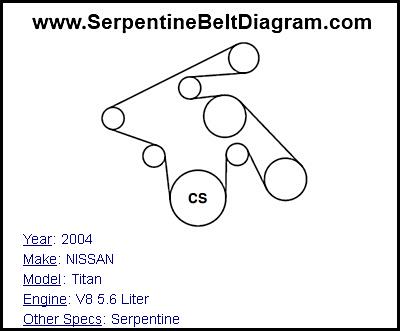
Okay, let's talk about the serpentine belt on your 2004 Nissan Titan. A failing serpentine belt is a common issue, and thankfully, it's often a repair you can tackle yourself with a little guidance. We're going to cover everything you need to know, from locating the correct diagram to getting that new belt installed.
Understanding the Serpentine Belt System
Before we dive into the diagram, let's quickly recap what the serpentine belt actually does. This single, long belt snakes its way around various pulleys connected to essential engine components. Typically, it powers the alternator (charging your battery), the power steering pump (making steering easier), the air conditioning compressor (keeping you cool), and sometimes the water pump (critical for engine cooling). If the belt breaks, you'll quickly lose power steering and air conditioning. Your battery will drain, and your engine could overheat – not a good situation!
Symptoms of a worn or failing serpentine belt include:
- Squealing or chirping noises, especially when the engine is first started or under load (like turning the steering wheel).
- Visible cracks, fraying, or glazing on the belt itself.
- Loss of power steering (steering becomes very difficult).
- Air conditioning stops working.
- The battery warning light illuminating on your dashboard.
- Engine overheating (this is a serious symptom; stop immediately!).
Finding the Correct Serpentine Belt Diagram for Your 2004 Titan
The serpentine belt routing can vary slightly depending on the engine and specific options your Titan has. Luckily, locating the correct diagram is usually quite straightforward. Here are your best options:
1. Under the Hood (The Ideal Scenario)
The easiest way is to look for a diagram sticker located somewhere under the hood. Check these common spots:
- On the radiator support (the metal bar running across the front of the engine compartment).
- On the underside of the hood itself.
- On the fender wells, near the engine compartment.
This sticker will show you the exact routing for your specific Titan's configuration. If you're lucky enough to find it, you can stop searching right here!
2. The Owner's Manual
Your 2004 Nissan Titan owner's manual might contain a serpentine belt diagram. Check the section on engine maintenance or belt replacement. While not always the clearest, it's worth a look.
3. Online Resources (Reliable Sources Only!)
If the sticker is missing and the owner's manual doesn't help, you'll need to turn to online resources. Be careful! Not all diagrams you find online are accurate, and using the wrong routing can damage your accessories or cause the belt to slip. Stick to reputable sources like:
- Reputable Auto Parts Retailer Websites: Sites like AutoZone, Advance Auto Parts, and O'Reilly Auto Parts often have diagrams associated with the serpentine belt part listing for your specific vehicle. Enter your year, make, model, and engine size on their website, then search for "serpentine belt." The diagram is usually displayed on the product page or in the "installation instructions" section. This is often the most reliable online option.
- Nissan Forums: Nissan Titan forums (like TitanTalk.com) can be a good resource. Search for "serpentine belt diagram" within the forum. Experienced members may have posted diagrams or pictures of the correct routing. Always double-check any diagram you find on a forum against other sources to ensure accuracy.
- Mitchell OnDemand or AlldataDIY (Subscription Required): These are professional-grade repair information databases that mechanics use. They provide accurate diagrams and detailed repair procedures. However, they require a subscription fee.
Important: When searching online, always specify your engine size (e.g., "2004 Nissan Titan 5.6L Serpentine Belt Diagram"). The 5.6L VK56DE engine was the standard engine for the 2004 Titan, but it's crucial to confirm.
4. When in Doubt, Ask a Professional
If you're still unsure about the correct routing after exhausting these options, the best advice is to consult a qualified mechanic. A local shop can quickly identify the correct routing and replace the belt for you. The cost of a professional serpentine belt replacement is typically between $100 and $200, including parts and labor. While it adds to the cost, the peace of mind is worth it if you're not confident in your ability to do it yourself.
Replacing the Serpentine Belt (DIY Guide)
If you've found the correct diagram and are comfortable with basic automotive repairs, you can likely replace the serpentine belt yourself. Here's a general guide:
Tools You'll Need:
- New Serpentine Belt: Make sure it's the correct part number for your 2004 Nissan Titan.
- Serpentine Belt Tool (or a wrench/socket set): This tool is specifically designed to release the tension on the belt tensioner. A wrench or socket of the correct size *might* work, but the belt tool makes the job much easier and safer.
- Socket Set and Ratchet: For removing any necessary covers or components.
- Screwdrivers (various sizes): For removing clips or fasteners.
- Work Gloves: To protect your hands.
- Safety Glasses: To protect your eyes.
- The Serpentine Belt Diagram: Print it out and keep it handy!
Steps for Replacement:
- Safety First! Disconnect the negative battery cable to prevent electrical shorts.
- Locate the Serpentine Belt Tensioner: This spring-loaded pulley keeps the belt tight. It usually has a square hole or a bolt head that you can use to apply leverage.
- Apply Tension to the Tensioner: Using the serpentine belt tool (or wrench/socket), apply leverage to the tensioner to relieve the tension on the belt. This will allow you to easily slip the belt off the pulleys. Important: Pay close attention to the belt's routing before removing it. Take a picture with your phone for reference if needed.
- Remove the Old Belt: Carefully slip the old belt off each of the pulleys, starting with the smoothest pulleys (like the idler pulley) first and ending with the grooved pulleys.
- Inspect the Pulleys: While the belt is off, check all the pulleys for smooth rotation. Spin each pulley by hand. If any pulley is noisy, wobbly, or difficult to turn, it may need to be replaced.
- Install the New Belt: Follow the serpentine belt diagram exactly. Route the new belt around each pulley, ensuring it's seated properly in the grooves.
- Release the Tensioner: Once the belt is correctly routed, slowly release the tension on the tensioner. The belt should now be tight.
- Double-Check: Carefully inspect the belt routing again to make sure it's correct and that the belt is properly seated on all pulleys.
- Reconnect the Battery: Reconnect the negative battery cable.
- Start the Engine: Start the engine and listen for any unusual noises. Check that all accessories (power steering, air conditioning, alternator) are functioning correctly.
- Inspect Again: After running the engine for a few minutes, turn it off and inspect the belt routing one last time.
Tips for Success:
- Don't force anything! If the belt is difficult to remove or install, double-check that you've released the tension on the tensioner sufficiently.
- If a pulley is damaged, replace it! A worn pulley will quickly ruin a new belt.
- Keep the old belt as a spare. While it's not ideal, a used belt can get you out of a bind in an emergency.
Approximate Cost Breakdown:
- Serpentine Belt: $20 - $50 (depending on quality and brand)
- Serpentine Belt Tool: $15 - $30
- Professional Installation: $100 - $200 (including parts and labor)
Replacing your 2004 Nissan Titan's serpentine belt is a manageable DIY project with the right information and tools. Remember to prioritize safety, double-check your work, and don't hesitate to seek professional help if you're unsure about any step of the process. Good luck!