
2005 Nissan Titan Evap Vent Control Valve Location
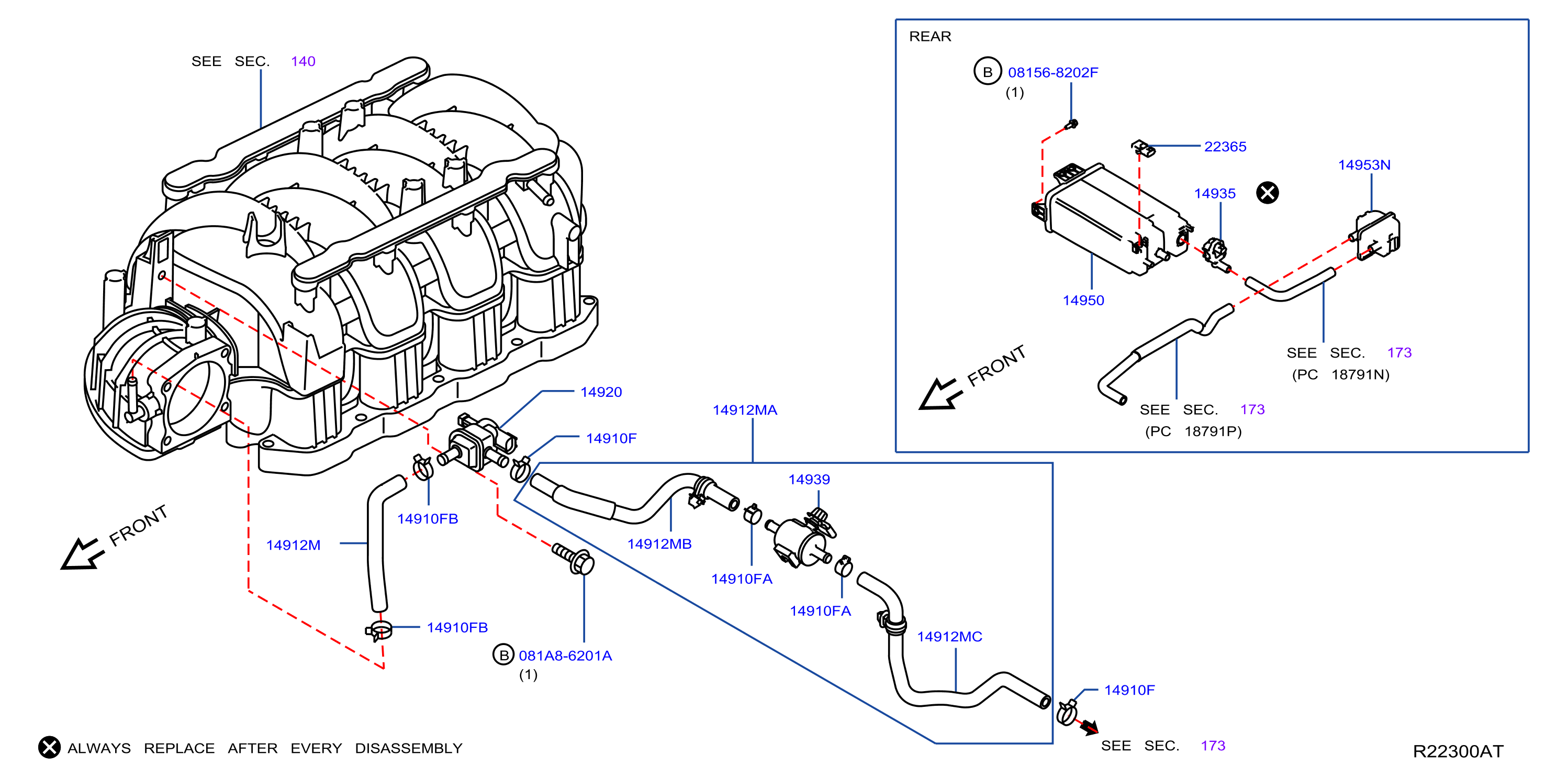
The Evaporative Emission Control (EVAP) system in your 2005 Nissan Titan is a critical component, designed to prevent harmful gasoline vapors from escaping into the atmosphere. Understanding its operation and, more specifically, the location and function of the EVAP vent control valve, can be incredibly helpful for troubleshooting emissions-related issues and performing basic maintenance.
The Purpose of the EVAP System
Before we dive into the specific location of the vent control valve, let's quickly recap the EVAP system's role. The system captures fuel vapors that evaporate from the fuel tank and fuel lines. These vapors are stored in a charcoal canister until the engine is running and operating conditions are right. At that point, the engine control unit (ECU) opens the purge valve, allowing the stored vapors to be drawn into the intake manifold and burned during normal combustion. This process prevents the release of hydrocarbons into the atmosphere, contributing to cleaner air and helping your Titan pass emissions tests.
The EVAP system consists of several key components, including the fuel tank, fuel cap, vapor lines, charcoal canister, purge valve, and the EVAP vent control valve. Each component plays a vital role in the overall functionality of the system.
The Role of the EVAP Vent Control Valve
The EVAP vent control valve (sometimes referred to as the vent solenoid or canister vent valve) is a crucial component of the EVAP system. It controls the flow of fresh air into the charcoal canister. When the purge valve is opened, creating a vacuum in the system, the vent control valve opens to allow atmospheric air to enter the canister. This incoming air mixes with the stored fuel vapors and helps to push them towards the purge valve and into the engine. Think of it as a breathing hole for the system. Without it, the system would be unable to efficiently purge the stored vapors.
More specifically, the vent control valve is normally open. This means that when the solenoid is not energized, air can flow freely through it. When the ECU wants to seal the EVAP system for testing purposes (such as during an EVAP system self-test), it energizes the solenoid, closing the valve and creating a sealed system. This sealed system allows the ECU to monitor for leaks by applying a vacuum and observing if the vacuum holds.
Locating the EVAP Vent Control Valve on a 2005 Nissan Titan
Now, for the most important part: pinpointing the exact location of the EVAP vent control valve on your 2005 Nissan Titan. This can sometimes be tricky, as the location can vary slightly depending on the specific model year and configuration. However, on the 2005 Titan, you will typically find the EVAP vent control valve located near the charcoal canister.
Here's a step-by-step guide to finding it:
- Identify the Charcoal Canister: The charcoal canister is usually a black, cylindrical or rectangular container. On the 2005 Titan, it is typically located underneath the vehicle, near the fuel tank. It's often mounted to the frame rail or body. You'll need to safely lift the vehicle using a jack and jack stands to access it properly. Always use jack stands when working under a vehicle. Safety first!
- Follow the Vapor Lines: Once you've located the charcoal canister, look for the various hoses (vapor lines) connected to it. The EVAP vent control valve will be in-line with one of these hoses, specifically the one that vents to the atmosphere. This vent line will often have a small filter or screen attached to it to prevent debris from entering the system.
- Identify the Valve: The EVAP vent control valve itself is typically a small, black plastic component with an electrical connector attached to it. It will have two hose connections – one coming from the charcoal canister and one leading to the vent (often with a small filter). It may have a small mounting bracket securing it to the frame or body.
- Look for the Wiring Harness: The valve will have an electrical connector, typically with two wires. This wiring harness connects the valve to the vehicle's electrical system and allows the ECU to control its operation. Following this wiring harness can also help you pinpoint the valve's location.
Important Considerations:
- Visual Inspection: Before you start disconnecting anything, carefully inspect the valve for any signs of damage, such as cracks, broken connectors, or corroded wiring.
- Wiring Diagrams: If you're having trouble locating the valve, consult a repair manual or wiring diagram specific to your 2005 Nissan Titan. These diagrams will provide a detailed layout of the EVAP system components and their locations.
- Professional Assistance: If you're not comfortable working on your vehicle's EVAP system, it's always best to seek professional assistance from a qualified mechanic.
Troubleshooting EVAP System Problems Related to the Vent Control Valve
A faulty EVAP vent control valve can cause a variety of problems, including:
- Check Engine Light: One of the most common symptoms of a problem with the EVAP system is the illumination of the "Check Engine" light on the dashboard. Diagnostic trouble codes (DTCs) related to the EVAP system, such as P0440, P0441, P0446, and others, may be stored in the ECU's memory. These codes can be read using an OBD-II scanner.
- Difficulty Refueling: A malfunctioning vent valve can create pressure build-up in the fuel tank, making it difficult to add fuel. The gas pump may keep shutting off prematurely.
- Fuel Odor: If the vent valve is stuck open or leaking, you may notice a fuel odor, especially near the fuel tank or charcoal canister.
- Poor Fuel Economy: While less common, a faulty EVAP system can contribute to poor fuel economy.
Diagnosis and Testing:
To diagnose a potential problem with the EVAP vent control valve, you can perform the following tests:
- Visual Inspection: As mentioned earlier, visually inspect the valve for any physical damage.
- Resistance Test: Use a multimeter to measure the resistance of the valve's solenoid. Compare the reading to the specification listed in the repair manual. An open circuit or a resistance value outside the specified range indicates a faulty valve.
- Actuation Test: With the valve disconnected from the vehicle, apply 12 volts to the solenoid terminals. You should hear a distinct click as the valve opens and closes. If the valve doesn't click or sounds weak, it may be faulty.
- Smoke Test: A smoke test is a valuable diagnostic tool for identifying leaks in the EVAP system. Smoke is introduced into the system, and any leaks will be visible as smoke escaping from the compromised area.
Replacing the EVAP Vent Control Valve
If you've determined that the EVAP vent control valve is faulty, replacing it is a relatively straightforward process. However, remember to always disconnect the negative battery cable before working on any electrical components.
Here are the general steps involved in replacing the valve:
- Disconnect the Electrical Connector: Carefully disconnect the electrical connector from the valve.
- Disconnect the Hoses: Disconnect the hoses from the valve. Note the orientation of the hoses before disconnecting them to ensure proper reinstallation.
- Remove the Valve: Remove any mounting hardware securing the valve to the vehicle.
- Install the New Valve: Install the new valve, ensuring that it is properly oriented and securely mounted.
- Connect the Hoses: Connect the hoses to the new valve. Double-check that they are securely attached.
- Connect the Electrical Connector: Connect the electrical connector to the new valve.
- Reconnect the Battery: Reconnect the negative battery cable.
- Clear Diagnostic Trouble Codes (DTCs): Use an OBD-II scanner to clear any DTCs related to the EVAP system.
- Test the System: Start the engine and allow it to run for a few minutes. Monitor for any signs of problems, such as a "Check Engine" light or fuel odors.
Pro Tip: When replacing the EVAP vent control valve, consider replacing the vent filter as well. A clogged filter can restrict airflow and affect the performance of the EVAP system.
By understanding the function and location of the EVAP vent control valve on your 2005 Nissan Titan, you can better diagnose and resolve EVAP system-related issues, keeping your vehicle running smoothly and efficiently, and helping to protect the environment.