
2006 Nissan Murano Transmission Fluid Type
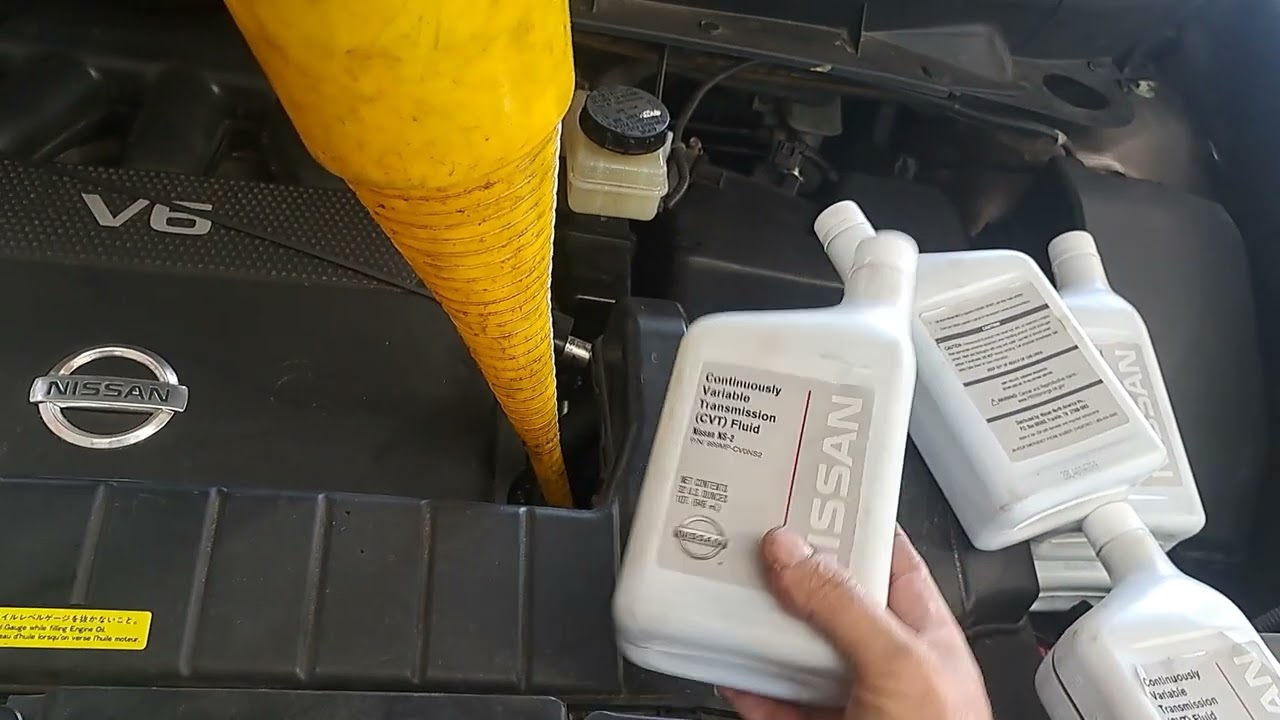
So, you're having some transmission trouble with your 2006 Nissan Murano, and the question of transmission fluid type has come up. You're not alone! It's a common concern, and getting the right fluid is absolutely crucial for the health and longevity of your CVT (Continuously Variable Transmission). Putting in the wrong fluid can lead to serious, and expensive, problems.
The Problem: Using the Wrong Transmission Fluid
The 2006 Nissan Murano uses a CVT, which is quite different from a traditional automatic transmission. Because of this difference, it requires a specialized fluid designed to work with its unique internal components. The wrong fluid can cause a whole host of issues, including:
- Slipping: The transmission might feel like it's not fully engaging, leading to delayed acceleration and poor performance.
- Shuddering: You might experience a noticeable vibration or shaking, especially at lower speeds.
- Overheating: Incorrect fluid can lead to increased friction and heat buildup within the transmission, causing damage.
- Premature Wear and Tear: The components within the CVT are designed to work with a specific fluid. Using the wrong one can accelerate wear and tear, leading to costly repairs or even a complete transmission failure.
- Diagnostic Trouble Codes (DTCs): Your vehicle's computer might register error codes related to transmission performance, indicating a problem with the fluid or the transmission itself.
In severe cases, using the wrong fluid can lead to complete transmission failure, requiring a replacement that could cost several thousand dollars. So, it's definitely worth getting this right!
The Solution: Using Nissan NS-2 CVT Fluid (or Compatible Alternative)
For your 2006 Nissan Murano, the correct transmission fluid is Nissan NS-2 CVT fluid. This is specifically formulated for the first generation of Nissan CVTs. This is often a pale green color, but color alone shouldn't be your only indicator.
Now, Nissan NS-2 is getting harder to find these days. It has been superseded by Nissan NS-3, which is used in newer Nissan CVTs. Do not use NS-3 in your 2006 Murano!. It is not compatible and can cause damage.
The good news is that there are aftermarket alternatives that are specifically designed to be compatible with Nissan NS-2. These are often labeled as "CVT fluid suitable for Nissan NS-2." Some reputable brands to look for include:
- Valvoline CVT Fluid (specifically labeled as NS-2 compatible)
- Castrol Transmax CVT Fluid (check label for NS-2 compatibility)
- Amsoil Synthetic CVT Fluid (ensure NS-2 compatibility)
Crucially, always check the product label to confirm that the fluid is explicitly stated to be compatible with Nissan NS-2. If you're unsure, consult with a trusted mechanic or parts supplier before making a purchase.
Practical Tips for Checking and Changing Your Transmission Fluid
Here's a breakdown of how to check and change your transmission fluid. Disclaimer: Working on your vehicle can be dangerous. If you're not comfortable performing these tasks, it's best to have a qualified mechanic do the work.
Checking the Fluid Level
Unfortunately, the 2006 Murano does not have a dipstick to check the CVT fluid level. The proper method is to check the fluid level by draining the fluid and measuring what came out. If the fluid level is off, you can add the correct amount of fluid into the transmission fill hole.
Tools Needed:
- Socket set with various sizes (including the drain plug size – usually around 19mm)
- Wrenches
- Drain pan
- Measuring cup
- Fluid pump or funnel with a long, flexible hose
- Gloves
- Rags or shop towels
- Jack and jack stands (for safe access underneath the vehicle)
Steps:
- Safety First: Park the vehicle on a level surface, engage the parking brake, and use jack stands to securely support the vehicle.
- Locate the Drain Plug: Find the transmission drain plug on the bottom of the transmission pan.
- Drain the Fluid: Place the drain pan under the drain plug. Loosen the drain plug with the correct size socket or wrench and carefully remove it. Allow the fluid to drain completely.
- Measure the Fluid: Use your measuring cup to accurately measure the amount of fluid that came out.
- Reinstall the Drain Plug: Clean the drain plug and install a new washer (if available). Tighten the drain plug to the manufacturer's specified torque (check your vehicle's repair manual).
- Locate the Fill Hole: Locate the transmission fill hole, it is usually located on the side of the transmission, near the top. It is usually sealed with a bolt or plug.
- Add New Fluid: Using a fluid pump or funnel with a hose, carefully add the same amount of fresh Nissan NS-2 compatible CVT fluid (or the amount specified in your repair manual) into the fill hole.
- Check for Leaks: Inspect the drain plug and fill hole for any leaks.
- Lower the Vehicle: Carefully lower the vehicle back to the ground.
Changing the Fluid (Full Flush Recommended)
While simply draining and filling the transmission can help, a full fluid flush is generally recommended for a more thorough cleaning and fluid replacement. This typically involves using a machine to circulate new fluid through the transmission while simultaneously removing the old fluid.
This process is generally best left to a professional mechanic, as it requires specialized equipment and knowledge to avoid damaging the transmission. However, if you're comfortable with advanced DIY repairs, you can find instructions and videos online for performing a CVT fluid flush. Proceed with caution and follow all instructions carefully.
Estimated Cost: A professional CVT fluid flush can range from $250 to $450, depending on the shop and the cost of the fluid.
Warning Signs You Need a Transmission Fluid Change
Even if you're not experiencing any major issues, it's important to be aware of the warning signs that indicate your transmission fluid needs to be changed:
- Dark or Dirty Fluid: Check the fluid's color (if possible) and consistency. Healthy fluid is usually pinkish or reddish. Dark brown or black fluid indicates it's contaminated and needs to be replaced.
- Burnt Smell: A burnt smell coming from the transmission area is a sign of overheating and fluid degradation.
- Slipping or Hesitation: As mentioned earlier, slipping or hesitation during acceleration can be a sign of low or contaminated fluid.
- Unusual Noises: Whining, humming, or clunking noises from the transmission can indicate fluid problems.
- Mileage Interval: Consult your vehicle's owner's manual for the recommended transmission fluid change interval. A general rule of thumb is to change the fluid every 30,000 to 60,000 miles, depending on driving conditions. However, for the first-generation Nissan CVTs, more frequent changes (e.g., every 30,000 miles) are often recommended for optimal longevity.
Preventative Maintenance is Key
The best way to avoid transmission problems is to practice preventative maintenance. Regularly check your transmission fluid level and condition, and follow the recommended fluid change intervals. Using the correct type of fluid is paramount. By taking these simple steps, you can help ensure the long and reliable life of your 2006 Nissan Murano's CVT.
If you're unsure about any aspect of transmission fluid maintenance, don't hesitate to consult with a qualified mechanic. They can diagnose any issues, recommend the appropriate fluid, and perform the necessary service to keep your Murano running smoothly.