
2009 Nissan Murano Starter Relay Location
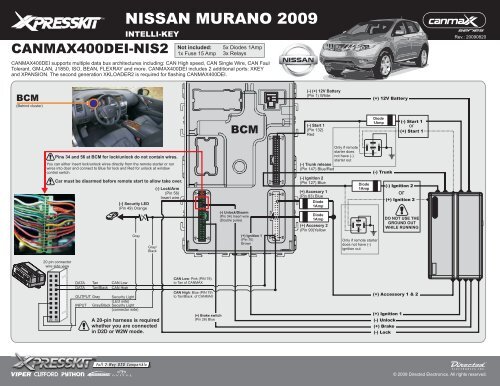
The 2009 Nissan Murano, a crossover SUV known for its blend of comfort and practicality, relies on a series of electrical components for its smooth operation. Among these, the starter relay plays a crucial role. Without it, the engine simply won't crank. Understanding its location and function can be invaluable for troubleshooting starting issues and performing basic maintenance. While the process is relatively straightforward, navigating the vehicle's electrical system requires precision and care.
Understanding the Starter Relay's Function
Before diving into the location, let's establish a clear understanding of what the starter relay does. In essence, it acts as an electrical switch, allowing a small amount of current from the ignition switch to control a much larger current flow to the starter motor. The starter motor, in turn, engages with the engine's flywheel, cranking the engine to initiate combustion.
Why the need for a relay? The starter motor requires a significant amount of amperage to operate. Routing that high current directly through the ignition switch would necessitate a much larger and more robust (and expensive) switch assembly. The relay acts as an intermediary, isolating the ignition switch from the high current demands of the starter. This allows for a smaller, more reliable ignition switch and protects it from potential damage.
Think of it like this: the ignition switch is the conductor signaling the orchestra to begin. The starter relay is the concertmaster, ensuring the entire orchestra (the starter motor) kicks in with full force. Without the concertmaster, the signal might not be strong enough to get everyone playing.
Locating the Starter Relay: A Step-by-Step Guide
The starter relay in the 2009 Nissan Murano is generally located within the IPDM E/R (Intelligent Power Distribution Module Engine Room). This module is essentially a sophisticated fuse box and relay center that manages various electrical functions within the engine compartment. However, unlike a traditional fuse box with clearly labeled components, the IPDM E/R often requires a little more digging to identify the specific starter relay.
Step 1: Accessing the IPDM E/R
The IPDM E/R is typically found on the passenger side of the engine compartment, near the firewall. Look for a black plastic box with numerous wires and connectors attached to it. The exact placement may vary slightly depending on the vehicle's specific configuration.
Open the hood and locate the IPDM E/R. You may need to remove a plastic cover or two to gain clear access. Always disconnect the negative battery terminal before working on any electrical components. This will prevent accidental shorts and potential damage to the vehicle's electrical system. Safety first!
Step 2: Identifying the Relay Layout
Once you have access to the IPDM E/R, you'll need to identify the starter relay. This is where things can get a bit tricky. The relays and fuses inside the IPDM E/R are often not clearly labeled on the module itself. You'll likely need to consult the vehicle's owner's manual or a detailed wiring diagram to pinpoint the exact location of the starter relay.
Consult your 2009 Nissan Murano's owner's manual. It may contain a diagram of the IPDM E/R with the relays and fuses identified. If the owner's manual doesn't provide this information (which is unfortunately common), you'll need to find a wiring diagram specific to your vehicle. These diagrams can often be found online through automotive repair databases or purchased from reputable automotive parts suppliers. Inputting your VIN (Vehicle Identification Number) is a key step to ensure you are referencing the correct wiring diagrams.
Look closely at the wiring diagram. The starter relay is typically identified with a specific numerical designation (e.g., Relay #4, Relay #7) and its function clearly labeled as "Starter Relay" or "Starting System Relay." Note the relay's position within the IPDM E/R based on the diagram.
Step 3: Locating the Relay within the IPDM E/R
With the wiring diagram in hand, carefully compare the diagram to the actual layout of the relays within the IPDM E/R. Look for the relay that corresponds to the location indicated in the diagram. Relays are typically rectangular or cube-shaped plastic components that plug into sockets within the IPDM E/R.
Pay attention to the color and markings on the relay itself. The wiring diagram may also provide this information to help you confirm you've identified the correct relay. Double-check the wiring diagram and the relay's position within the IPDM E/R to ensure you have the correct component. Mistaking another relay for the starter relay could lead to incorrect diagnosis and potentially damage other systems.
Step 4: Verifying the Starter Relay (Optional)
Before replacing the relay, you can perform a simple test to verify whether it's the source of the problem. One method is to swap the starter relay with an identical relay from another less critical system within the IPDM E/R (e.g., the horn relay, if it's the same type). If the engine starts after swapping the relays, it confirms that the original starter relay was faulty.
Important: Only swap relays if you are absolutely certain they are identical in terms of voltage, amperage, and pin configuration. Using an incorrect relay could damage the IPDM E/R or other electrical components.
Another method involves using a multimeter to test the relay's continuity. A functioning relay should have continuity between specific terminals when the ignition switch is in the "start" position. Consult the wiring diagram for the correct terminals to test. However, this method requires a more advanced understanding of electrical testing and should only be performed by individuals with the necessary skills and equipment.
Troubleshooting Starter Relay Issues
A faulty starter relay can manifest in several ways, including:
- Engine not cranking: This is the most common symptom. When you turn the key to the "start" position, you hear nothing – no clicking, no whirring, just silence.
- Clicking sound from the starter motor: This indicates that the starter motor is receiving some power, but not enough to engage and crank the engine. This could be due to a weak relay or a problem with the starter motor itself.
- Intermittent starting problems: The engine starts sometimes, but not others. This could be a sign of a failing relay that is making intermittent contact.
If you suspect a faulty starter relay, replacing it with a new one is often the easiest and most effective solution. Starter relays are relatively inexpensive and readily available from most auto parts stores.
Preventive Maintenance
While starter relays are generally reliable, they can fail over time due to wear and tear, corrosion, or electrical surges. To help prevent starter relay problems, consider the following:
- Keep the battery terminals clean and corrosion-free: A weak or corroded battery can put extra strain on the starter relay.
- Avoid repeatedly cranking the engine for extended periods: This can overheat the starter relay and shorten its lifespan.
- Have the vehicle's electrical system inspected periodically: A qualified mechanic can identify potential problems before they lead to a starter relay failure.
Conclusion
The starter relay is a small but vital component in the 2009 Nissan Murano's starting system. Understanding its function and location can empower you to troubleshoot starting problems and perform basic maintenance. While the IPDM E/R can be a bit daunting to navigate, with patience and a reliable wiring diagram, you can successfully locate and diagnose the starter relay. Remember to always prioritize safety and disconnect the battery before working on any electrical components. By following these steps, you can ensure your Murano starts reliably every time.