
2010 Nissan Altima 2.5 Catalytic Converter
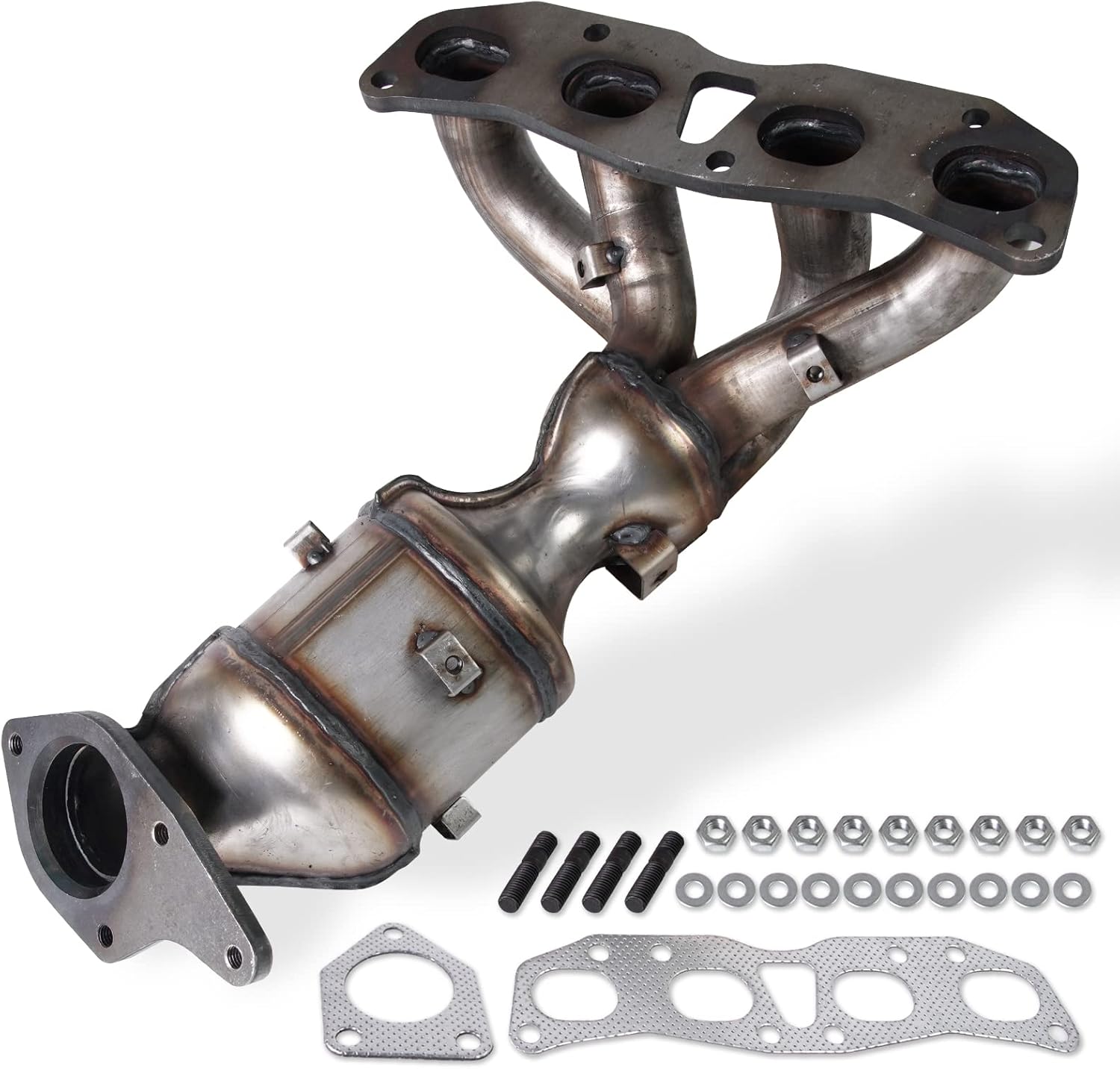
The 2010 Nissan Altima 2.5, a popular mid-size sedan, relies on a sophisticated emission control system to meet stringent environmental regulations. At the heart of this system lies the catalytic converter, a crucial component responsible for significantly reducing harmful pollutants in the exhaust gases. This article delves into the inner workings of the 2010 Nissan Altima 2.5's catalytic converter, exploring its design, function, and the chemical processes involved in its operation.
Catalytic Converter Fundamentals: The Three-Way Catalyst
The Altima 2.5, like most modern vehicles, employs a three-way catalytic converter. This design aims to simultaneously address three primary pollutants produced during combustion: hydrocarbons (HC), carbon monoxide (CO), and nitrogen oxides (NOx). Achieving this requires a precisely controlled environment within the converter, and the engine control unit (ECU) plays a vital role in maintaining the ideal air-fuel mixture necessary for optimal converter performance.
The "three-way" designation refers to the three main chemical reactions that occur within the converter:
- Reduction of Nitrogen Oxides (NOx): NOx molecules are broken down into harmless nitrogen (N2) and oxygen (O2).
- Oxidation of Carbon Monoxide (CO): CO is oxidized to form carbon dioxide (CO2).
- Oxidation of Hydrocarbons (HC): Unburnt hydrocarbons are oxidized to form carbon dioxide (CO2) and water (H2O).
Construction and Materials: Inside the Converter
The 2010 Altima 2.5 catalytic converter isn't just an empty can; it's a carefully engineered device with several key components:
The Substrate: A Cellular Matrix
The substrate provides a large surface area for the catalytic reactions to occur. It's typically made of ceramic material, often cordierite (magnesium iron aluminum silicate). This ceramic is formed into a honeycomb structure, also known as a monolith. The honeycomb design significantly increases the surface area exposed to the exhaust gases while minimizing backpressure. The honeycomb structure allows exhaust gases to flow through readily, minimizing restriction and maintaining engine performance. The Altima 2.5 catalytic converter's substrate is designed to balance these two critical factors.
The Washcoat: Preparing the Surface
The substrate itself isn't catalytically active. It serves as a carrier for the washcoat, a thin layer of highly porous material applied to the substrate's surface. The washcoat is typically composed of alumina (aluminum oxide, Al2O3) and provides an even larger surface area for the precious metals to adhere to. The washcoat also enhances the dispersion of the catalytic metals, maximizing their effectiveness.
The Precious Metals: The Catalytic Agents
The heart of the catalytic converter's functionality lies in the precious metals embedded within the washcoat. These metals act as catalysts, facilitating the chemical reactions without being consumed themselves. The three primary precious metals used in three-way catalytic converters are:
- Platinum (Pt): Primarily responsible for the oxidation of hydrocarbons and carbon monoxide.
- Palladium (Pd): Also involved in the oxidation of hydrocarbons and carbon monoxide.
- Rhodium (Rh): Crucially involved in the reduction of nitrogen oxides.
The specific ratio of these metals is carefully optimized to achieve the best possible conversion efficiency for the Altima 2.5's engine characteristics and emissions targets. The ECU uses feedback from oxygen sensors to fine-tune the air-fuel ratio, ensuring the catalytic converter operates within its optimal "window" for maximum pollutant reduction.
The Chemical Processes: A Closer Look
Let's examine the chemical reactions that occur within the Altima 2.5's catalytic converter in more detail:
Reduction of NOx:
Nitrogen oxides (NOx) are reduced into nitrogen (N2) and oxygen (O2) according to the following simplified reactions, primarily facilitated by rhodium:
2NOx -> xO2 + N2
Where 'x' represents the average number of oxygen atoms per NOx molecule. The exact reaction pathways are complex and involve various intermediate species. The presence of rhodium is crucial for efficiently breaking the strong bonds within NOx molecules.
Oxidation of CO:
Carbon monoxide (CO) is oxidized to carbon dioxide (CO2), primarily by platinum and palladium:
2CO + O2 -> 2CO2
This reaction requires oxygen, which is why a slightly lean air-fuel mixture (more oxygen than stoichiometric) is beneficial for CO conversion.
Oxidation of HC:
Unburnt hydrocarbons (HC) are oxidized to carbon dioxide (CO2) and water (H2O), also primarily by platinum and palladium:
CxHy + (x + y/4)O2 -> xCO2 + (y/2)H2O
Like CO oxidation, this reaction requires sufficient oxygen for complete combustion of the hydrocarbons.
The efficiency of these reactions is highly dependent on temperature. The catalytic converter needs to reach a certain operating temperature (typically around 400-800°C) before it becomes fully effective. This is why vehicles often have a "warm-up" period where emissions are higher. The 2010 Altima 2.5 may utilize strategies like retarded ignition timing during warm-up to quickly heat up the catalytic converter.
Monitoring and Feedback: Oxygen Sensors
To ensure the catalytic converter is functioning correctly and efficiently, the 2010 Altima 2.5 employs oxygen sensors (O2 sensors). These sensors measure the amount of oxygen in the exhaust gas, both before (upstream) and after (downstream) the catalytic converter.
The upstream oxygen sensor provides feedback to the ECU, allowing it to adjust the air-fuel mixture to maintain the optimal conditions for catalytic converter operation. The ECU aims to keep the air-fuel ratio as close as possible to the stoichiometric point (approximately 14.7:1), where the converter is most effective at reducing all three pollutants.
The downstream oxygen sensor monitors the oxygen level after the catalytic converter. Its primary purpose is to assess the converter's efficiency. A properly functioning catalytic converter will significantly reduce the oxygen content in the exhaust gas. If the downstream sensor readings are similar to the upstream sensor readings, it indicates that the catalytic converter is not effectively removing pollutants and needs replacement.
The ECU continuously monitors the signals from both oxygen sensors and uses this information to diagnose catalytic converter performance. Diagnostic trouble codes (DTCs) such as P0420 ("Catalyst System Efficiency Below Threshold") are commonly associated with a failing catalytic converter.
Factors Affecting Catalytic Converter Performance
Several factors can negatively impact the performance and lifespan of the 2010 Altima 2.5's catalytic converter:
- Contamination: Leaded fuel, oil consumption, and coolant leaks can contaminate the catalytic converter, poisoning the precious metals and rendering them ineffective. Even small amounts of leaded fuel can permanently damage the converter.
- Overheating: Running the engine rich (too much fuel) for extended periods can cause the catalytic converter to overheat, leading to thermal stress and damage to the substrate.
- Physical Damage: Impacts from road debris can physically damage the catalytic converter, compromising its structural integrity.
- Engine Misfires: Misfires can send unburnt fuel into the catalytic converter, causing it to overheat and potentially melt down.
- Age and Wear: Over time, the precious metals can gradually degrade and lose their catalytic activity.
Conclusion
The catalytic converter in the 2010 Nissan Altima 2.5 is a complex and vital component of the vehicle's emission control system. Its ability to simultaneously reduce hydrocarbons, carbon monoxide, and nitrogen oxides demonstrates a remarkable feat of chemical engineering. Understanding the design, function, and chemical processes involved in its operation can help both enthusiasts and amateur engineers appreciate the sophistication of modern automotive technology and the importance of maintaining this critical component for environmental protection. Proper maintenance, including addressing engine problems promptly and avoiding contaminants, is crucial for ensuring the long-term performance and effectiveness of the catalytic converter.