
2010 Nissan Pathfinder Shift Lock Solenoid
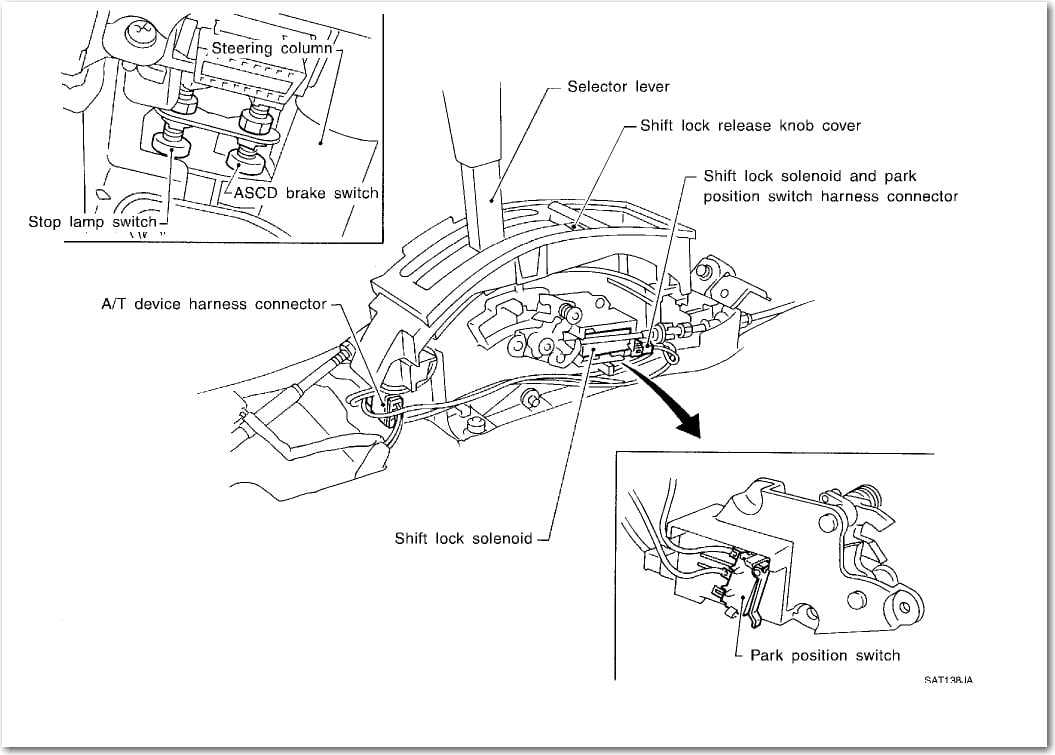
Let's dive into the 2010 Nissan Pathfinder's shift lock solenoid system. This isn't something you'll encounter every day, but understanding how it works, and more importantly, how to troubleshoot it, can save you from being stranded or facing a hefty repair bill. We'll cover its function, common failure points, diagnostics, and potential fixes.
What is the Shift Lock Solenoid and What Does It Do?
The shift lock solenoid is a small, electrically operated component within your Pathfinder's automatic transmission system. Its primary purpose is to prevent unintentional shifting out of the Park (P) position. This is a crucial safety feature. Without it, a child, or even an accidental nudge, could shift the vehicle out of Park, potentially leading to a dangerous situation. Think of it as a mechanical and electrical gatekeeper for your gear selector.
Here’s the breakdown of how it works:
- Ignition On, Brake Pedal Depressed: When you turn the ignition on and depress the brake pedal, a signal is sent to the shift lock solenoid.
- Solenoid Activation: This electrical signal energizes the solenoid, which is essentially an electromagnet. This energization causes a small plunger or lever within the solenoid to retract.
- Shift Lever Release: When the plunger retracts, it physically unlocks the shift lever, allowing you to move it out of the Park position.
- Brake Pedal Released: If you release the brake pedal, the electrical signal to the solenoid ceases. The solenoid de-energizes, the plunger extends, and the shift lever is locked back in Park.
The shift lock solenoid is part of a broader system that includes the brake light switch, the ignition switch, and related wiring. A failure in any of these components can mimic a faulty solenoid.
Common Failure Points and Symptoms
Several things can go wrong with the shift lock solenoid system on a 2010 Pathfinder. Here are the most common culprits:
Faulty Shift Lock Solenoid Itself
This is the most obvious suspect. The solenoid can fail mechanically (plunger sticking, spring breaking) or electrically (coil winding shorting or opening).
A common sign of solenoid failure is hearing a faint clicking sound near the shift lever when the brake pedal is depressed, but the lever remains locked. This suggests the solenoid is receiving power but not actuating properly.
Brake Light Switch Issues
The brake light switch, usually located near the brake pedal, is crucial. It performs two essential functions: activates your brake lights and sends a signal to the shift lock solenoid. If the switch is faulty, it won't send the necessary signal, and the solenoid won't release the shift lever.
Important Note: If your brake lights aren't working, this is a strong indication the brake light switch is the primary problem.
Wiring Problems
Wires can become corroded, damaged, or disconnected over time. This can interrupt the electrical signal to the solenoid. Pay particular attention to wiring near the brake pedal and the shift lever.
Fuse Problems
A blown fuse in the shift lock circuit can prevent the solenoid from receiving power. Check your owner's manual to identify the correct fuse.
Ignition Switch Issues
While less common, a problem with the ignition switch itself can prevent the necessary power from reaching the shift lock circuit.
Symptoms of a Failing Shift Lock Solenoid System
- Inability to Shift Out of Park: This is the most common and obvious symptom.
- Brake Lights Not Working: As mentioned earlier, this strongly suggests a brake light switch issue.
- Intermittent Shifting Problems: Sometimes, the shift lever might release occasionally, but not consistently.
- Clicking Sound Near Shift Lever: A faint clicking sound when depressing the brake pedal indicates the solenoid is receiving power but not fully actuating.
Diagnostics and Troubleshooting
Before replacing the shift lock solenoid, it’s essential to perform a thorough diagnostic process to rule out other potential causes. Here’s a step-by-step approach:
1. Check the Fuses
Start with the basics. Locate the fuse box (usually under the dashboard or in the engine compartment) and identify the fuse related to the shift lock solenoid or brake lights. Your owner's manual will be your best friend here. Use a multimeter to test the fuse for continuity. If it's blown, replace it with a fuse of the same amperage rating. If the fuse blows again immediately, there’s likely a short circuit in the system that needs further investigation.
2. Verify Brake Light Operation
Have someone stand behind your vehicle while you depress the brake pedal. Ensure both brake lights are illuminating brightly and consistently. If not, the brake light switch is a prime suspect.
3. Test the Brake Light Switch
The brake light switch is typically located near the top of the brake pedal arm. Disconnect the switch and use a multimeter to test its continuity. You should have continuity between specific terminals when the brake pedal is depressed and no continuity when it's released. Refer to your Pathfinder's service manual or online resources for the specific pinout and testing procedure for your switch. Replacing the brake light switch is often a relatively inexpensive and straightforward fix.
4. Inspect Wiring and Connectors
Carefully inspect the wiring harness and connectors associated with the shift lock solenoid, brake light switch, and ignition switch. Look for signs of corrosion, damage, or loose connections. Use a wiring diagram to trace the circuit and ensure all connections are secure. Clean any corroded connectors with electrical contact cleaner.
5. Test the Shift Lock Solenoid Directly
This step requires a bit more technical skill. You'll need to access the shift lock solenoid (typically located near the shift lever assembly). Disconnect the electrical connector from the solenoid. Use a multimeter to check the resistance of the solenoid coil. A typical solenoid coil will have a resistance value within a specified range (refer to your service manual for the exact value). An open circuit (infinite resistance) or a short circuit (very low resistance) indicates a faulty solenoid.
You can also try applying 12V DC directly to the solenoid terminals (observing the correct polarity). You should hear a distinct click as the solenoid actuates. If you don't hear a click, the solenoid is likely defective.
6. Scan for Diagnostic Trouble Codes (DTCs)
Use an OBD-II scanner to check for any stored diagnostic trouble codes (DTCs) related to the transmission, brake system, or electrical system. While not always definitive, these codes can provide valuable clues about the source of the problem. Common codes related to the shift lock solenoid system might include codes related to the brake light switch circuit or the shift lock solenoid circuit itself.
Replacing the Shift Lock Solenoid
If, after thorough diagnostics, you’ve determined that the shift lock solenoid itself is faulty, replacing it is the next step. Here's a general overview of the procedure:
- Disconnect the Negative Battery Cable: This is crucial for safety to prevent electrical shorts.
- Access the Shift Lever Assembly: This usually involves removing trim panels around the shift lever. Consult your Pathfinder's service manual for specific instructions.
- Locate the Shift Lock Solenoid: The solenoid is typically a small, cylindrical component attached to the shift lever assembly.
- Disconnect the Electrical Connector: Carefully disconnect the electrical connector from the solenoid.
- Remove the Solenoid: The solenoid is usually held in place by screws or bolts. Remove the fasteners and carefully remove the solenoid.
- Install the New Solenoid: Install the new solenoid in the reverse order of removal. Ensure the electrical connector is securely attached.
- Reassemble the Shift Lever Assembly: Reinstall all trim panels and components.
- Reconnect the Negative Battery Cable: Reconnect the negative battery cable.
- Test the System: Start the vehicle and test the shift lock system to ensure it's functioning correctly.
Important Note: Always refer to your vehicle's specific service manual for detailed instructions and torque specifications.
Preventative Maintenance
While shift lock solenoid failure isn't a common maintenance item, you can help prevent issues by:
- Regularly Inspecting Brake Lights: Ensure your brake lights are working properly to catch potential brake light switch issues early.
- Protecting Wiring: Keep wiring harnesses clean and protected from damage.
By understanding the function, common failure points, and diagnostic procedures for the 2010 Nissan Pathfinder's shift lock solenoid system, you can confidently troubleshoot and repair this critical safety feature. Remember to always prioritize safety and consult your vehicle's service manual for detailed instructions.