
2012 Nissan Altima 2.5 Catalytic Converter
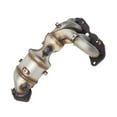
Alright, let's dive into the catalytic converter on your 2012 Nissan Altima 2.5. It's a crucial component in your vehicle's emissions system, and understanding how it works, why it fails, and what your options are when replacement time comes is important for any serious DIYer or car enthusiast. We’ll cover everything from its location to troubleshooting common issues.
What is a Catalytic Converter and Why Does the Altima Need One?
Simply put, the catalytic converter is an emissions control device that reduces the toxicity of pollutants in exhaust gas. Think of it as a chemical reactor sitting in the exhaust stream. Your Altima's 2.5L engine, like all internal combustion engines, produces some nasty byproducts during combustion: hydrocarbons (HC), carbon monoxide (CO), and oxides of nitrogen (NOx). These are harmful to human health and the environment. The catalytic converter's job is to convert these into less harmful substances: carbon dioxide (CO2), water (H2O), and nitrogen (N2).
The 2012 Altima 2.5L uses a three-way catalytic converter. The "three-way" part refers to the three pollutants it tackles. Inside the converter, you'll find a ceramic substrate (often a honeycomb structure) coated with precious metals, primarily platinum, palladium, and rhodium. These metals act as catalysts, accelerating the chemical reactions without being consumed themselves. The design maximizes the surface area for exhaust gases to interact with the catalysts.
The typical chemical reactions that take place are:
- Reduction of NOx: 2NOx → N2 + xO2
- Oxidation of CO: 2CO + O2 → 2CO2
- Oxidation of HC: HC + O2 → H2O + CO2
Without a functioning catalytic converter, your Altima would be pumping out significantly more pollutants, failing emissions tests, and potentially leading to fines. Plus, a failing converter can impact engine performance.
Location and Configuration on the 2012 Altima 2.5
On the 2012 Altima 2.5L, the catalytic converter is typically located downstream from the exhaust manifold, close to the engine. Specifically, it’s part of the exhaust system, usually bolted to the exhaust manifold using a flange and connected to the exhaust pipe leading towards the muffler. This location is strategic because the converter needs to be hot (usually around 400-800°F) to operate efficiently. Being close to the engine helps it reach operating temperature quickly.
The exact configuration can vary slightly depending on whether you have a California emissions (CARB compliant) vehicle or a federal emissions vehicle. CARB compliant Altimas might have additional pre-converters or sensors.
Common Problems and Failure Modes
Catalytic converters don't last forever. Several factors can contribute to their failure:
- Contamination: This is the most common cause of failure. Coolant leaks, excessive oil consumption, or fuel additives containing silicon can coat the catalyst, preventing it from working effectively. Even a small amount of contaminant can poison the catalytic converter.
- Overheating: Rich fuel mixtures (too much fuel, not enough air) can cause the converter to overheat, melting the substrate and rendering it useless. This often happens when there's a problem with the engine's fuel management system.
- Physical Damage: Road debris can physically damage the converter, cracking the substrate or damaging the housing. This is less common but still possible.
- Age and Deterioration: Over time, the catalyst materials can degrade and lose their effectiveness, even without contamination or overheating.
Signs of a failing catalytic converter include:
- Check Engine Light (CEL): Specifically, codes like P0420 ("Catalyst System Efficiency Below Threshold, Bank 1") are strong indicators. Use an OBD-II scanner to retrieve the code.
- Poor Engine Performance: Reduced power, sluggish acceleration, and rough idling can all be symptoms.
- Failed Emissions Test: Obvious, but worth mentioning.
- Rattling Noise: A rattling sound coming from underneath the car, especially on acceleration, can indicate a broken substrate inside the converter.
- Sulfur Smell: A rotten egg smell (sulfur dioxide) can sometimes be noticeable, particularly under heavy acceleration.
Troubleshooting and Diagnostics
Before condemning the catalytic converter, it's crucial to rule out other potential problems. Here's a logical troubleshooting process:
- Read the OBD-II Codes: A P0420 code is the most common indicator, but other codes related to the oxygen sensors (O2 sensors) can also provide clues. O2 sensors measure the amount of oxygen in the exhaust stream. There's usually an upstream sensor (before the converter) and a downstream sensor (after the converter). Comparing the readings from these sensors helps the ECU (Engine Control Unit) monitor the converter's efficiency.
- Inspect the O2 Sensors: Check the wiring and connectors of the O2 sensors for damage or corrosion. Consider replacing the O2 sensors, especially if they are old, before replacing the catalytic converter. Faulty O2 sensors can sometimes cause a P0420 code.
- Check for Exhaust Leaks: Exhaust leaks upstream of the catalytic converter can introduce extra oxygen into the system, skewing the O2 sensor readings and potentially triggering a P0420 code. Visually inspect the exhaust system for leaks, especially around the flanges and welds.
- Inspect the Engine for Misfires and Other Problems: Misfires can dump unburned fuel into the catalytic converter, causing it to overheat. Address any misfire issues (e.g., faulty spark plugs, ignition coils) before replacing the converter. Check for coolant leaks and excessive oil consumption as these can contaminate the converter.
- Perform an O2 Sensor Test: If you have access to a scan tool that can display live data, monitor the O2 sensor readings. A healthy downstream O2 sensor should show a relatively stable voltage (around 0.45V) when the engine is at operating temperature and running smoothly. Large fluctuations in voltage indicate the converter is not effectively storing oxygen and is likely failing.
- Backpressure Test (Advanced): This test requires specialized equipment. A backpressure gauge is installed in place of an O2 sensor upstream of the converter. Excessive backpressure indicates a blockage within the converter.
Replacement Options and Considerations
If you've confirmed that the catalytic converter is indeed faulty, you have several replacement options:
- OEM (Original Equipment Manufacturer) Converter: This is the most expensive option, but it guarantees fitment and performance to the original specifications.
- Aftermarket Converter: Aftermarket converters are generally more affordable than OEM converters. However, quality can vary significantly. Look for reputable brands that meet EPA or CARB (if applicable) requirements. Ensure the converter is specifically designed for your 2012 Altima 2.5L.
- High-Flow Converter: These are often marketed as performance upgrades. While they may offer a slight increase in horsepower, they may also trigger a CEL if they don't meet emissions standards. Research carefully and choose a reputable brand if you go this route. Consider that high-flow converters may not be legal in all areas.
Important Considerations:
- Legality: It's illegal to remove or tamper with a catalytic converter. Ensure that any replacement converter meets federal or state emissions standards. Check your local laws before making any modifications.
- CARB Compliance: If you live in California or another state that follows California emissions standards, you'll need to purchase a CARB-compliant catalytic converter. These converters have a special EO (Executive Order) number that indicates they have been approved by the California Air Resources Board.
- Installation: Replacing a catalytic converter typically involves unbolting the old converter from the exhaust manifold and exhaust pipe, and then bolting in the new one. You may need to use penetrating oil to loosen rusted bolts. Be sure to use new gaskets and hardware. If you're not comfortable working with exhaust systems, it's best to have a professional mechanic perform the replacement.
Post-Replacement
After replacing the catalytic converter, it's essential to clear the OBD-II codes and monitor the engine performance. If the CEL returns, double-check your work and consider further diagnostics to rule out any underlying issues. It's also a good idea to perform a visual inspection of the exhaust system after a few days to check for leaks.
Replacing a catalytic converter on your 2012 Nissan Altima 2.5L can seem daunting, but with the right knowledge and tools, it's a manageable task for the experienced DIYer. Remember to prioritize safety, follow proper procedures, and choose a quality replacement converter to ensure optimal performance and compliance with emissions regulations.