
2012 Nissan Pathfinder Catalytic Converter
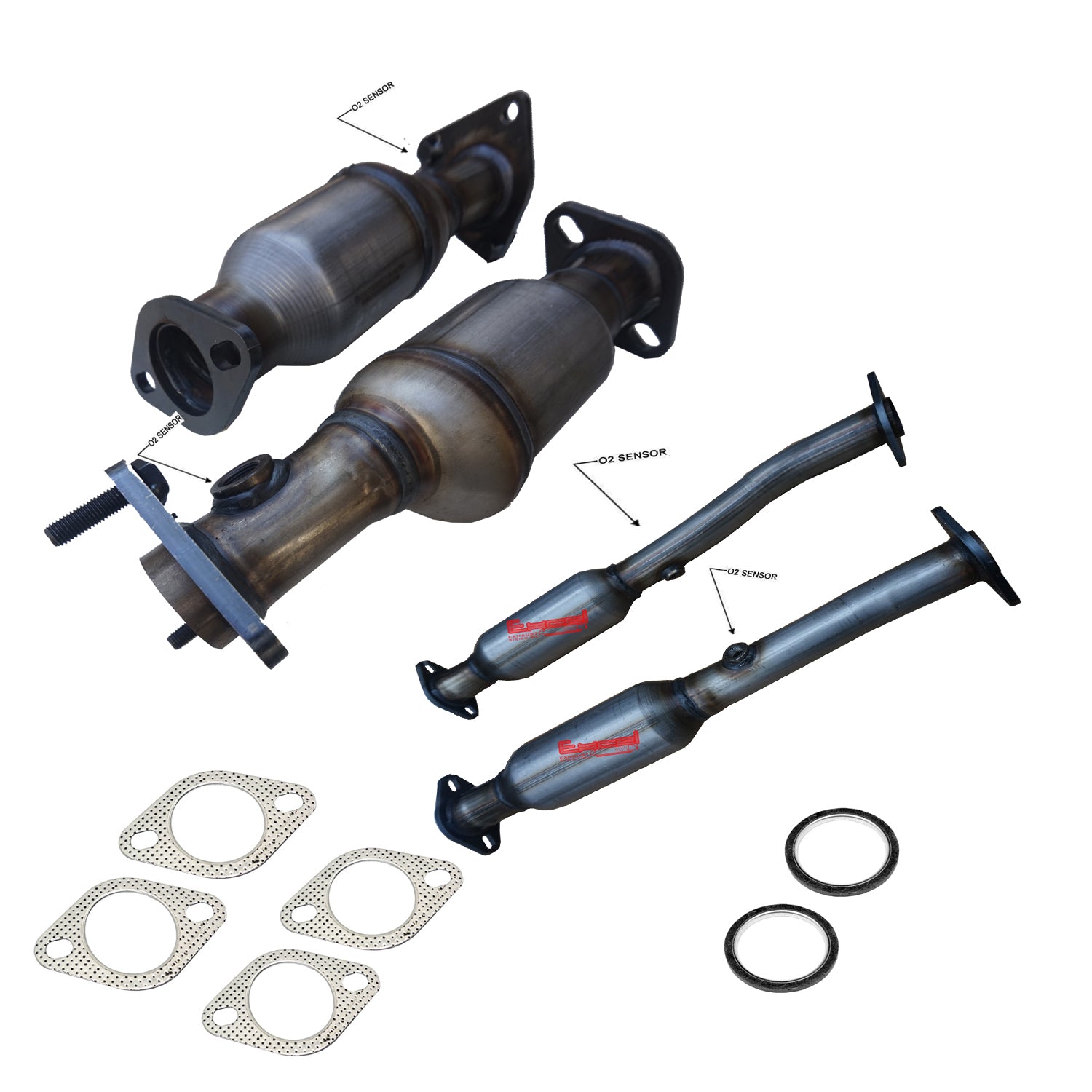
So, you're having catalytic converter problems with your 2012 Nissan Pathfinder? You're not alone. It's a common issue on vehicles of this age, and while it can be frustrating, understanding the problem and your options is the first step to getting it resolved. Let's break it down.
Understanding the Catalytic Converter in Your Pathfinder
The catalytic converter is a crucial component of your Pathfinder's exhaust system. Its job is to reduce harmful emissions – things like hydrocarbons, carbon monoxide, and nitrogen oxides – into less harmful substances like carbon dioxide, water, and nitrogen. Think of it as the unsung hero of clean air! It uses a catalyst (typically platinum, palladium, and rhodium) to speed up these chemical reactions.
For a 2012 Pathfinder, you likely have multiple catalytic converters: one or two upstream (close to the engine) and potentially one downstream. This configuration depends on the specific engine and drivetrain configuration of your particular vehicle.
Common Symptoms of a Failing Catalytic Converter
How do you know if your catalytic converter is on its way out? Here are some telltale signs:
- Check Engine Light (CEL): This is often the first and most obvious indicator. The OBD-II system, which monitors your car's performance, will likely throw a code related to catalytic converter efficiency. Common codes include P0420 ("Catalyst System Efficiency Below Threshold Bank 1") and P0430 ("Catalyst System Efficiency Below Threshold Bank 2").
- Reduced Engine Performance: A clogged or failing catalytic converter restricts exhaust flow. This can result in a noticeable decrease in acceleration, sluggish performance, and a general feeling that your Pathfinder is struggling.
- Poor Fuel Economy: Because the engine isn't breathing as efficiently, it has to work harder to maintain speed, leading to a drop in gas mileage.
- Rattling Noises: Internal components of the catalytic converter can break down over time. These loose pieces can rattle around inside the converter's housing, creating a distinct and annoying noise, especially when the engine is idling or under load.
- Overheating: A severely clogged catalytic converter can cause excessive heat build-up in the exhaust system, potentially damaging other components.
- Sulfur Smell (Rotten Eggs): While not always indicative of a catalytic converter problem alone, a strong sulfur smell coming from the exhaust can sometimes be a sign that the converter is struggling to process exhaust gases properly.
- Failed Emissions Test: If your Pathfinder fails an emissions test, a faulty catalytic converter is a prime suspect.
Diagnosing the Problem: More Than Just the Code
While a P0420 or P0430 code strongly suggests a catalytic converter issue, it's crucial to properly diagnose the problem before jumping to a replacement. A good mechanic will perform the following checks:
- Visual Inspection: Look for any signs of physical damage to the catalytic converter, such as dents, cracks, or rust. Also, check the exhaust system for leaks, as these can affect the converter's performance.
- OBD-II Scan: Confirm the presence of catalytic converter-related codes and check for any other codes that might be contributing to the issue (e.g., oxygen sensor codes, misfire codes).
- Oxygen Sensor Testing: The oxygen sensors (O2 sensors) located upstream and downstream of the catalytic converter play a vital role in monitoring its efficiency. A mechanic can use a scan tool to analyze the O2 sensor readings and determine if they are functioning correctly. Faulty O2 sensors can trigger false catalytic converter codes.
- Exhaust Backpressure Test: This test measures the resistance to exhaust flow. High backpressure indicates a clogged catalytic converter.
- Temperature Readings: Using an infrared thermometer, a mechanic can measure the temperature difference between the inlet and outlet of the catalytic converter. A properly functioning converter should have a higher temperature at the outlet.
Potential Causes of Catalytic Converter Failure
Catalytic converters don't usually fail on their own. They often die prematurely due to other underlying problems. Here are some common culprits:
- Engine Misfires: Unburnt fuel from misfires can overheat and damage the catalytic converter.
- Oil Leaks: Oil entering the exhaust system can coat the catalyst and render it ineffective.
- Coolant Leaks: Coolant leaks into the combustion chamber can also poison the catalytic converter.
- Faulty Oxygen Sensors: As mentioned earlier, bad O2 sensors can provide incorrect data to the engine control unit (ECU), leading to improper fuel mixture and catalytic converter damage.
- Excessive Fuel Consumption: Running excessively rich can cause carbon buildup on the catalytic converter reducing its efficiency.
- Physical Damage: Road debris or accidents can physically damage the catalytic converter.
- Age and Mileage: Over time, the catalyst material inside the converter degrades, reducing its efficiency.
Repair Options and Costs
Once you've confirmed that the catalytic converter is indeed the problem, you have a few options:
- Catalytic Converter Replacement: This is the most common solution. You can choose between an OEM (Original Equipment Manufacturer) catalytic converter or an aftermarket option. OEM converters are generally more expensive but are designed to meet the exact specifications of your vehicle. Aftermarket converters are usually more affordable but may not perform as well or last as long. It's crucial to choose a catalytic converter that meets EPA standards for your 2012 Pathfinder.
- Repairing a Small Leak: If the converter has a small leak that is causing a code, a skilled welder might be able to repair it. This is not always possible and is often a temporary fix. It's rarely a good long-term solution.
- Cleaning (Not Recommended): Some products claim to clean catalytic converters, but these are generally ineffective and can even cause further damage. Cleaning rarely restores a failing converter to proper working order. Avoid these products.
Approximate Costs:
- Aftermarket Catalytic Converter Replacement: $400 - $800 (parts and labor) per converter.
- OEM Catalytic Converter Replacement: $800 - $1500+ (parts and labor) per converter.
These are just estimates. The actual cost will depend on the specific type of catalytic converter, the labor rates in your area, and whether you need to replace any other components (e.g., oxygen sensors, exhaust pipes). It is always best to get a quote from a local, reputable mechanic.
Tools You Might Need (If You're DIYing)
Replacing a catalytic converter can be a DIY project for mechanically inclined individuals, but it requires some specialized tools and knowledge. If you are not comfortable working on your car, it is always best to leave this to a professional. Here are some tools you might need:
- Socket Set and Wrenches: Including metric sizes appropriate for your Pathfinder.
- Penetrating Oil: To loosen rusted bolts.
- Oxygen Sensor Socket: A specialized socket for removing and installing oxygen sensors without damaging them.
- Jack and Jack Stands: To safely lift and support your vehicle.
- Safety Glasses and Gloves: For protection.
- Torque Wrench: To tighten bolts to the correct specifications.
- Cutting Torch or Reciprocating Saw (Potentially): If the old catalytic converter is welded to the exhaust system.
- Welding Equipment (Potentially): If you need to weld the new converter in place.
Important Considerations:
- Safety First: Always wear safety glasses and gloves when working on your car. Use jack stands to support the vehicle safely.
- Disconnect the Battery: Disconnect the negative battery terminal before starting any work on the electrical system.
- Follow Torque Specifications: Tighten all bolts to the manufacturer's recommended torque specifications.
- Check for Leaks: After installing the new catalytic converter, start the engine and check for exhaust leaks.
Preventing Future Catalytic Converter Problems
Once you've replaced your catalytic converter, take steps to prevent future problems:
- Regular Maintenance: Follow your Pathfinder's recommended maintenance schedule, including oil changes, tune-ups, and spark plug replacements.
- Address Engine Problems Promptly: Don't ignore engine misfires, oil leaks, or coolant leaks. Fix these problems as soon as possible to prevent damage to the catalytic converter.
- Use Quality Fuel: Use the correct octane fuel recommended for your Pathfinder.
- Avoid Short Trips: Short trips don't allow the catalytic converter to heat up to its optimal operating temperature, which can lead to carbon buildup.
Final Thoughts
Dealing with a catalytic converter issue on your 2012 Nissan Pathfinder can be a headache, but with a little knowledge and the right approach, you can get it resolved. Remember to properly diagnose the problem, choose a quality replacement converter, and address any underlying issues that may have contributed to the failure. Whether you choose to tackle the repair yourself or take it to a trusted mechanic, understanding the process will help you make informed decisions and keep your Pathfinder running smoothly for years to come. Good luck!