
2013 Nissan Versa Transmission Replacement
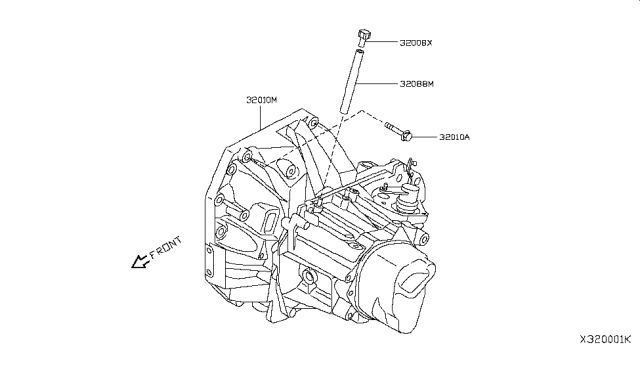
The 2013 Nissan Versa, known for its fuel efficiency and affordability, often sees its fair share of transmission work over its lifespan. While robust for everyday commuting, the Continuously Variable Transmission (CVT), designated either as a JF015E or, less commonly, a conventional automatic, can present challenges as the miles accumulate. This guide provides an in-depth look at a transmission replacement on the 2013 Versa, focusing on the technical aspects involved. It's important to note that this process requires a solid understanding of automotive mechanics and safety procedures. Incorrect procedures can lead to serious injury or damage to the vehicle. If you're not comfortable with this level of work, it's best to leave it to a professional.
Understanding the Transmission Options
The first crucial step is identifying exactly which transmission your Versa is equipped with. This is critical because the procedures can differ slightly. The most common is the JF015E CVT. This is identifiable by its size, cooler lines, and the fact that it will not have shift points as you drive. The second option is the conventional automatic, which can be found on less common trims of the 2013 Versa. This transmission will behave like a normal automatic and provide distinct shift points. If the model is equipped with the CVT, you'll need to take extra precautions as these are more sensitive than conventional transmissions.
Preparation and Safety
Before starting any work, safety is paramount. Here’s what you’ll need:
- Safety Glasses: Essential for protecting your eyes.
- Gloves: Protect your hands from fluids and sharp edges.
- Wheel Chocks: Prevent the vehicle from rolling.
- Jack Stands: To securely support the vehicle after lifting.
- Drain Pans: To catch fluids like transmission fluid and coolant.
- Torque Wrench: Crucial for tightening bolts to the correct specifications.
- Socket Set and Wrenches: Metric sizes will be required.
- Transmission Jack: Absolutely necessary for safely lowering and raising the transmission.
- Penetrating Oil: To loosen stubborn bolts.
- New Transmission Fluid: Use the correct type specified for your transmission (Nissan NS-3 for the JF015E is typical, but confirm with your owner's manual).
- New Transmission Filter: Replace this while you have the transmission out.
- New Transmission Mounts: Inspect and replace as needed, as they are often worn.
- Service Manual: A detailed service manual for the 2013 Nissan Versa is highly recommended.
Disconnect the negative battery terminal to prevent any electrical shorts. Raise the vehicle and securely support it with jack stands. Ensure the vehicle is stable before proceeding.
Removal Procedure
Step 1: Disconnecting Components
Start by disconnecting all components attached to the transmission. This includes:
- Wiring Harnesses: Carefully disconnect all electrical connectors. Label each connector with masking tape and a marker to ensure correct reinstallation. Pay close attention to the Transmission Control Module (TCM) connectors, if applicable.
- Shift Linkage: Disconnect the shift linkage cable from the transmission. Be gentle to avoid damaging the cable or its mounting points.
- Cooler Lines: If equipped, disconnect the transmission cooler lines. Be prepared for fluid spillage and plug the lines to prevent contamination.
- Driveshafts/Axles: Disconnect the driveshafts from the transmission. On front-wheel-drive vehicles like the Versa, this involves separating the axles from the transaxle flanges. This may require removing the wheels and disconnecting the suspension components to gain adequate clearance. Be careful not to damage the CV joints.
- Starter Motor: Disconnect the starter motor wiring and remove the starter. This may be necessary to provide clearance for transmission removal.
Document everything with pictures as you go. This will be invaluable during reassembly.
Step 2: Supporting the Engine
Before removing the transmission, it's crucial to support the engine. Use an engine support bar that spans the engine bay and rests on the fender wells. This will prevent the engine from tilting or falling when the transmission is removed.
Step 3: Removing the Transmission Mounts
Locate and remove the transmission mounts that secure the transmission to the vehicle's frame. These mounts typically consist of rubber bushings and metal brackets. Loosen the bolts securing the mounts to the transmission and the frame. Do not completely remove the bolts until the transmission is supported by the transmission jack.
Step 4: Lowering and Removing the Transmission
Position the transmission jack under the transmission pan and adjust it until it's securely supporting the transmission's weight. Double-check that the transmission is stable on the jack. Now, carefully remove the remaining bolts securing the transmission to the engine. With the transmission fully supported by the jack, slowly lower it. Maneuver the transmission to clear any obstacles, such as the frame or exhaust components. Once the transmission is clear of the vehicle, carefully inspect the engine's rear main seal for leaks and replace it if necessary.
Installation Procedure
Step 1: Preparing the New Transmission
Before installing the new transmission, inspect it thoroughly for any signs of damage. Install the new transmission filter and ensure all necessary components, such as the torque converter (for conventional automatics) or flexplate (for CVTs), are properly installed and aligned.
Step 2: Raising and Aligning the Transmission
Position the new transmission on the transmission jack and carefully raise it into position. Align the transmission with the engine block and ensure the mounting bolts line up correctly. This may require some maneuvering and adjustments to the transmission jack.
Step 3: Securing the Transmission
Install the transmission mounting bolts and tighten them to the torque specifications outlined in the service manual. Start with the bolts closest to the center of the transmission and work your way outwards in a star pattern. This will ensure even pressure distribution and prevent warping. Reinstall the transmission mounts and tighten their bolts to the specified torque.
Step 4: Reconnecting Components
Reconnect all components that were disconnected during the removal process. This includes:
- Driveshafts/Axles: Carefully reinstall the driveshafts into the transmission flanges. Ensure they are properly seated and secured.
- Cooler Lines: Reconnect the transmission cooler lines and tighten the fittings securely.
- Shift Linkage: Reconnect the shift linkage cable to the transmission. Adjust the linkage as needed to ensure proper shifting.
- Wiring Harnesses: Reconnect all electrical connectors, referring to the labels you made during the removal process. Double-check that all connectors are securely attached.
- Starter Motor: Reinstall the starter motor and reconnect the wiring.
Step 5: Fluid Fill and Initial Startup
Fill the transmission with the correct type and amount of fluid, as specified in the owner's manual. This is critical for proper transmission operation and longevity. Check the fluid level and add more as needed. Reconnect the negative battery terminal. Start the engine and allow it to idle for a few minutes. Check for any leaks around the transmission, cooler lines, and driveshaft seals. Cycle through the gears and check for smooth engagement. If using a CVT, remember there won't be "shifts," but you should see a smooth, linear increase in speed.
Final Checks and Road Test
Before driving the vehicle, perform a thorough inspection of all connections and components. Ensure everything is properly installed and secured. Take the vehicle for a short test drive and observe its performance. Check for any unusual noises, vibrations, or shifting problems. Monitor the transmission fluid level and add more as needed. If you notice any issues, address them immediately. With the correct approach, safety and tools, the transmission can be replaced efficiently. It can be a tedious job, but it provides an excellent mechanical learning experience.