
2014 Nissan Sentra Starter Relay Location
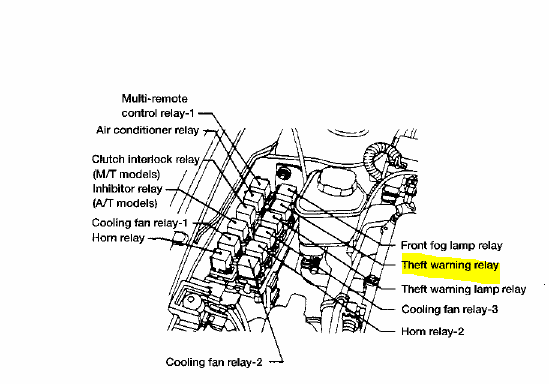
If you're experiencing starting problems with your 2014 Nissan Sentra, one of the first components you should investigate is the starter relay. This relatively inexpensive part plays a crucial role in engaging the starter motor and getting your engine running. Knowing the 2014 Nissan Sentra starter relay location can save you time and money, potentially avoiding a costly trip to the mechanic.
Understanding the Starter Relay's Function
Before diving into the location, let's briefly explain the starter relay's function. The starter relay acts as an intermediary switch between the ignition switch and the starter motor. The ignition switch, operated by your key, doesn't directly supply the high current required to power the starter. Instead, it sends a low-current signal to the starter relay. The relay, in turn, uses this signal to close a high-current circuit, allowing power from the battery to flow to the starter motor. This protects the ignition switch from being overloaded and provides a more reliable way to engage the starter.
A faulty starter relay can prevent the starter motor from engaging, even if the battery is fully charged. Common symptoms of a bad starter relay include:
- Clicking sound when turning the key (but the engine doesn't crank).
- Engine not starting at all.
- Intermittent starting problems (sometimes the engine starts, sometimes it doesn't).
- Dashboard lights dimming significantly when trying to start the car.
If you're experiencing any of these symptoms, checking the starter relay should be a priority. However, remember to also rule out other potential causes, such as a dead battery, faulty starter motor, or loose wiring.
Locating the Starter Relay in Your 2014 Nissan Sentra
The starter relay location in the 2014 Nissan Sentra is typically found within the Intelligent Power Distribution Module (IPDM) E/R. The IPDM E/R is essentially a fuse and relay box located in the engine compartment. While the exact placement within the IPDM can vary slightly depending on the specific Sentra configuration, this is the general area to focus on.
Step-by-Step Guide to Finding the Relay:
- Park Your Car Safely: Ensure your car is parked on a level surface, in a well-lit area, and the engine is turned off. Engage the parking brake.
- Open the Hood: Locate the hood release lever inside the cabin, usually under the dashboard, and pull it to release the hood latch. Then, go to the front of the car, find the hood latch, and lift the hood.
- Locate the IPDM E/R: The IPDM E/R is usually a black plastic box located near the battery or the engine's side. It will have a cover that needs to be removed.
- Identify the Starter Relay: This is the most crucial step. The IPDM E/R contains multiple relays, so you need to find the one specifically designated as the starter relay.
Here are a few methods to help you identify the correct relay:
- Consult the Owner's Manual: The owner's manual is your best resource. It should contain a diagram of the IPDM E/R, clearly labeling each relay and its function. Look for the relay labeled "Starter Relay" or something similar. If you don't have a physical copy of the manual, you can often find a digital version online on the Nissan website or through other reputable sources.
- Check the IPDM E/R Cover: The inside of the IPDM E/R cover often has a diagram that shows the location and function of each fuse and relay. This diagram might be a simplified version of the one in the owner's manual, but it can still be helpful.
- Look for the Relay with the Correct Amperage: Starter relays typically have a higher amperage rating than other relays in the IPDM E/R. Check the amperage rating printed on the side of the relays and compare them to the specifications in your owner's manual or online resources.
- Listen for the Click: Have someone turn the ignition key to the "start" position while you listen near the IPDM E/R. You should be able to hear a distinct "click" from the starter relay as it engages. This can help you pinpoint its location. Be careful and ensure the car is in park or neutral and the parking brake is engaged before attempting this.
- Use a Multimeter (Advanced): If you have experience using a multimeter, you can use it to test the relay. Check for voltage at the relay terminals when the ignition key is turned to the "start" position. This will confirm whether the relay is receiving the signal from the ignition switch. If you're not comfortable using a multimeter, it's best to consult a qualified mechanic.
Diagram and Labeling Conventions
Nissan, like other manufacturers, uses specific labeling conventions for their relays and fuses. Understanding these conventions can help you decipher the diagrams in your owner's manual or on the IPDM E/R cover. Pay close attention to symbols, abbreviations, and color codes. Common abbreviations you might encounter include:
- STRT: Starter
- IGN: Ignition
- ENG: Engine
- ECM: Engine Control Module
Also, be aware that some relays might have slightly different names depending on the specific Sentra trim level or optional features. For example, it might be labeled as "Starter Motor Relay" or "Ignition Relay (Starter)."
Testing the Starter Relay
Once you've located the starter relay, you can test it to determine if it's functioning correctly. There are several ways to test a starter relay, ranging from simple visual inspections to more advanced electrical tests.
Simple Visual Inspection:
Begin with a visual inspection. Look for any signs of damage to the relay, such as:
- Cracked or broken plastic housing.
- Corroded or burnt terminals.
- Loose or damaged wiring connected to the relay.
If you see any of these signs, the relay is likely faulty and needs to be replaced.
Relay Swapping (Simple Test):
A common and relatively easy method to test the starter relay is to swap it with an identical relay in the IPDM E/R. Identify another relay in the IPDM E/R that is the exact same type and amperage as the starter relay (e.g., a relay for the horn or headlights). Swap the two relays.
Then, try starting the car. If the car starts with the swapped relay in the starter relay position, and the function of the other relay (e.g., the horn) no longer works, it confirms that the original starter relay was faulty.
Important: Only swap relays if they are absolutely identical. Using a relay with a different amperage rating can damage your car's electrical system.
Using a Multimeter (Advanced Test):
A multimeter is a valuable tool for diagnosing electrical problems. To test the starter relay with a multimeter, you'll need to understand how the relay works and how to access its terminals.
- Identify the Relay Terminals: The relay typically has four or five terminals. These terminals are usually labeled with numbers or letters. You'll need to identify the coil terminals (which control the relay's operation) and the switch terminals (which connect the battery to the starter motor).
- Test the Coil Circuit: Use the multimeter to check for continuity across the coil terminals. You should see a low resistance reading (typically between 50 and 150 ohms). If there is no continuity (infinite resistance), the coil is open and the relay is faulty.
- Test the Switch Circuit: With the relay removed from the IPDM E/R, use the multimeter to check for continuity across the switch terminals. You should see no continuity (infinite resistance). Then, apply 12 volts to the coil terminals (you can use a battery charger for this). This should energize the relay and close the switch. Now, check for continuity across the switch terminals again. You should now see low resistance (close to 0 ohms). If the switch doesn't close when you apply voltage to the coil, the relay is faulty.
Warning: Working with electricity can be dangerous. If you're not comfortable using a multimeter or working with electrical components, it's best to consult a qualified mechanic.
Replacing the Starter Relay
If you've determined that the starter relay is faulty, replacing it is a straightforward process. You can purchase a new starter relay from an auto parts store or online retailer. Make sure to get a relay that is specifically designed for your 2014 Nissan Sentra.
Steps to Replace the Starter Relay:
- Disconnect the Negative Battery Cable: This is a crucial safety step to prevent electrical shocks or damage to your car's electrical system.
- Locate the Faulty Relay: Use the methods described earlier to locate the starter relay in the IPDM E/R.
- Remove the Old Relay: Gently pull the old relay straight out of the IPDM E/R. It might require a bit of force, but avoid using excessive force or twisting the relay, as this could damage the IPDM E/R.
- Install the New Relay: Align the new relay with the terminals in the IPDM E/R and push it firmly into place. Make sure it's fully seated and secure.
- Reconnect the Negative Battery Cable: Once the new relay is installed, reconnect the negative battery cable.
- Test the Car: Start the car to ensure the new relay is working properly.
Preventative Maintenance
While starter relays are relatively reliable components, they can fail over time due to wear and tear, corrosion, or electrical surges. To help prevent starter relay problems, consider the following:
- Regularly Inspect the IPDM E/R: Check for signs of corrosion or damage to the relays and fuses in the IPDM E/R.
- Keep the Battery Terminals Clean: Clean battery terminals ensure good electrical connections and prevent voltage drops that can stress the starter relay.
- Avoid Jump-Starting the Car: Jump-starting a car can sometimes cause voltage spikes that damage sensitive electrical components, including the starter relay. If you need to jump-start your car, follow the proper procedure and be careful to avoid creating a short circuit.
Conclusion
Knowing the 2014 Nissan Sentra starter relay location and understanding its function can be invaluable when troubleshooting starting problems. By following the steps outlined in this article, you can potentially diagnose and resolve the issue yourself, saving time and money. However, if you're not comfortable working with electrical components or are unsure about any aspect of the repair, it's always best to consult a qualified mechanic.
Remember to always prioritize safety when working on your car. Disconnect the negative battery cable before working on any electrical components and use caution when handling tools and equipment. By taking the necessary precautions, you can safely and effectively troubleshoot and repair your 2014 Nissan Sentra.