
2019 Nissan Altima Grille Shutter Actuator
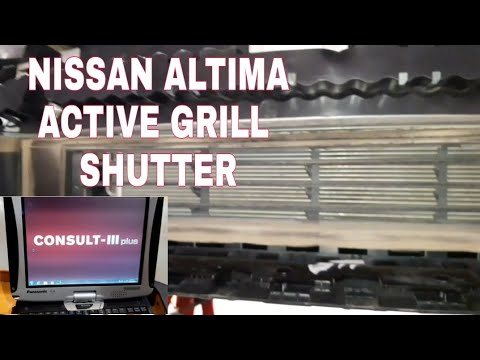
The 2019 Nissan Altima, like many modern vehicles, incorporates a grille shutter system to enhance fuel efficiency and optimize engine performance. At the heart of this system lies the grille shutter actuator, a relatively small but crucial component responsible for controlling the opening and closing of the grille shutters. Understanding its operation, function, and potential issues is vital for both informed vehicle ownership and DIY maintenance.
Function and Purpose
The primary function of the grille shutter system is to manage airflow through the radiator. In older vehicles, this airflow was passively determined by the open grille design. The Altima's active grille shutter system takes a more controlled approach.
Why is this important? Consider these two scenarios:
- Cold Engine Start: When the engine is cold, the grille shutters remain closed. This reduces airflow across the radiator, allowing the engine to reach its optimal operating temperature more quickly. A faster warm-up translates directly into improved fuel economy, as the engine operates more efficiently when warm. It also reduces emissions, as catalytic converters function best at higher temperatures.
- Highway Cruising: At higher speeds, less airflow is needed to maintain optimal engine temperature. Closing the grille shutters reduces aerodynamic drag, which leads to further fuel savings. The 2019 Altima's sleek design is complemented by this drag-reduction strategy.
The grille shutter actuator is the device that makes this all possible. It receives commands from the vehicle's engine control unit (ECU) and translates those commands into physical movement, opening or closing the shutters as needed. Without a functioning actuator, the system will either fail closed (potentially leading to overheating in some conditions) or fail open (negating the fuel economy benefits).
Component Breakdown and Operation
Let's delve into the internal workings of a typical grille shutter actuator:
Actuator Housing and Mounting
The actuator is typically housed in a durable plastic enclosure designed to withstand the harsh under-hood environment. The housing provides protection for the internal components from moisture, dirt, and temperature extremes. It also incorporates mounting points for secure attachment to the vehicle's grille assembly.
Electric Motor
At the heart of the actuator is a small DC electric motor. This motor provides the power to move the shutter mechanism. The ECU controls the motor by varying the voltage and polarity of the electrical current supplied to it. The motor's specifications (voltage, current, torque) are carefully selected to provide the necessary force to operate the shutters reliably.
Gear Train
The motor's rotational force is typically amplified through a series of gears, known as a gear train. This gear train increases the torque available to move the shutters, allowing a relatively small motor to exert significant force. The gear ratios are carefully calculated to provide the optimal balance between speed and torque. The gears are typically made of durable plastic or metal, depending on the specific design and load requirements.
Linkage and Shutter Connection
The final stage of the actuator's operation involves the linkage that connects the gear train to the grille shutters. This linkage translates the rotational motion of the gear train into linear motion, opening and closing the shutters. The linkage is designed to be robust and durable, capable of withstanding repeated movements and exposure to the elements. The design of this linkage is crucial to ensure smooth and reliable shutter operation.
Position Sensor (Feedback)
Crucially, many grille shutter actuators incorporate a position sensor. This sensor provides feedback to the ECU regarding the current position of the shutters. This feedback loop allows the ECU to precisely control the shutter position and to detect any malfunctions. The position sensor may be a potentiometer, a rotary encoder, or another type of sensor that provides an electrical signal proportional to the shutter position. This feedback is essential for ensuring optimal system performance and fault detection.
Troubleshooting and Diagnosis
A faulty grille shutter actuator can manifest in several ways. Common symptoms include:
- Check Engine Light: The most common indicator of a problem is the illumination of the check engine light. Diagnostic trouble codes (DTCs) related to the grille shutter system will be stored in the ECU's memory. Common DTCs include codes indicating an open or short circuit in the actuator's wiring, a malfunctioning position sensor, or a mechanical failure within the actuator itself.
- Poor Fuel Economy: If the shutters are stuck open, the vehicle's aerodynamic efficiency will be reduced, leading to decreased fuel economy. This may be subtle and difficult to detect without careful monitoring.
- Engine Overheating: If the shutters are stuck closed, airflow across the radiator will be restricted, potentially leading to engine overheating, especially under heavy load or in hot weather. This is a critical issue that should be addressed immediately.
- Visible Damage: A visual inspection of the actuator and its linkage may reveal obvious signs of damage, such as cracks, broken parts, or corrosion.
Diagnostic Steps
Diagnosing a grille shutter actuator issue typically involves the following steps:
- Retrieve DTCs: Use an OBD-II scanner to retrieve any stored DTCs. This will provide valuable information about the nature of the problem.
- Visual Inspection: Carefully inspect the actuator, linkage, and wiring for any signs of damage.
- Wiring Check: Use a multimeter to check the wiring harness for continuity and voltage. Ensure that the actuator is receiving power and that the ground connection is good.
- Actuator Function Test: Many diagnostic tools allow you to command the actuator to open and close the shutters. This can help you determine if the actuator is functioning correctly. Observe the actuator's movement and listen for any unusual noises.
- Position Sensor Test: If the actuator has a position sensor, use a multimeter or oscilloscope to check the sensor's output signal. Verify that the signal changes smoothly as the shutters move.
Common Failure Points
Several factors can contribute to grille shutter actuator failure:
- Motor Failure: The electric motor can fail due to wear and tear, corrosion, or electrical overload.
- Gear Train Damage: The gears in the gear train can break or wear down due to repeated use or excessive load.
- Linkage Problems: The linkage can become damaged or disconnected, preventing the shutters from opening and closing properly.
- Position Sensor Failure: The position sensor can fail due to contamination, wear, or electrical damage.
- Wiring Issues: Corrosion, damaged wires, or loose connections can disrupt the electrical signals to the actuator.
- Environmental Factors: Exposure to extreme temperatures, moisture, and road debris can accelerate the wear and tear on the actuator and its components. Road salt is a particularly damaging factor in colder climates.
Replacement Considerations
If the grille shutter actuator is found to be faulty, replacement is usually the best course of action. When selecting a replacement actuator, it's important to choose a high-quality part that is specifically designed for your vehicle. OEM (Original Equipment Manufacturer) parts are generally the most reliable, but aftermarket options are also available. When choosing an aftermarket part, be sure to select a reputable brand that offers a warranty.
Installation
The installation process typically involves the following steps:
- Disconnect the negative battery cable.
- Remove the grille assembly (refer to the vehicle's service manual for specific instructions).
- Disconnect the electrical connector from the old actuator.
- Remove the old actuator from the grille assembly.
- Install the new actuator.
- Connect the electrical connector.
- Reinstall the grille assembly.
- Reconnect the negative battery cable.
- Clear any stored DTCs using an OBD-II scanner.
- Test the system to ensure that the actuator is functioning correctly.
Important Note: Always consult the vehicle's service manual for specific installation instructions and torque specifications. Working on automotive electrical systems can be dangerous. If you are not comfortable performing the repair yourself, it's best to take the vehicle to a qualified mechanic.
Conclusion
The grille shutter actuator is an integral part of the 2019 Nissan Altima's fuel-saving and engine-optimizing system. Understanding its function, troubleshooting potential issues, and performing proper maintenance can help ensure optimal vehicle performance and longevity. While seemingly a small component, its impact on fuel economy and engine temperature regulation is significant, showcasing the increasing complexity and sophistication of modern automotive engineering.