
Catalytic Converter 2005 Nissan Sentra 1.8
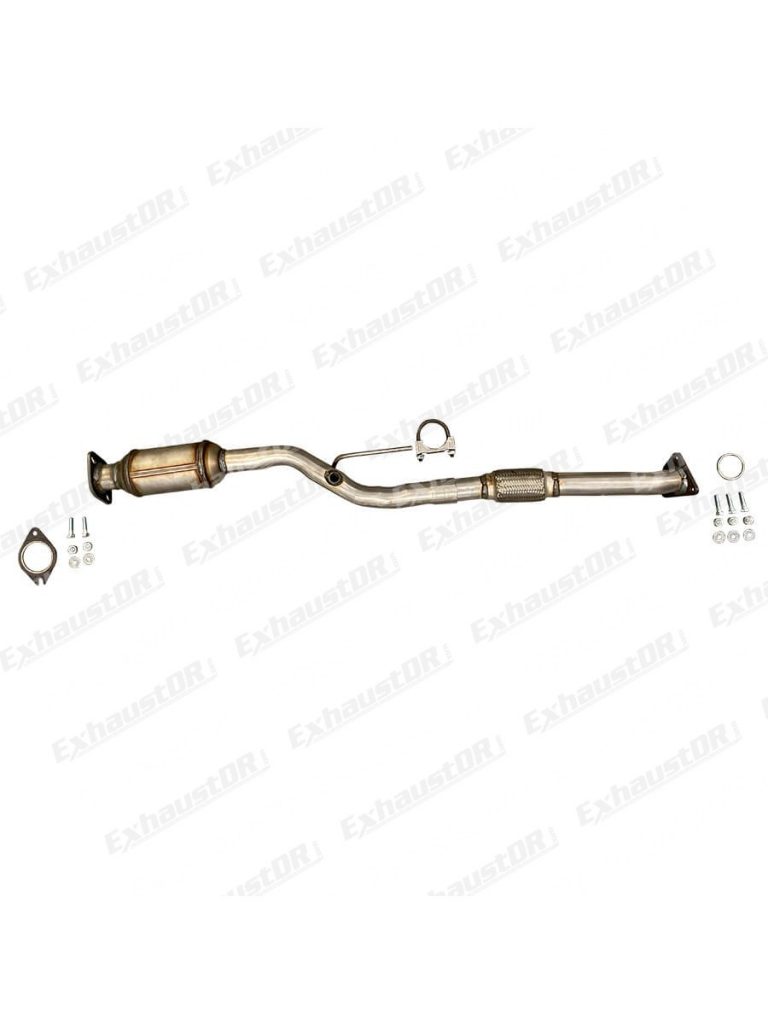
The catalytic converter, often a neglected component in discussions about vehicle maintenance, plays a crucial role in reducing harmful emissions. This article delves into the inner workings of the catalytic converter specifically designed for the 2005 Nissan Sentra with the 1.8-liter QG18DE engine, providing an analytical and educational perspective for curious readers and aspiring engineers.
Understanding the Basics: Emission Control and the Converter's Role
Modern internal combustion engines produce a cocktail of undesirable exhaust gases, including hydrocarbons (HC), carbon monoxide (CO), and nitrogen oxides (NOx). These pollutants contribute to smog, acid rain, and respiratory problems. Environmental regulations, such as those enforced by the Environmental Protection Agency (EPA), mandate the reduction of these emissions.
The catalytic converter is the primary device used to mitigate these pollutants. It employs chemical reactions to transform these harmful gases into less harmful substances: carbon dioxide (CO2), water (H2O), and nitrogen (N2). The 2005 Nissan Sentra 1.8L, like most gasoline-powered vehicles, utilizes a three-way catalytic converter, which is designed to address all three pollutants simultaneously.
Construction and Materials of the 2005 Sentra 1.8L Converter
The catalytic converter on the 2005 Sentra typically consists of the following key components:
- Housing: A stainless steel or aluminized steel shell encases the internal components, providing structural integrity and protection from the harsh undercarriage environment.
- Substrate (Honeycomb): This is the core of the converter. It's usually a ceramic monolith with a honeycomb structure. This design provides a very large surface area for the catalytic reactions to occur. The honeycomb structure minimizes backpressure while maximizing contact between the exhaust gases and the catalyst.
- Washcoat: The substrate is coated with a washcoat, typically made of alumina (aluminum oxide – Al2O3). The washcoat further increases the surface area and provides a binding layer for the precious metals.
- Catalytic Metals (Precious Metals): These are the heart of the catalytic process. Platinum (Pt), palladium (Pd), and rhodium (Rh) are the most commonly used metals. Platinum and palladium act as oxidation catalysts, oxidizing HC and CO. Rhodium acts as a reduction catalyst, reducing NOx. The specific ratio of these metals can vary depending on the manufacturer and the intended performance characteristics.
The placement of the catalytic converter in the exhaust system is crucial. On the 2005 Sentra 1.8L, it's typically located downstream of the exhaust manifold, close enough to retain sufficient heat for efficient operation but far enough to prevent overheating. The closer the converter is to the engine, the faster it reaches its operating temperature, often referred to as "light-off" temperature.
The Three-Way Catalytic Process: A Detailed Look
The 2005 Nissan Sentra 1.8L uses a three-way catalytic converter, meaning it performs three simultaneous reactions:
- Reduction of Nitrogen Oxides (NOx): Rhodium facilitates the reduction of NOx into nitrogen (N2) and oxygen (O2). A simplified representation of this reaction is:
2NOx → xO2 + N2
- Oxidation of Carbon Monoxide (CO): Platinum and palladium catalyze the oxidation of carbon monoxide into carbon dioxide (CO2). This reaction is represented as:
2CO + O2 → 2CO2
- Oxidation of Hydrocarbons (HC): Platinum and palladium also catalyze the oxidation of unburned hydrocarbons into carbon dioxide (CO2) and water (H2O). A simplified representation of this reaction is:
HC + O2 → CO2 + H2O
For these reactions to occur efficiently, the air-fuel mixture entering the engine must be precisely controlled. The engine control unit (ECU) utilizes oxygen sensors (O2 sensors) positioned upstream and downstream of the catalytic converter to monitor the exhaust gas composition. The upstream sensor provides feedback to the ECU about the air-fuel ratio entering the converter, allowing the ECU to adjust the fuel injection accordingly. The downstream sensor monitors the converter's efficiency. If the downstream sensor detects an increase in oxygen levels compared to the upstream sensor when the converter is at operating temperature, it indicates a decrease in the converter's ability to store oxygen, meaning the unit is failing and no longer converting pollutants effectively.
Factors Affecting Catalytic Converter Performance and Longevity
Several factors can impact the performance and lifespan of the catalytic converter on a 2005 Nissan Sentra 1.8L:
- Fuel Quality: Using leaded gasoline will quickly poison the catalytic converter, rendering it ineffective. Even fuels with high sulfur content can degrade the converter's performance over time.
- Oil Consumption: Excessive oil consumption can coat the catalytic converter with oil residue, hindering its ability to catalyze reactions.
- Coolant Leaks: Coolant entering the exhaust system can also contaminate the converter.
- Engine Misfires: Misfires introduce unburned fuel into the exhaust system, which can overheat the catalytic converter and damage the substrate or even cause a fire.
- Physical Damage: Impact from road debris can damage the converter's housing or substrate.
- Age and Mileage: Over time, the catalytic metals can degrade and lose their effectiveness.
Diagnosis and Troubleshooting
A failing catalytic converter can manifest in several ways:
- Check Engine Light (CEL): The most common indicator is the illumination of the CEL. Diagnostic trouble codes (DTCs) such as P0420 ("Catalyst System Efficiency Below Threshold") are frequently associated with a failing catalytic converter.
- Reduced Fuel Economy: A clogged or inefficient converter can increase backpressure, leading to reduced engine performance and fuel economy.
- Poor Engine Performance: The engine may exhibit hesitation, lack of power, or rough idling.
- Failed Emissions Test: The vehicle will likely fail an emissions test due to excessive levels of HC, CO, or NOx.
- Rattling Noise: A rattling noise from under the vehicle can indicate a broken or damaged substrate inside the converter.
- Sulfur Smell: A rotten egg smell (sulfur dioxide) from the exhaust can also indicate a problem with the catalytic converter's ability to process sulfur compounds in the fuel.
Diagnosing a catalytic converter issue often involves:
- Reading Diagnostic Trouble Codes (DTCs): Using an OBD-II scanner to retrieve any stored DTCs.
- Visual Inspection: Inspecting the converter for physical damage, leaks, or corrosion.
- Exhaust Backpressure Test: Measuring the backpressure in the exhaust system to identify any blockages.
- Oxygen Sensor Testing: Analyzing the signals from the O2 sensors to assess the converter's efficiency. This often involves using a graphing multimeter or a scan tool to observe the sensor waveforms.
- Temperature Measurement: Measuring the temperature at the inlet and outlet of the converter using an infrared thermometer. A significantly lower temperature at the outlet compared to the inlet can indicate a clogged or inactive converter.
Replacement Considerations and Aftermarket Options
When a catalytic converter fails, replacement is often necessary. Several options are available:
- OEM (Original Equipment Manufacturer) Converter: These are typically the most expensive but offer the best fit, performance, and longevity.
- Aftermarket Converters: These are generally more affordable than OEM converters and come in various grades. When selecting an aftermarket converter, ensure it meets EPA standards and is specifically designed for the 2005 Nissan Sentra 1.8L. Be cautious of extremely cheap converters, as they may have a shorter lifespan and lower efficiency.
- High-Flow Converters: These are designed for performance applications and typically have a larger substrate and lower backpressure. However, they may not be legal in all areas and may not provide the same level of emissions control as a standard converter.
When replacing the catalytic converter, it's often recommended to replace the oxygen sensors as well, as they may have been affected by the failing converter. Ensure all connections are properly sealed to prevent exhaust leaks. Properly torquing all fasteners is also vital to long term reliability.
Conclusion
The catalytic converter is a vital component in the 2005 Nissan Sentra 1.8L's emissions control system. Understanding its construction, function, and potential failure modes is essential for maintaining optimal vehicle performance and reducing environmental impact. By adhering to proper maintenance practices and addressing issues promptly, you can ensure the longevity and effectiveness of this critical emissions control device.