
Catalytic Converter For 2004 Nissan Maxima
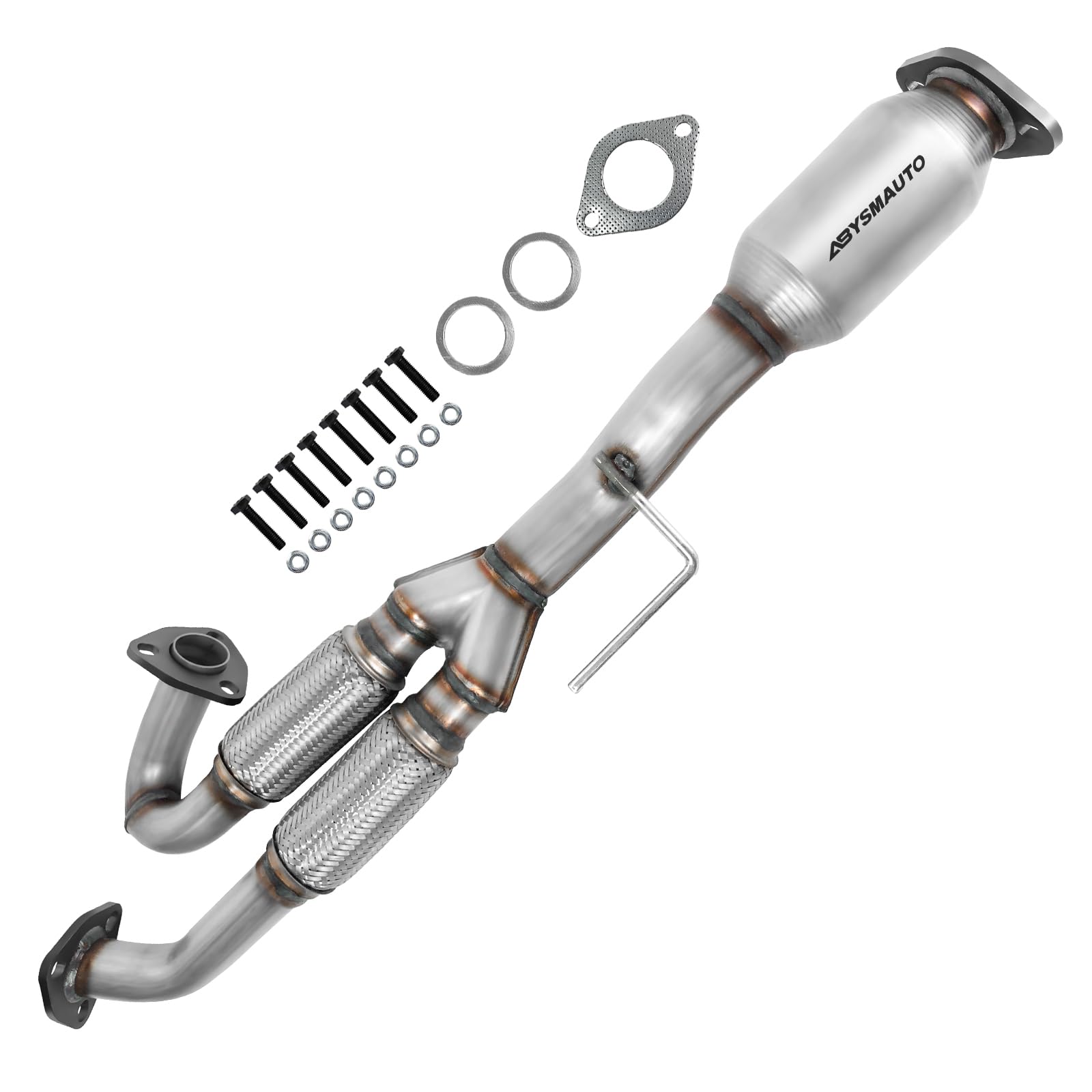
So, you're having trouble with your 2004 Nissan Maxima and suspect it might be the catalytic converter? You're not alone. The 2004 Maxima, while a fantastic car, is getting to the age where catalytic converter issues become more common. Let's walk through the symptoms, diagnosis, and solutions to get your Maxima running smoothly again.
Symptoms of a Failing Catalytic Converter on a 2004 Nissan Maxima
Before we dive into the nitty-gritty, let's confirm if your symptoms align with a failing catalytic converter. Here are some common indicators:
- Check Engine Light: This is the most obvious sign. You'll likely see a P0420 code ("Catalyst System Efficiency Below Threshold, Bank 1") or a P0430 code ("Catalyst System Efficiency Below Threshold, Bank 2"). These codes specifically point to the catalytic converter's performance. While other codes might also be present, these are the key indicators.
- Reduced Engine Performance: A clogged or inefficient catalytic converter restricts exhaust flow, which can significantly reduce your Maxima's horsepower and acceleration. You might notice sluggishness, especially when trying to accelerate quickly.
- Poor Fuel Economy: A failing converter can disrupt the air-fuel mixture, leading to a decrease in your gas mileage. Keep an eye on your MPG; a noticeable drop could indicate a problem.
- Rattling Noises: Over time, the internal components of the catalytic converter can break down and rattle around inside the housing, creating a distinct rattling sound, especially when the engine is cold or under load.
- Overheating: In some cases, a severely clogged catalytic converter can cause the engine to overheat due to restricted exhaust flow and increased backpressure.
- Failed Emissions Test: This is often the final confirmation. If your Maxima fails its emissions test, the catalytic converter is a prime suspect.
Diagnosing the Issue: Is it *Really* the Catalytic Converter?
It's crucial to be absolutely sure the catalytic converter is the culprit before replacing it. A new converter is a significant expense, and replacing it without addressing the root cause can lead to premature failure of the new unit and wasted money. Here's how to properly diagnose the issue:
1. Read the Diagnostic Trouble Codes (DTCs)
Use an OBD-II scanner to retrieve the DTCs stored in your Maxima's computer. A P0420 or P0430 code is a strong indicator, but as mentioned earlier, don't stop there. Record all codes present, as they might reveal underlying issues contributing to the catalytic converter's failure.
2. Check for Exhaust Leaks
Exhaust leaks before the catalytic converter can introduce excess oxygen into the exhaust stream, which can fool the oxygen sensors and trigger a false P0420 or P0430 code. Visually inspect the exhaust system from the exhaust manifold to the catalytic converter for any signs of leaks, such as black soot deposits or rust. You can also use a soapy water solution sprayed onto the exhaust system while the engine is running to look for bubbles indicating a leak.
3. Inspect the Oxygen Sensors
The oxygen sensors (O2 sensors) play a vital role in monitoring the catalytic converter's performance. There are typically two O2 sensors associated with each catalytic converter: an upstream sensor (before the converter) and a downstream sensor (after the converter). A malfunctioning O2 sensor can send incorrect data to the engine control unit (ECU), leading to a false P0420 or P0430 code. Use a scan tool that displays live data to monitor the O2 sensor readings. Compare the readings of the upstream and downstream sensors. The downstream sensor should have a relatively stable voltage reading compared to the upstream sensor, which fluctuates more rapidly. If the downstream sensor is fluctuating similarly to the upstream sensor, it could indicate a failing catalytic converter or a faulty downstream O2 sensor.
4. Perform an Exhaust Backpressure Test
A severely clogged catalytic converter will restrict exhaust flow, creating excessive backpressure. You can measure exhaust backpressure using a gauge that screws into the oxygen sensor port upstream of the catalytic converter. Excessive backpressure (typically above 2-3 PSI at idle) confirms a blockage in the exhaust system, which is often caused by a clogged catalytic converter.
5. Visual Inspection of the Catalytic Converter
A visual inspection can sometimes reveal obvious problems, such as physical damage to the converter housing or signs of overheating. Look for cracks, dents, or melted areas. If possible, try tapping on the converter housing. A rattling sound could indicate that the internal components have broken down.
Solutions: Replacing the Catalytic Converter
If you've confirmed that the catalytic converter is indeed the problem, you'll need to replace it. Here's what you need to know:
Choosing the Right Catalytic Converter
Aftermarket vs. OEM: You have two main options: aftermarket and Original Equipment Manufacturer (OEM). OEM converters are generally more expensive but are designed specifically for your Maxima and often offer better performance and longevity. Aftermarket converters are typically cheaper but may not meet the same quality standards as OEM units. When choosing an aftermarket converter, make sure it's CARB-compliant (California Air Resources Board) if you live in California or a state that follows California emissions standards. CARB-compliant converters are designed to meet stricter emissions requirements.
Direct-Fit vs. Universal: Direct-fit converters are designed to bolt directly onto your Maxima's exhaust system without any modifications. Universal converters, on the other hand, require welding and fabrication to install. Unless you have welding experience, it's generally recommended to choose a direct-fit converter for ease of installation.
Tools Needed
- Socket set (metric)
- Wrench set (metric)
- Oxygen sensor socket
- Penetrating oil (to loosen rusty bolts)
- Jack and jack stands
- Safety glasses and gloves
- Possibly a saw if the bolts are too rusty to remove.
Step-by-Step Replacement (General Guide)
Important Note: This is a general guide only. Always refer to your vehicle's repair manual for specific instructions and torque specifications. Disconnect the negative battery cable before starting any work.
- Safely lift and support your Maxima using a jack and jack stands.
- Spray penetrating oil on the bolts connecting the catalytic converter to the exhaust manifold and the exhaust pipe. Let it soak for at least 15-20 minutes.
- Disconnect the oxygen sensors from the catalytic converter. Use an oxygen sensor socket to avoid damaging the sensors.
- Remove the bolts connecting the catalytic converter to the exhaust manifold and the exhaust pipe. Be prepared for these bolts to be very rusty and difficult to remove. You may need to use a breaker bar or even heat to loosen them.
- Carefully remove the old catalytic converter.
- Install the new catalytic converter, using new gaskets if necessary.
- Reinstall the oxygen sensors, making sure to tighten them to the correct torque specification.
- Reconnect the exhaust manifold and exhaust pipe using new bolts if the old ones are corroded. Tighten the bolts to the correct torque specification.
- Reconnect the negative battery cable.
- Start the engine and check for any exhaust leaks.
- Clear the DTCs using an OBD-II scanner.
- Take your Maxima for a test drive to ensure everything is working properly.
Professional Installation
If you're not comfortable performing this repair yourself, it's best to take your Maxima to a qualified mechanic. A professional will have the necessary tools and experience to properly diagnose the problem and install the new catalytic converter correctly. They can also address any other underlying issues that may be contributing to the catalytic converter's failure.
Cost Considerations
The cost of replacing a catalytic converter on a 2004 Nissan Maxima can vary depending on several factors, including:
- Type of catalytic converter (OEM vs. Aftermarket): OEM converters are typically more expensive.
- Labor costs: Labor rates vary depending on your location and the mechanic's hourly rate.
- Additional repairs: If there are any underlying issues that need to be addressed, such as exhaust leaks or faulty oxygen sensors, the cost will be higher.
As a rough estimate, you can expect to pay anywhere from $500 to $1500 for a catalytic converter replacement on a 2004 Nissan Maxima, including parts and labor. It's always a good idea to get quotes from multiple mechanics to compare prices.
Preventing Future Catalytic Converter Problems
Here are some tips to help prolong the life of your new catalytic converter:
- Regular Maintenance: Follow your Maxima's recommended maintenance schedule, including regular oil changes, tune-ups, and air filter replacements.
- Address Engine Issues Promptly: Any engine problems, such as misfires or oil leaks, can damage the catalytic converter. Address these issues as soon as possible.
- Use High-Quality Fuel: Avoid using low-quality fuel, which can contain contaminants that can damage the catalytic converter.
- Avoid Short Trips: Short trips don't allow the catalytic converter to reach its operating temperature, which can lead to carbon buildup and reduced efficiency.
- Don't Tamper with the Exhaust System: Modifications to the exhaust system can affect the catalytic converter's performance and lifespan.
By understanding the symptoms, diagnosis, and solutions related to catalytic converter problems, you can keep your 2004 Nissan Maxima running smoothly and efficiently for years to come. Remember to consult a qualified mechanic if you're unsure about any aspect of the repair process.