
Catalytic Converter For Nissan Altima 2003
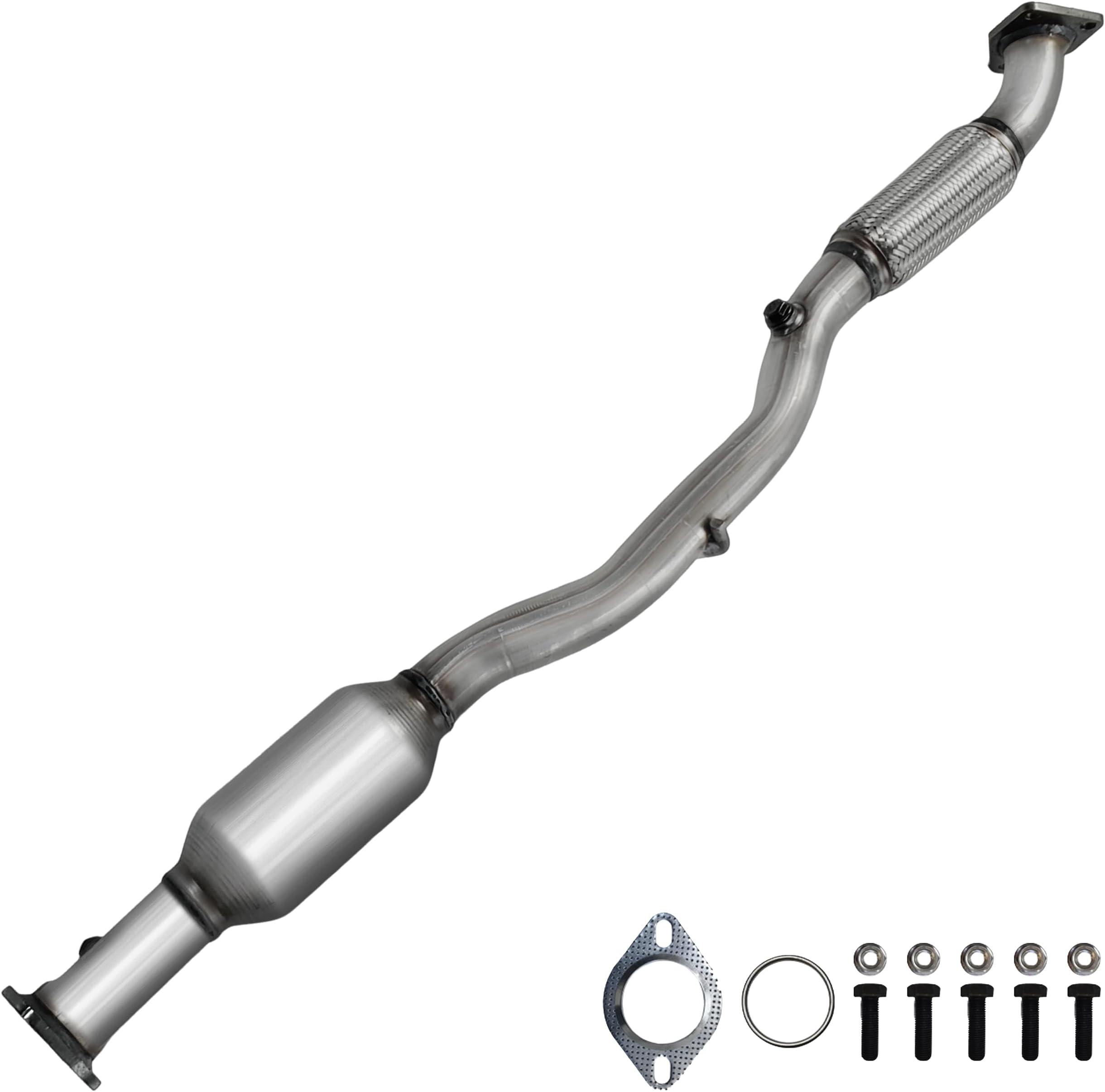
The 2003 Nissan Altima, a popular mid-size sedan, relies on a catalytic converter as a crucial component of its emissions control system. This seemingly simple device is, in reality, a sophisticated piece of engineering designed to significantly reduce the harmful pollutants released into the atmosphere. Understanding how the catalytic converter functions in your Altima is not just about environmental responsibility, but also about maintaining optimal engine performance and avoiding costly repairs. This guide delves into the technical aspects of the 2003 Altima's catalytic converter, exploring its construction, operation, potential issues, and diagnostic approaches.
Construction and Design
The catalytic converter on a 2003 Nissan Altima is typically located in the exhaust system, downstream from the exhaust manifold and often integrated with the exhaust pipe. Its primary structure consists of a stainless steel housing that protects the internal components from the harsh environment of high temperatures and corrosive exhaust gases. Within this housing lies the heart of the converter: the substrate.
The Substrate: Where the Magic Happens
The substrate is a ceramic honeycomb-like structure coated with a thin layer of catalyst materials. This honeycomb design provides a massive surface area, maximizing the contact between the exhaust gases and the catalysts. The catalyst material usually consists of precious metals, primarily platinum, palladium, and rhodium. The specific composition and ratio of these metals are carefully engineered to optimize the converter's performance across different engine operating conditions. The substrate on the 2003 Altima may be made of cordierite or silicon carbide, known for its thermal stability and resistance to thermal shock.
The honeycomb channels are designed to minimize backpressure while providing ample surface area. Excessive backpressure can negatively impact engine performance, reducing power and fuel efficiency. The channels are carefully sized and shaped to strike a balance between catalyst exposure and exhaust flow restriction.
Converter Types: Two-Way vs. Three-Way
The 2003 Nissan Altima utilizes a three-way catalytic converter. It's essential to understand the difference between two-way and three-way converters to appreciate the complexity of the Altima's system. A two-way converter only oxidizes hydrocarbons (HC) and carbon monoxide (CO) into water (H2O) and carbon dioxide (CO2). A three-way converter, however, also reduces nitrogen oxides (NOx) into nitrogen (N2), significantly improving emissions control. The three-way functionality is crucial for meeting modern emissions standards.
Operational Principles
The catalytic converter operates based on chemical reactions facilitated by the precious metal catalysts. The process involves two main stages: oxidation and reduction. These reactions occur simultaneously within the converter at elevated temperatures, typically between 400°C and 800°C. It is crucial to maintain this operating temperature range for optimal catalyst activity.
Reduction: Conquering Nitrogen Oxides
In the reduction stage, nitrogen oxides (NOx) are converted into nitrogen (N2) and oxygen (O2). This reaction is primarily catalyzed by rhodium. A typical reduction reaction can be represented as: 2NOx -> xO2 + N2. This process effectively neutralizes these harmful pollutants into less harmful components of the atmosphere.
Oxidation: Taming Hydrocarbons and Carbon Monoxide
In the oxidation stage, hydrocarbons (HC) and carbon monoxide (CO) are converted into water (H2O) and carbon dioxide (CO2). Platinum and palladium are the primary catalysts for this reaction. The reactions can be represented as: 2CO + O2 -> 2CO2 and CxHy + (x + y/4)O2 -> xCO2 + (y/2)H2O. By oxidizing these harmful gases, the converter significantly reduces their contribution to smog and air pollution.
The Role of Oxygen Sensors
The 2003 Nissan Altima utilizes oxygen sensors (O2 sensors) both upstream and downstream of the catalytic converter. These sensors play a vital role in monitoring the converter's efficiency and providing feedback to the engine control unit (ECU). The upstream O2 sensor measures the air-fuel ratio before the converter, while the downstream O2 sensor measures the oxygen content after the converter. By comparing these two readings, the ECU can determine the converter's effectiveness in reducing pollutants. If the downstream sensor reading is similar to the upstream sensor reading, it indicates that the converter is not functioning properly and a diagnostic trouble code (DTC) will likely be triggered, illuminating the check engine light. The ECU will then adjust the fuel mixture to optimize converter performance.
Common Problems and Diagnostics
Several factors can lead to catalytic converter failure in a 2003 Nissan Altima. Understanding these issues and their symptoms is crucial for timely diagnosis and repair.
Causes of Failure
- Contamination: Lead, phosphorus, and sulfur, often found in certain engine oil additives or improperly formulated fuels, can poison the catalyst, rendering it ineffective. Even small amounts of these contaminants can significantly reduce the converter's performance.
- Overheating: Excessive engine heat, often caused by a rich-running condition (too much fuel), can melt the substrate, physically damaging the converter. A malfunctioning cooling system or engine misfires can also contribute to overheating.
- Physical Damage: Impact from road debris can crack or break the converter housing or the substrate inside. This damage can reduce the converter's efficiency and create exhaust leaks.
- Clogging: Excessive oil consumption or coolant leaks into the combustion chamber can lead to carbon buildup and clogging of the honeycomb channels, restricting exhaust flow and reducing catalyst effectiveness.
- Age and Deterioration: Over time, the catalyst materials can degrade and lose their effectiveness. This is a natural process, but it can be accelerated by improper engine maintenance or exposure to harsh operating conditions.
Symptoms of a Failing Catalytic Converter
- Check Engine Light: This is the most common symptom. DTCs such as P0420 (Catalyst System Efficiency Below Threshold) are frequently associated with converter issues.
- Reduced Engine Performance: A clogged converter can restrict exhaust flow, leading to a noticeable decrease in power and acceleration.
- Poor Fuel Economy: Reduced engine efficiency due to backpressure from a clogged converter can negatively impact fuel economy.
- Rattling Noise: A broken or damaged substrate can cause a rattling noise from underneath the vehicle, especially during acceleration or when the engine is idling.
- Failed Emissions Test: If the converter is not functioning properly, the vehicle will likely fail an emissions test.
- Sulfur Smell: A rotten egg smell (sulfur dioxide) can indicate that the converter is not properly processing sulfur compounds in the exhaust.
Diagnostic Procedures
Diagnosing a catalytic converter problem typically involves a combination of visual inspection, diagnostic code reading, and sensor data analysis.
- Visual Inspection: Check for any signs of physical damage, such as cracks, dents, or rust, on the converter housing.
- Diagnostic Code Reading: Use an OBD-II scanner to retrieve any stored DTCs related to the converter or oxygen sensors. Pay particular attention to codes like P0420, P0421, and codes related to O2 sensor malfunctions.
- Oxygen Sensor Data Analysis: Use a scan tool to monitor the live data from the upstream and downstream oxygen sensors. The downstream sensor's voltage should be relatively stable compared to the fluctuating voltage of the upstream sensor. A downstream sensor voltage that mimics the upstream sensor's voltage suggests a failing converter.
- Exhaust Backpressure Test: This test involves measuring the exhaust backpressure upstream of the converter. Excessive backpressure indicates a clogged converter.
- Temperature Gun Test: Use an infrared temperature gun to measure the temperature of the converter inlet and outlet. The outlet temperature should be significantly higher than the inlet temperature if the converter is functioning properly.
Replacement Considerations
If the catalytic converter is diagnosed as faulty, replacement is often necessary. When choosing a replacement converter, consider the following:
- OEM vs. Aftermarket: Original Equipment Manufacturer (OEM) converters are typically more expensive but are designed to meet or exceed the original performance specifications. Aftermarket converters can be more affordable but may not offer the same level of performance or durability. Ensure the aftermarket converter meets EPA standards for the 2003 Nissan Altima.
- Direct-Fit vs. Universal: Direct-fit converters are designed to bolt directly into the original exhaust system, simplifying installation. Universal converters require cutting and welding, making installation more complex.
- Warranty: Choose a converter with a good warranty to protect against premature failure.
Important Note: Catalytic converter replacement may require specialized tools and knowledge. If you are not comfortable performing the repair yourself, it is best to consult a qualified mechanic. Replacing a catalytic converter without addressing the underlying cause of its failure can lead to premature failure of the new converter. It is essential to diagnose and repair any engine problems, such as oil leaks or misfires, before replacing the converter.
Understanding the function and potential issues of the catalytic converter in your 2003 Nissan Altima can help you maintain optimal engine performance, reduce emissions, and avoid costly repairs. Regular maintenance, proper fuel and oil selection, and prompt attention to engine problems are key to extending the life of your catalytic converter and keeping your Altima running smoothly.